Turkey Leads Global Smoking Rates with 17.1 Cigarettes Consumed Daily

Regulations by 2FIRSTS.ai
Jan.22.2024
Turkey Leads Global Smoking Rates with 17.1 Cigarettes Consumed Daily
Turkey leads in global smoking rates with an average of 17.1 cigarettes daily per person, surpassing all other countries.

According to a report by hurriyetdailynews on January 20th, Turkey ranks first in global smoking rates, with an average of 17.1 cigarettes smoked per person per day, surpassing all other countries. Following closely are Greece, Israel, Japan, and Austria.


According to the report "Tobacco Control Program 2018-2023", at least one-fourth of Turkish residents aged 15 and above engage in smoking, totaling approximately 20 million smokers. Data from the European Union reveals that Turkey has the highest daily per capita cigarette consumption at 17.1 cigarettes, followed closely by Greece at 15.7 cigarettes. Israel and Japan both have a rate of 15.5 cigarettes, while Austria's rate stands at 15.4 cigarettes.


Global smoking trends are on the decline, but e-cigarettes are gaining popularity among young people as a substitute for traditional smoking. Experts warn that the chemical components of e-cigarettes are equally harmful as those found in regular cigarettes, emphasizing the need for smoking cessation rather than seeking alternative options.


The World Health Organization (WHO) has urged for urgent action to control the use of e-cigarettes in order to minimize potential hazards to public health. Despite a global decline in smoking trends, it remains crucial to address the issue of smoking and implement effective measures to encourage more people to quit smoking, thus ensuring overall public health.


We welcome news tips, article submissions, interview requests, or comments on this piece.

Please contact us at info@2firsts.com, or reach out to Alan Zhao, CEO of 2Firsts, on LinkedIn


Notice

1.  This article is intended solely for professional research purposes related to industry, technology, and policy. Any references to brands or products are made purely for objective description and do not constitute any form of endorsement, recommendation, or promotion by 2Firsts.

2.  The use of nicotine-containing products — including, but not limited to, cigarettes, e-cigarettes, nicotine pouchand heated tobacco products — carries significant health risks. Users are responsible for complying with all applicable laws and regulations in their respective jurisdictions.

3.  This article is not intended to serve as the basis for any investment decisions or financial advice. 2Firsts assumes no direct or indirect liability for any inaccuracies or errors in the content.

4.  Access to this article is strictly prohibited for individuals below the legal age in their jurisdiction.


Copyright


This article is either an original work created by 2Firsts or a reproduction from third-party sources with proper attribution. All copyrights and usage rights belong to 2Firsts or the original content provider. Unauthorized reproduction, distribution, or any other form of unauthorized use by any individual or organization is strictly prohibited. Violators will be held legally accountable.

For copyright-related inquiries, please contact: info@2firsts.com


AI Assistance Disclaimer


This article may have been enhanced using AI tools to improve translation and editorial efficiency. However, due to technical limitations, inaccuracies may occur. Readers are encouraged to refer to the cited sources for the most accurate information.

We welcome any corrections or feedback. Please contact us at: info@2firsts.com

Gallup Tracks Nicotine Pouch Use for the First Time: 11% of U.S. Adults Smoke, 9% Vape and 4% Use Nicotine Pouches
Gallup’s 2026 Consumption Habits survey tracked nicotine pouch use for the first time. The survey found that 11% of U.S. adults reported smoking cigarettes in the past week, 9% reported vaping, and 4% reported using nicotine pouches. Cigarette smoking remained near Gallup’s long-term low, while adult vaping rates stayed relatively stable in recent years.
Market
Aug.25 by 2Firsts Perspectives
UK Vape Duty Starts in October as Hayati, DOJO and Others Launch Lower-Capacity Products With Lower Per-Unit Tax
The UK's Vaping Products Duty will take effect on October 1, 2026, at a flat rate of £2.20 per 10ml of vaping liquid. Ahead of implementation, DOJO, PIXL and Hayati have introduced or been reported to be adding lower-capacity tiers alongside larger products. DOJO has added a 6ml BLAST7K Fresh below its 10ml BLAST10K Fresh, PIXL offers both a 12ml 8000 and a 6ml 5K, while retailer Ninja Vapes says Hayati is preparing a 7ml 4K alongside its existing 12ml 6K. The pattern points to a growing lower-capacity tier in the UK market, although the brands have not all explicitly linked the changes to the new duty.
Sep.23
U.S. Ninth Circuit Upholds FDA Denial of MH Global’s Flavored Vape PMTA Applications
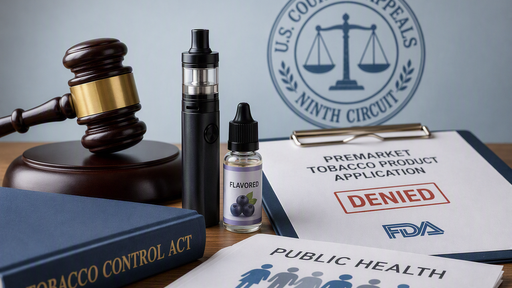
The U.S. Court of Appeals for the Ninth Circuit upheld the FDA’s denial of MH Global LLC’s applications to market flavored electronic nicotine delivery systems (ENDS). The court ruled that FDA’s comparative-efficacy framework, which requires applicants to show that flavored products provide greater cessation or switching benefits than tobacco-flavored alternatives, is consistent with the Tobacco Control Act’s “appropriate for the protection of the public health” standard. The court also found that FDA was not required to establish the framework through notice-and-comment rulemaking.
Aug.26
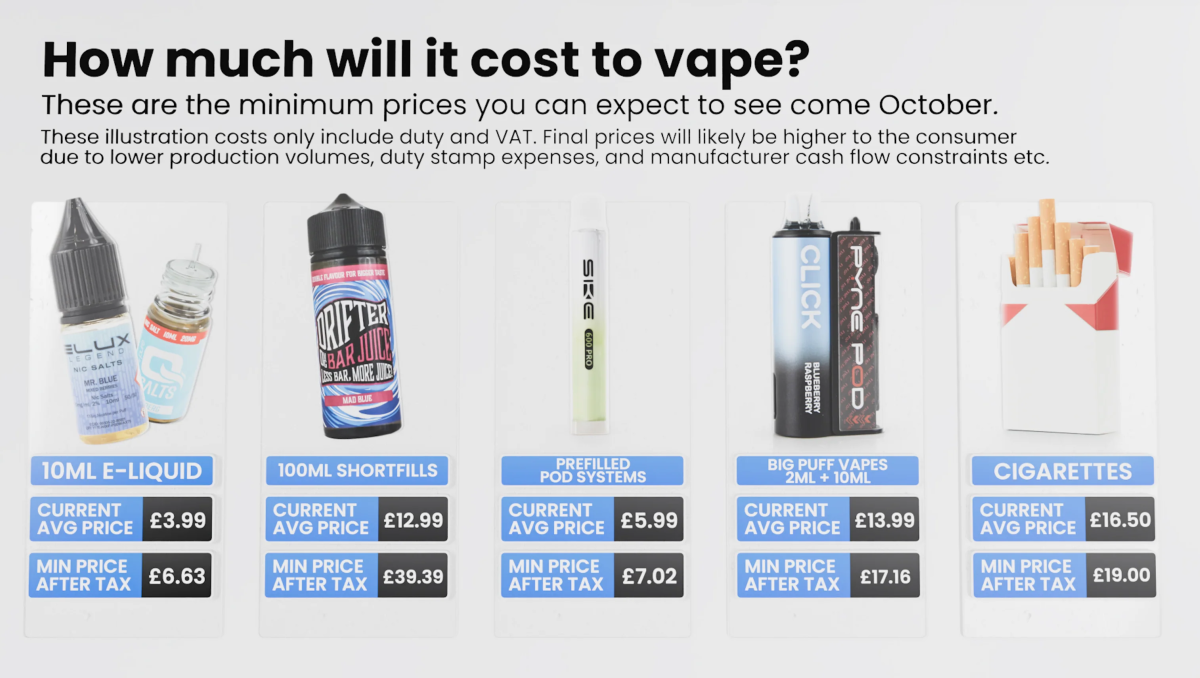
UK Vape Tax Countdown: Retailer Vape HQ Estimates 100ml E-liquid Prices Could Rise From £12.99 to £39.39, While Pod Kits Increase Less Than 10%
The UK’s Vaping Products Duty (VPD), scheduled to take effect in October 2026, is prompting retailers to assess how different vape categories may be affected. UK retailer Vape HQ has estimated potential price changes under the new volume-based tax system, showing that 100ml shortfill e-liquids could see prices rise from around £12.99 to £39.39, a 203% increase, while 2ml prefilled pod vape kits could rise from £5.99 to £6.52, an increase of about 9%. The estimates highlight how a volume-based tax structure creates uneven cost impacts across product categories.
Aug.19
Iowa Enforces Vape Registry Law as Retailers Warn Product Limits Could Increase Store Pressure
Iowa has begun enforcing its vape registry law, requiring vape products to be registered before they can be legally sold in the state. The move follows a decision by the U.S. Court of Appeals for the Eighth Circuit to lift an injunction that had blocked enforcement. Retailers have warned that tighter product availability rules could increase pressure on vape shops. One Iowa retailer said that if only a limited number of products remain available, many stores could face significant business challenges.
Aug.06
Couche-Tard Posts Double-Digit U.S. Same-Store Growth in Other Nicotine Products, Led by Pouches
Alimentation Couche-Tard said U.S. same-store sales in its “other nicotine products” category grew at a double-digit rate in the first quarter of fiscal 2027, led by nicotine pouches, while overall U.S. same-store merchandise revenues increased 1.7%. The company also said its Canadian nicotine business continued to face regulatory pressure and illicit-market headwinds. The U.S. performance coincides with Couche-Tard's participation in efforts to reopen Canadian convenience-store access to authorized nicotine pouches, though the company has not established a direct causal link between the two.
Sep.14