According to a report by British media outlet Shares Magazine on January 29th, the UK government recently announced a ban on the sale of disposable e-cigarettes, causing a sharp decline in the stock prices of e-cigarette suppliers Supreme (SUP) and Chill Brands (CHLL) during morning trading. Specifically, Supreme's stock price dropped by over 6% to 98.50 pence, while Chill Brands' stock price plummeted by over 20% to 3 pence.
Last year, British Prime Minister Rishi Sunak announced at the Conservative Party conference that he would implement strict measures to restrict the legal age for smoking and prevent youth smoking. However, this ban did not have an impact on British American Tobacco (BATS). On the contrary, the company's stock price rose over 1% to £23.72 in early morning trading.
FTSE 100 companies expressed their support last November for a new regulation that would enable the e-cigarette industry in the UK to achieve a smoke-free status. According to Russ Mould, the UK chief of the company, they believe that minors should not be using e-cigarettes, which is why they wish to prohibit the sale of candy, dessert, and soft drink-flavored e-cigarettes. Additionally, they hope to introduce new management regulations for the sales channels and methods of e-cigarettes.
A financial advisor from investment firm AJ Bell has commented on the increasing sales of e-cigarettes in recent years, noting that many manufacturers and suppliers have been capitalizing on this trend by introducing more products. However, strict government regulations on e-cigarettes could potentially impede the company's profits. This applies to both Chancellor Sunak's recent remarks and the government's overarching desire to discourage young people from smoking.
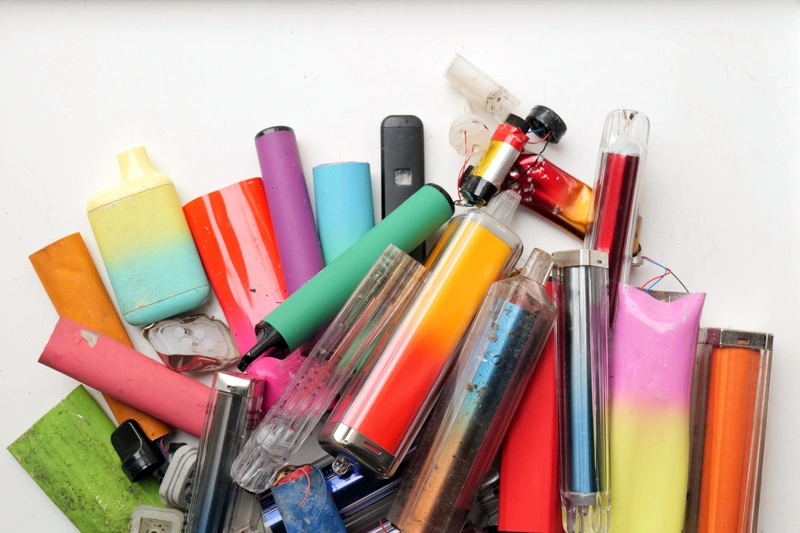
This decision to ban disposable e-cigarettes has been welcomed by the Waste and Resources Action Programme (WRAP). The organization states that the use of single-use e-cigarettes consumes a large amount of natural resources and contributes to plastic and electronic waste, causing environmental pollution. Moreover, disposable e-cigarettes can potentially trigger fires in waste disposal facilities, requiring the amount of lithium equivalent to 5000 electric car batteries each year.
According to estimates, approximately five million disposable e-cigarettes are discarded every week, equivalent to eight discards per second. Despite the availability of reusable e-cigarettes to aid in smoking cessation, and the association between disposable e-cigarettes and children's usage, WRAP strongly supports the ban.
"UK Disposable E-Cigarette Ban" Series Report
Policy Updates
【1】UK Government Announces Ban on Disposable E-Cigarettes
【2】Original Text of UK Government's Disposable Ban Announcement
Market Dynamics
【1】After UK Disposable Ban: Retailers Clearing Stock, Major Distributors Turning to E-liquids and Open-Systems
【2】UK Announces Disposable E-Cigarette Ban: Smoore and Yinghe Technology Stock Prices Decline
Various Perspectives
【1】Black Market or Opportunity? Insiders' Perspectives on UK Disposable Ban
Business Review
【1】Disposable Ban Impact: Is Smoore's Strategic Layout Empty Again?
We welcome news tips, article submissions, interview requests, or comments on this piece.
Please contact us at info@2firsts.com, or reach out to Alan Zhao, CEO of 2Firsts, on LinkedIn
Notice
1. This article is intended solely for professional research purposes related to industry, technology, and policy. Any references to brands or products are made purely for objective description and do not constitute any form of endorsement, recommendation, or promotion by 2Firsts.
2. The use of nicotine-containing products — including, but not limited to, cigarettes, e-cigarettes, nicotine pouchand heated tobacco products — carries significant health risks. Users are responsible for complying with all applicable laws and regulations in their respective jurisdictions.
3. This article is not intended to serve as the basis for any investment decisions or financial advice. 2Firsts assumes no direct or indirect liability for any inaccuracies or errors in the content.
4. Access to this article is strictly prohibited for individuals below the legal age in their jurisdiction.
Copyright
This article is either an original work created by 2Firsts or a reproduction from third-party sources with proper attribution. All copyrights and usage rights belong to 2Firsts or the original content provider. Unauthorized reproduction, distribution, or any other form of unauthorized use by any individual or organization is strictly prohibited. Violators will be held legally accountable.
For copyright-related inquiries, please contact: info@2firsts.com
AI Assistance Disclaimer
This article may have been enhanced using AI tools to improve translation and editorial efficiency. However, due to technical limitations, inaccuracies may occur. Readers are encouraged to refer to the cited sources for the most accurate information.
We welcome any corrections or feedback. Please contact us at: info@2firsts.com