Key points:
Policy Core: The UK plans to require e-cigarette retailers and online sellers of electronic products to pay for the disposal of devices, following the "polluter pays principle."
Background and Goal: Currently, UK businesses bear the cost of electronic waste disposal, putting them at a disadvantage compared to overseas online competitors; the new measure aims to end the "disposable culture," promote the circular economy, reduce illegal dumping, and increase recycling investment.
Specific Measures: Online retailers must register and report sales data to determine the fee schedule; a new category for e-cigarettes will be added, clarifying that producers are responsible for the disposal costs.
According to a report by The Guardian on August 12th, e-cigarette retailers will be required to pay for the disposal of electronic waste under plans announced by the British government.
Ministers announced measures to provide funding for electronic waste recycling, stating that they aim to "end the disposable culture in the UK.
According to the "polluters pay principle," online retailers of electronic products, including microwaves and computers, will be required to fund the costs of recycling these products after they have been disposed of.
Currently, businesses in the UK bear the cost of collecting and processing electronic waste, with ministers stating that this puts them at a disadvantage compared to online competitors based overseas.
The new measures are expected to attract investments in the recycling industry to prevent these electronic devices from being illegally dumped in rural areas or abandoned on the streets. Industry estimates from the non-profit organization Material Focus, dedicated to improving the electronic recycling situation in the UK, show that over 100,000 tons of appliances (such as irons and microwaves) are discarded in the UK every year.
The government stated that the fees imposed on these online retailers will help improve the collection and disposal of waste by local authorities, and ensure increased investment in crucial recycling infrastructure.
Companies like Amazon will be required to register with the Environment Agency and report sales data of their overseas sellers in the UK, which will be used to calculate how much they should be charged to provide funding for the recycling of these items.
Mary Creagh, Minister for Circular Economy, stated: "We are committed to transitioning to a circular economy, where the use of electronics such as laptops and toasters will be extended. Ensuring online markets pay their fair share of the costs for electronic waste disposal will increase recycling rates, create a level playing field for UK retailers, promote growth through our reform plan, and make the system fairer overall.
The electronics company welcomes this change. Paula Coughlan, Chief Sustainability Officer of Currys, said, "We welcome this positive change, as it helps to create a more level playing field for retailers in the UK. It is important that the responsibility for the safe disposal of electronic waste is shared fairly, and we are pleased that the government has listened to our views and those of other industry leaders. In addition to making online markets pay for the waste they generate, we should go further by setting higher targets and incentivizing investment in waste clean-up efforts.
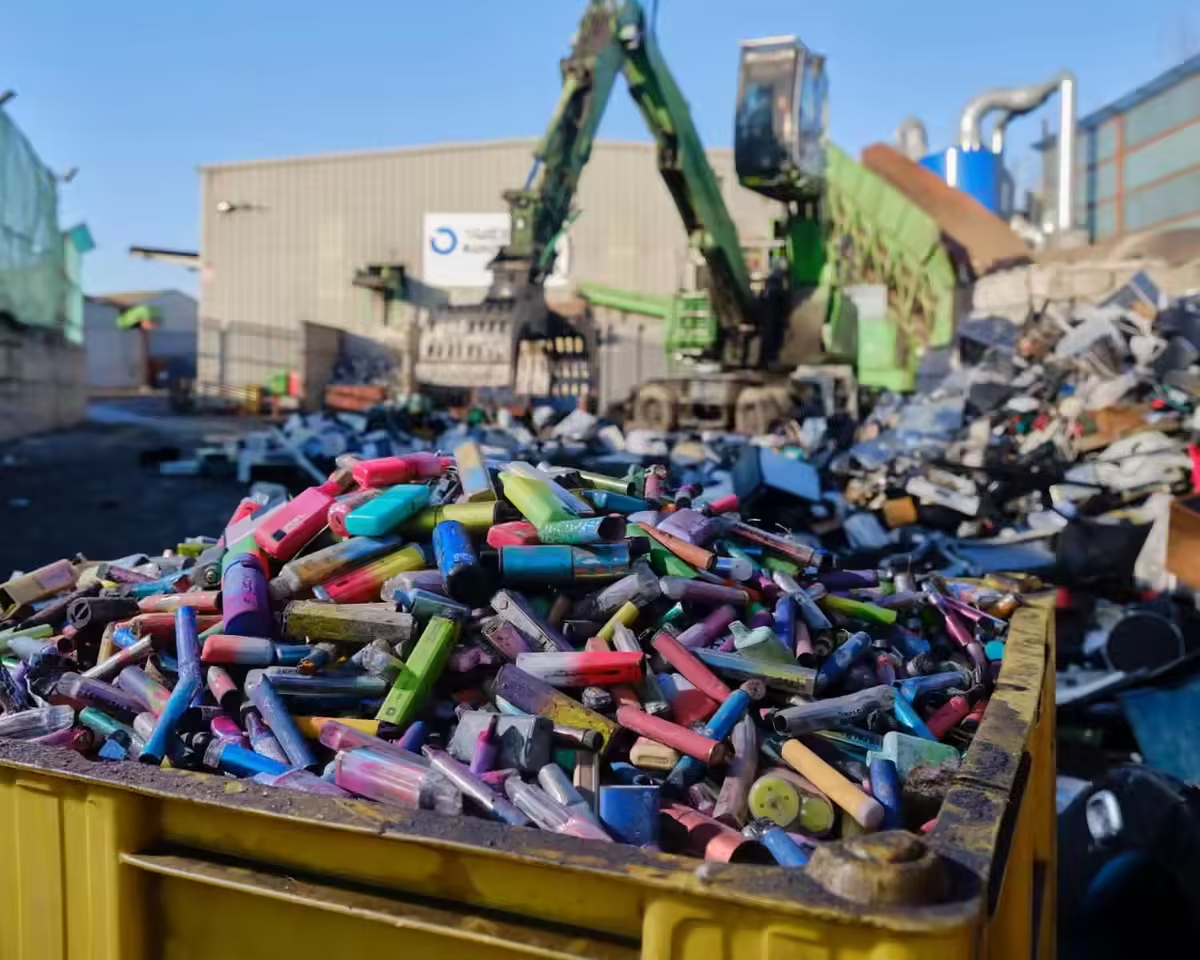
The government has introduced a new category for e-cigarettes to ensure that the costs of collection and handling are fairly borne by producers.
In recent years, the increasingly popular e-cigarettes contain materials such as lithium and copper. "Material Focus" found that the amount of rare earth elements discarded in the past three years is enough to supply over 16,000 electric cars.
Scott Butler, executive director of "Material Focus," stated: "By understanding how many e-cigarettes are being sold, the government can set targets to ensure that e-cigarette producers make a fair contribution to the recycling costs of these products.
We welcome news tips, article submissions, interview requests, or comments on this piece.
Please contact us at info@2firsts.com, or reach out to Alan Zhao, CEO of 2Firsts, on LinkedIn
Notice
1. This article is intended solely for professional research purposes related to industry, technology, and policy. Any references to brands or products are made purely for objective description and do not constitute any form of endorsement, recommendation, or promotion by 2Firsts.
2. The use of nicotine-containing products — including, but not limited to, cigarettes, e-cigarettes, nicotine pouchand heated tobacco products — carries significant health risks. Users are responsible for complying with all applicable laws and regulations in their respective jurisdictions.
3. This article is not intended to serve as the basis for any investment decisions or financial advice. 2Firsts assumes no direct or indirect liability for any inaccuracies or errors in the content.
4. Access to this article is strictly prohibited for individuals below the legal age in their jurisdiction.
Copyright
This article is either an original work created by 2Firsts or a reproduction from third-party sources with proper attribution. All copyrights and usage rights belong to 2Firsts or the original content provider. Unauthorized reproduction, distribution, or any other form of unauthorized use by any individual or organization is strictly prohibited. Violators will be held legally accountable.
For copyright-related inquiries, please contact: info@2firsts.com
AI Assistance Disclaimer
This article may have been enhanced using AI tools to improve translation and editorial efficiency. However, due to technical limitations, inaccuracies may occur. Readers are encouraged to refer to the cited sources for the most accurate information.
We welcome any corrections or feedback. Please contact us at: info@2firsts.com