US Supreme Court Hears Oral Arguments on RJR Vapor-FDA Dispute

Jan.23.2025
US Supreme Court Hears Oral Arguments on RJR Vapor-FDA Dispute
Tobacco Reporter: US Supreme Court hears oral arguments between RJR Vapor and FDA over jurisdictional issue.

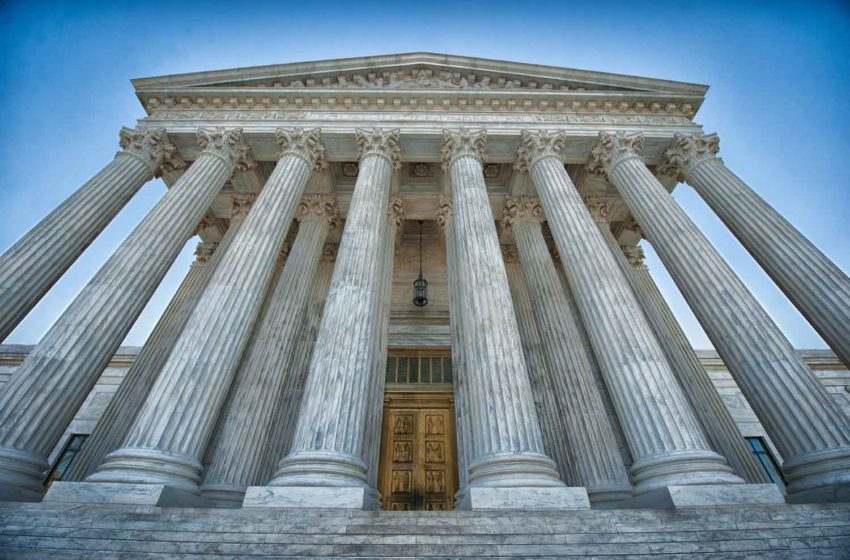
According to a report from Tobacco Reporter on January 21st, the United States Supreme Court heard oral arguments on Tuesday (21st) between British American Tobacco subsidiary RJR Vapor and the US Food and Drug Administration (FDA).


The FDA claims that the Tobacco Control Act allows cases to be tried in the District of Columbia Circuit Court, the jurisdiction where the plaintiff is located, or their primary place of business. However, the British-American Tobacco subsidiary, RJR Vapor, is attempting to challenge the FDA in the Fifth Circuit Court of Appeals in Louisiana.


RJR Vapor has teamed up with retailer Avail Vapor in Texas and a convenience store association in Mississippi that sells RJR products to submit a request for a review. Both states are in the Fifth Circuit.


The North Carolina headquarters of RJR Vapor falls under the Fourth Circuit, where an appeal against the FDA's rejection of their application has been dismissed. The Fifth Circuit Court had criticized the FDA for making it nearly impossible for companies to comply with regulations, calling it a "needle in a haystack" situation. RJR Vapor and retailers argue that regulations allow "any adversely affected person" to challenge the FDA, including retailers in the Fifth Circuit who may face closure risks due to selling Vuse products.


In 2016, the FDA rejected RJR Vapor's application, stating that the product was "not appropriate for protecting public health." The FDA believed that their decision primarily targeted manufacturers and had an indirect and insignificant impact on retailers. Allowing this case to be heard in the Fifth Circuit could potentially lead to regulatory evasion and encourage "forum shopping.


As a result, the FDA has filed a petition with the Supreme Court to review the case, and the Supreme Court agreed to hear it in October 2024. RJR Vapor argues that the Supreme Court does not have the authority to rule on such a "non-final" case and hopes that it will be dismissed while still pending.


We welcome news tips, article submissions, interview requests, or comments on this piece.

Please contact us at info@2firsts.com, or reach out to Alan Zhao, CEO of 2Firsts, on LinkedIn


Notice

1.  This article is intended solely for professional research purposes related to industry, technology, and policy. Any references to brands or products are made purely for objective description and do not constitute any form of endorsement, recommendation, or promotion by 2Firsts.

2.  The use of nicotine-containing products — including, but not limited to, cigarettes, e-cigarettes, nicotine pouchand heated tobacco products — carries significant health risks. Users are responsible for complying with all applicable laws and regulations in their respective jurisdictions.

3.  This article is not intended to serve as the basis for any investment decisions or financial advice. 2Firsts assumes no direct or indirect liability for any inaccuracies or errors in the content.

4.  Access to this article is strictly prohibited for individuals below the legal age in their jurisdiction.


Copyright


This article is either an original work created by 2Firsts or a reproduction from third-party sources with proper attribution. All copyrights and usage rights belong to 2Firsts or the original content provider. Unauthorized reproduction, distribution, or any other form of unauthorized use by any individual or organization is strictly prohibited. Violators will be held legally accountable.

For copyright-related inquiries, please contact: info@2firsts.com


AI Assistance Disclaimer


This article may have been enhanced using AI tools to improve translation and editorial efficiency. However, due to technical limitations, inaccuracies may occur. Readers are encouraged to refer to the cited sources for the most accurate information.

We welcome any corrections or feedback. Please contact us at: info@2firsts.com

Australia’s TGA Places Nicotine Pouches Under Therapeutic Goods Rules From July 24, Blocking Imports of Unapproved Products
Australia is strengthening controls on nicotine pouches under its existing therapeutic goods regulatory framework. According to the Therapeutic Goods Administration (TGA), nicotine pouch products must meet regulatory requirements, and unapproved products cannot be legally imported. The move follows Australia’s broader approach of maintaining strict oversight of nicotine products, including nicotine-containing vapes. As nicotine pouches expand globally, Australia’s regulatory approach highlights growing differences in how countries manage emerging smoke-free nicotine products.
Regulations
Jul.27
Philippine Customs Seizes $2.22 Million in Misdeclared Vape Products From China
The Philippine Bureau of Customs said it intercepted nine containers of misdeclared vape and vape-related products from China at the Manila International Container Port, with an estimated value of about ₱137 millionor, about $2.22 million.
Jul.10
Product | VEEV One Plus Goes Official as PMI Strengthens Its Closed-Pod Vaping Portfolio
Philip Morris International (PMI) has officially introduced the VEEV One Plus, the next-generation device in its closed-pod vaping lineup. The product is now featured on the official VEEV website in Portugal, bringing hardware upgrades including a new dual-pod storage system, a larger battery, and an updated device design while maintaining compatibility with existing VEEV One pods.
Jul.02
Hunan China Tobacco Industry files heated tobacco device patent featuring adult-user identification through pressure sensing
China-based Hunan China Tobacco Industry Co., Ltd. and Shenzhen Baisha Technology Co., Ltd. have filed a patent application covering an adult-user identification mechanism for heated tobacco devices. The patent proposes using flexible pressure sensors installed in the device grip area to collect pressure distribution patterns generated when users hold the device. The system evaluates factors including effective contact area, grip shape and contact duration, and combines roller movement detection to determine whether unlocking conditions are met. The filing reflects exploration of device-level user recognition and smarter interaction technologies for heated tobacco products (HTPs).
Aug.05
Adani’s Mumbai Airport Duty-Free Shops Face Scrutiny Over Nicotine Pouch Sales in India
An Indian investigation found that duty-free shops at Mumbai international airport operated by billionaire Gautam Adani’s business group sold nicotine pouches in breach of the law, Reuters reported, in a case that could shape how India regulates sales of new nicotine products at airport retail outlets.
Jul.08
Research | Swedish Study Finds Oral Lesions in 79% of Examined Nicotine Pouch Users, With Distinct Tissue Responses
A new Swedish study found oral mucosal lesions in 79% of examined nicotine pouch users and 89% of tobacco-derived snus users, with different tissue-response patterns between the two categories. For manufacturers and regulators, the findings shift attention toward product formulation, flavouring, pouch materials and local oral exposure, not only whether a product contains tobacco. The study found no higher prevalence of caries or periodontal disease, but it could not establish causality, long-term outcomes or differences between individual products or designs.
Special Report
Jul.27