USITC terminates investigation on disposable e-cigarette devices after Reynolds Tobacco withdraws complaint

Apr.10.2025
USITC terminates investigation on disposable e-cigarette devices after Reynolds Tobacco withdraws complaint
US ITC terminates 337 investigation into disposable e-cigarette devices following Reynolds Tobacco's withdrawal, leaving potential for future complaints.

Key Point:

  1. The U.S. International Trade Commission (ITC) has decided not to initiate a review of the termination of the 337 investigation related to disposable e-cigarette devices. The case has officially ended, as Reynolds Tobacco voluntarily withdrew its complaint.
  2. The lawsuit was initiated by Reynolds Tobacco Company and its e-cigarette subsidiary in October 2023, alleging that multiple companies in the US are engaged in false advertising, misrepresentation of origin, and unfair competition practices in the sale of disposable e-cigarette products. They are seeking injunctions and prohibitions against these products.
  3. Renault filed a motion to withdraw the lawsuit in January 2025. The Chief Administrative Judge granted the motion in March, ruling to terminate the investigation and reject the defendant's additional requests regarding economic compensation and future litigation restrictions. It was made clear that this termination does not impact the right to file a future appeal.

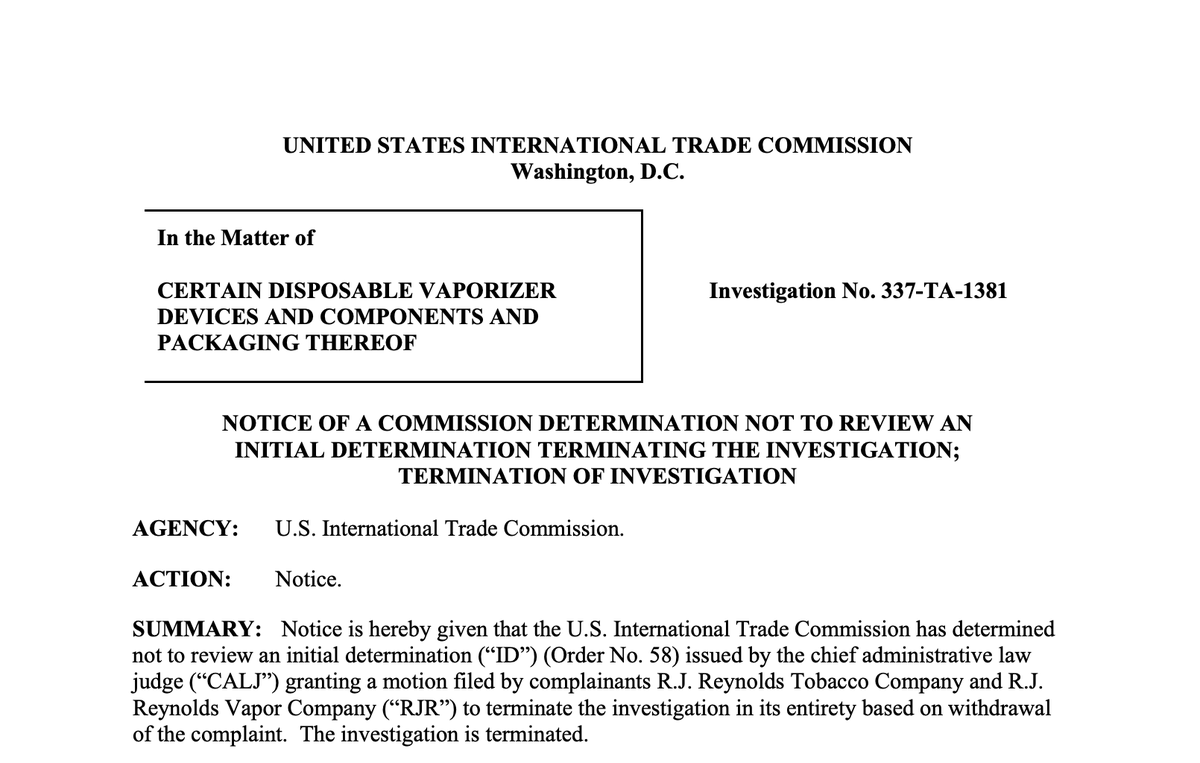
Recently, the United States International Trade Commission (USITC) issued a notice stating that they will no longer review the Chief Administrative Law Judge's (CALJ) Initial Determination (ID) to terminate the investigation of "Certain Disposable E-Cigarette Devices and Components Thereof and Packaging" (Investigation No. 337-TA-1381). This investigation has been officially terminated. The termination was based on a motion filed by the complainant, Reynolds Tobacco company (R.J. Reynolds Tobacco Company) and its subsidiary R.J. Reynolds Vapor Company (RJR), to voluntarily withdraw their complaint.


The investigation was initially launched on October 13, 2023, when Reynolds Tobacco Company filed a 337 investigation application to the U.S. International Trade Commission (ITC), claiming that the product being exported from the U.S., imported into the U.S., and sold in the U.S. violated U.S. Section 337 (false advertising, fictitious origin labels, unfair competition). Reynolds Tobacco Company requested the ITC to issue a general exclusion order or a limited exclusion order, as well as a cease and desist order.


On December 15, 2023, an investigation was initiated by the RJR based on appeals. The appeals alleged that multiple companies had violated Section 337 of the 1930 Tariff Act, causing substantial harm or threats to relevant industries in the United States. The investigation involves multiple companies from both the United States and China.


During the investigation, RJR proposed a motion on January 10, 2025 to terminate the entire investigation based on the withdrawal of the appeal. Although some defendants did not oppose the termination, they requested certain conditions to alleviate their financial burden and restrict RJR's future actions, which were not supported by the Chief Administrative Judge. The Chief Administrative Judge issued a preliminary ruling (ID, Order No. 58) on March 7, 2025 approving the termination of the investigation, but made it clear that the termination was "without prejudice" and rejected the defendants' request for additional conditions. The defendants then requested a review of the preliminary ruling by the committee, seeking to impose conditions, but the committee voted on April 8, 2025 not to conduct a review and upheld the preliminary ruling.


The committee noted in its announcement that the termination of this case could potentially lead to the appellant bringing forward similar complaints in the future. The committee stated that it is too early to determine the specific impact of this termination on future potential appeals, and they have not yet decided how the records of this investigation will be used in future inquiries.


We welcome news tips, article submissions, interview requests, or comments on this piece.

Please contact us at info@2firsts.com, or reach out to Alan Zhao, CEO of 2Firsts, on LinkedIn


Notice

1.  This article is intended solely for professional research purposes related to industry, technology, and policy. Any references to brands or products are made purely for objective description and do not constitute any form of endorsement, recommendation, or promotion by 2Firsts.

2.  The use of nicotine-containing products — including, but not limited to, cigarettes, e-cigarettes, nicotine pouchand heated tobacco products — carries significant health risks. Users are responsible for complying with all applicable laws and regulations in their respective jurisdictions.

3.  This article is not intended to serve as the basis for any investment decisions or financial advice. 2Firsts assumes no direct or indirect liability for any inaccuracies or errors in the content.

4.  Access to this article is strictly prohibited for individuals below the legal age in their jurisdiction.


Copyright


This article is either an original work created by 2Firsts or a reproduction from third-party sources with proper attribution. All copyrights and usage rights belong to 2Firsts or the original content provider. Unauthorized reproduction, distribution, or any other form of unauthorized use by any individual or organization is strictly prohibited. Violators will be held legally accountable.

For copyright-related inquiries, please contact: info@2firsts.com


AI Assistance Disclaimer


This article may have been enhanced using AI tools to improve translation and editorial efficiency. However, due to technical limitations, inaccuracies may occur. Readers are encouraged to refer to the cited sources for the most accurate information.

We welcome any corrections or feedback. Please contact us at: info@2firsts.com

Australia's Illicit Tobacco Market May Have Turned After Five Years of Growth, With Estimates Showing Up to 25% Decline Amid Tax-Cut Debate
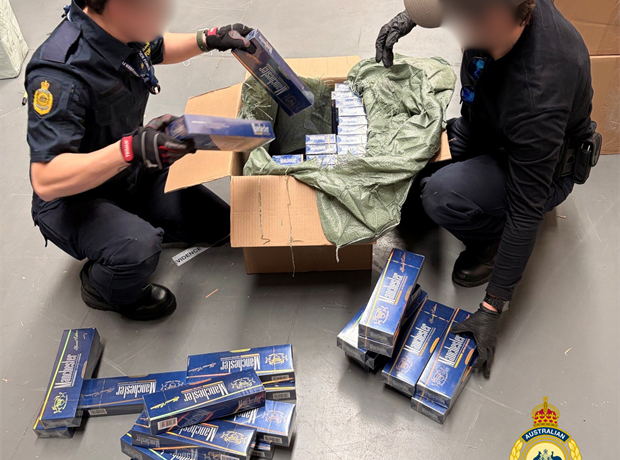
New Australian government estimates released on November 15, 2026, suggest that the country's illicit tobacco market may have contracted for the first time following five years of growth. Estimated market volume fell from a previous peak of 5,972 tonnes to a range of 4,453–5,893 tonnes. The government attributed the change to stronger border enforcement and coordinated domestic operations. Australian Border Force seized more than 2,300 tonnes of illicit tobacco and 13.2 million illicit vaping products in 2025–26, followed by approximately 730 tonnes of illicit tobacco in the first quarter of 2026–27. Separate experimental estimates from the Australian Bureau of Statistics indicate that illicit sources accounted for approximately 80% of nicotine consumption in 2025.
Regulations
Nov.16
Product | KUMI SCENIC 50K Offers Nicotine and 6-Methyl Nicotine Versions as 6-MN Products Appear in Multiple U.S. State Directories, With Louisiana Listing FDA Exemption
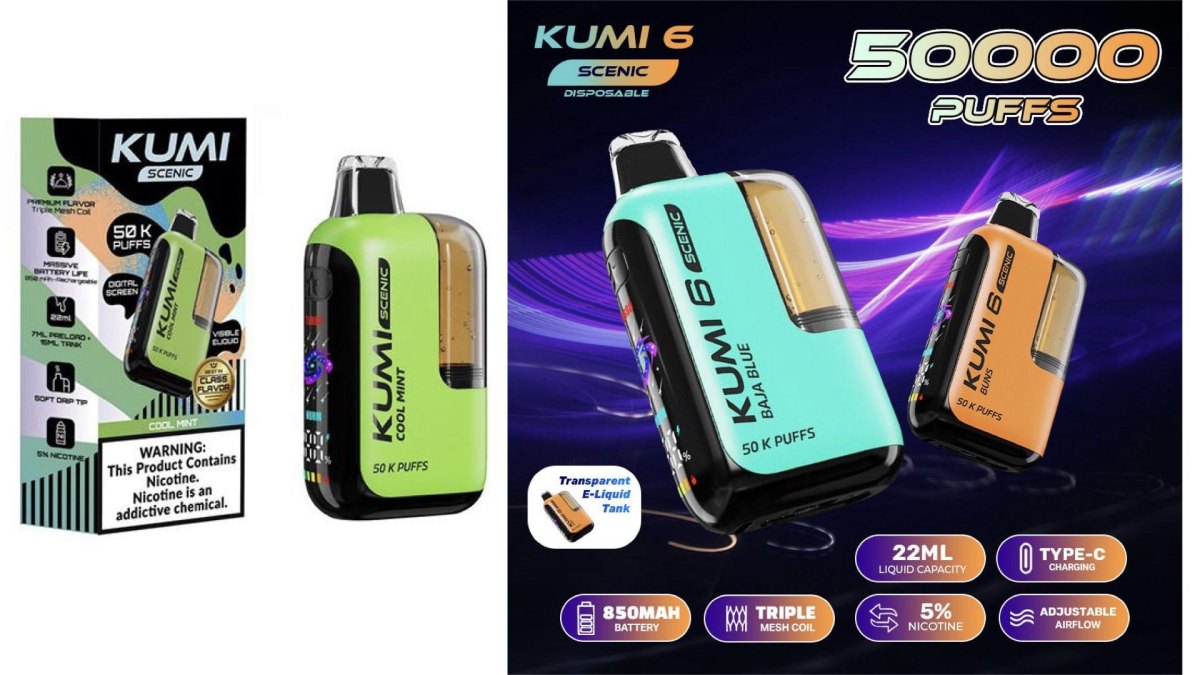
An October 2026 review of U.S. state vapor product directories found KUMI 6 SCENIC 50K listed in Louisiana and Nebraska. Louisiana classifies 20 related product entries as “FDA EXEMPTION.” The SCENIC platform is marketed in both conventional nicotine-salt and NoNic6 formulations, each advertised with 22mL e-liquid capacity and up to 50,000 puffs. U.S. wholesaler Midwest Goods listed both versions in August 2025 with a suggested retail price of $19.99 each. The NoNic6 version is associated with 6-methylnicotine and is also marketed by some distributors as “nicotine-free.”
product
Oct.27
Italy Plans Overhaul of €1.8 Billion Vape Market With Tighter Distribution, Online Sales and Pricing Rules, Alongside Nicotine Pouch Reforms; BAT Calls for Cigarette-Style Controls
British American Tobacco's Italian subsidiary has called for cigarette-style tax warehouses, distribution controls and nationwide uniform retail pricing to be extended to next-generation products. Italy's proposed 2027 budget would overhaul the distribution of e-liquids, nicotine pouches and non-tobacco solid inhalation products. The measures include requiring foreign suppliers to operate through authorized domestic warehouses, abolishing certain fiscal representative arrangements, introducing official e-liquid retail prices, and restricting exclusive sales agreements, tied sales and volume-based incentives. A BAT-backed study presented on November 18 found that 34.2% of monitored online vape retailers offered e-liquids exceeding nicotine concentration limits, while 37.8% of monitored nicotine pouch retailers offered products exceeding the study's reference limits. The budget bill would also bring forward certain tax increases on cigarettes, heated tobacco and e-liquids to July 2027.
Regulations
Nov.25
Australia Adds 6-Methylnicotine to Schedule 9 Prohibited Substances, Effective October 1
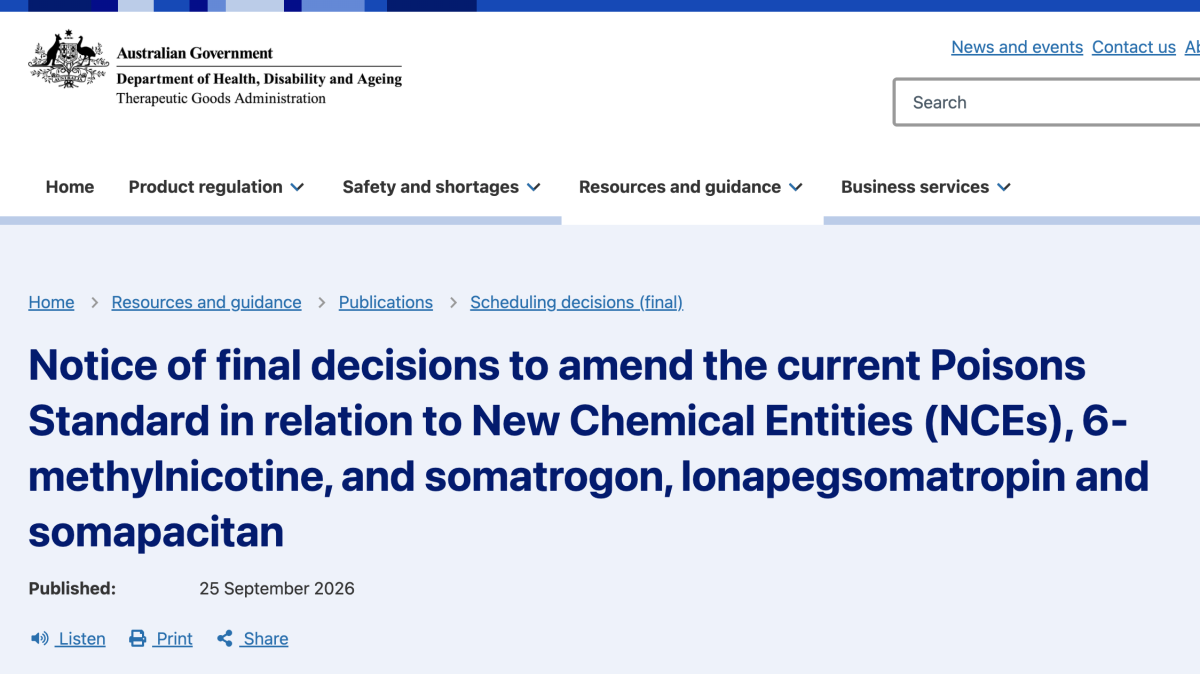
Australia's Therapeutic Goods Administration published a final decision on September 25 to classify 6-methylnicotine as a Schedule 9 prohibited substance under the Poisons Standard, effective October 1, 2026. TGA said the chemical has been reported in e-cigarette liquids sold in Australia and marketed as nicotine-free or nicotine alternatives, while evidence also indicates its use in preparations such as oral pouches. The government originally proposed a Schedule 7 classification but ultimately adopted the stricter Schedule 9 designation, citing acute toxicity, dependence risk, use in unapproved consumer products and misleading marketing.
News
Sep.29 by 2Firsts Perspectives
New York City Opens Lottery for 55 Vape Retail License Slots Across 23 Community Districts, Including 28 in Brooklyn
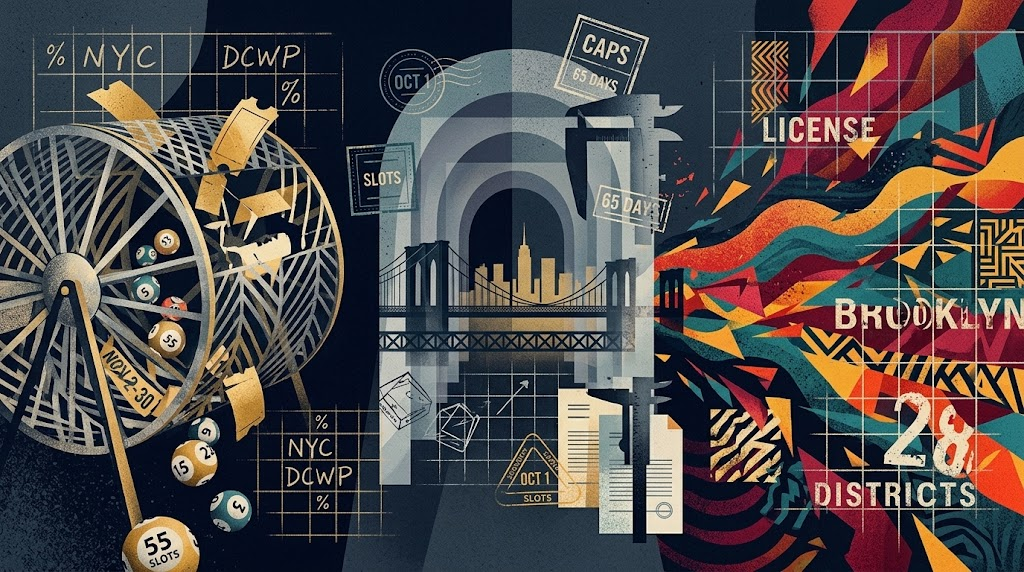
New York City's Department of Consumer and Worker Protection (DCWP) opened applications on November 2, 2026, for a lottery covering tobacco and electronic cigarette retail dealer licenses, with a deadline of 5 p.m. New York local time on November 30. According to the city's October 1 notice, 55 electronic cigarette retail license slots are available across 23 community districts, including 28 in Brooklyn, alongside 322 tobacco retail license slots across 41 districts. Businesses must enter the lottery and, if invited, complete licensing requirements within 65 days. New York City continues to restrict e-cigarette retail sales to tobacco-flavored or unflavored products, while city retail licenses do not replace FDA product marketing authorization.
Market
Nov.04
Wisconsin Vape Directory One Year On: Retailer Reports Four Store Closures and 70% Staff Cuts
Wisconsin's electronic vaping device directory has been fully enforced for more than a year, and local vape retailers say the reduced range of eligible products has contributed to declining sales, store closures and layoffs. Johnny Vapes owner Ben Hall said he has closed four of seven locations and cut about 70% of his staff. State law bars the sale of vaping devices not listed on the Wisconsin Department of Revenue directory and allows penalties of $1,000 per day for each unlisted device sold or offered for sale. In April 2026, the U.S. Court of Appeals for the Seventh Circuit allowed enforcement of the law to continue.
Regulations
Oct.10