Vietnam's Ban on E-Cigarettes May Worsen Tobacco Harm Reduction

Jan.13.2025
Vietnam's Ban on E-Cigarettes May Worsen Tobacco Harm Reduction
Vietnam's plan to ban e-cigarettes may hinder tobacco harm reduction efforts, warns experts. Critics say it may encourage smoking.

According to a report from Manilastandard on January 8th, tobacco harm reduction experts have warned that Vietnam's plan to ban e-cigarettes could deprive smokers of the opportunity to access better alternatives and may cause them to continue smoking.


Asa Saligupta, the head of Thailand's anti-smoking group (ECST), stated that Vietnam's ban on e-cigarettes goes against the global trend of regulation on e-cigarettes and heated tobacco products. He warned that this move could potentially undermine the harm reduction efforts in Southeast Asia.


The ban on e-cigarettes will only push users towards the black market, which is beyond the regulatory agency's control over product quality and standards. Even worse, this will likely tempt e-cigarette users to return to smoking cigarettes, which is the most dangerous way to consume nicotine.


Saligupta recommends that Vietnam should follow in the footsteps of the Philippines by regulating e-cigarettes and other smokeless products to provide smokers with better alternatives and to ensure that these products are not used by minors.


Public health experts have stated that in countries such as the UK, Japan, and Sweden, non-smoking products such as e-cigarettes, heated tobacco, and oral nicotine have helped millions of smokers quit, leading to a rapid decline in smoking rates in these countries.


Anton Israel, chairman of the Philippines Nicotine Consumers Union (NCUP), pointed out that "a ban will only drive these smokeless products underground, resulting in government revenue loss and depriving smokers of better options.


Dr. Lorenzo Mata Jr., chairman of the Quit For Good organization, emphasized the importance of regulating nicotine products and enforcing age restrictions to prevent underage use.


Joey Dulay, the chairman of the Philippine E-Cigarette Industry Association (PECIA), stated that criminalizing the use of technology to reduce the harm of smoking will hinder harm reduction efforts and research and development.


Canadian public health law expert Professor David Sweanor believes that banning e-cigarettes, heated tobacco products, and other smokeless devices is inconsistent with public health policy.


The Vietnamese National Assembly has passed a resolution in early December 2024 to ban the production, trade, import, storage, transportation, and use of e-cigarettes, heated tobacco products, and other related substances starting from 2025.


We welcome news tips, article submissions, interview requests, or comments on this piece.

Please contact us at info@2firsts.com, or reach out to Alan Zhao, CEO of 2Firsts, on LinkedIn


Notice

1.  This article is intended solely for professional research purposes related to industry, technology, and policy. Any references to brands or products are made purely for objective description and do not constitute any form of endorsement, recommendation, or promotion by 2Firsts.

2.  The use of nicotine-containing products — including, but not limited to, cigarettes, e-cigarettes, nicotine pouchand heated tobacco products — carries significant health risks. Users are responsible for complying with all applicable laws and regulations in their respective jurisdictions.

3.  This article is not intended to serve as the basis for any investment decisions or financial advice. 2Firsts assumes no direct or indirect liability for any inaccuracies or errors in the content.

4.  Access to this article is strictly prohibited for individuals below the legal age in their jurisdiction.


Copyright


This article is either an original work created by 2Firsts or a reproduction from third-party sources with proper attribution. All copyrights and usage rights belong to 2Firsts or the original content provider. Unauthorized reproduction, distribution, or any other form of unauthorized use by any individual or organization is strictly prohibited. Violators will be held legally accountable.

For copyright-related inquiries, please contact: info@2firsts.com


AI Assistance Disclaimer


This article may have been enhanced using AI tools to improve translation and editorial efficiency. However, due to technical limitations, inaccuracies may occur. Readers are encouraged to refer to the cited sources for the most accurate information.

We welcome any corrections or feedback. Please contact us at: info@2firsts.com

China STMA Deputy Administrator Meets KT&G COO as Heated Cigarette Rules Advance
Wang Gongcheng, deputy administrator of China’s State Tobacco Monopoly Administration, met KT&G Chief Operating Officer Lee Sang-hak in Shanghai on September 1, according to Oriental Tobacco News. The meeting comes as China seeks public comment on a draft mandatory national standard for heated cigarettes. The report did not disclose the subjects discussed or indicate whether heated tobacco products or market access were addressed.
News
Sep.02
Product | FOGER Introduces Switch Pro 30K Nixodine Pod in U.S. Retail, Bringing 6-MN Related Formulation to High-Capacity Pod Platform
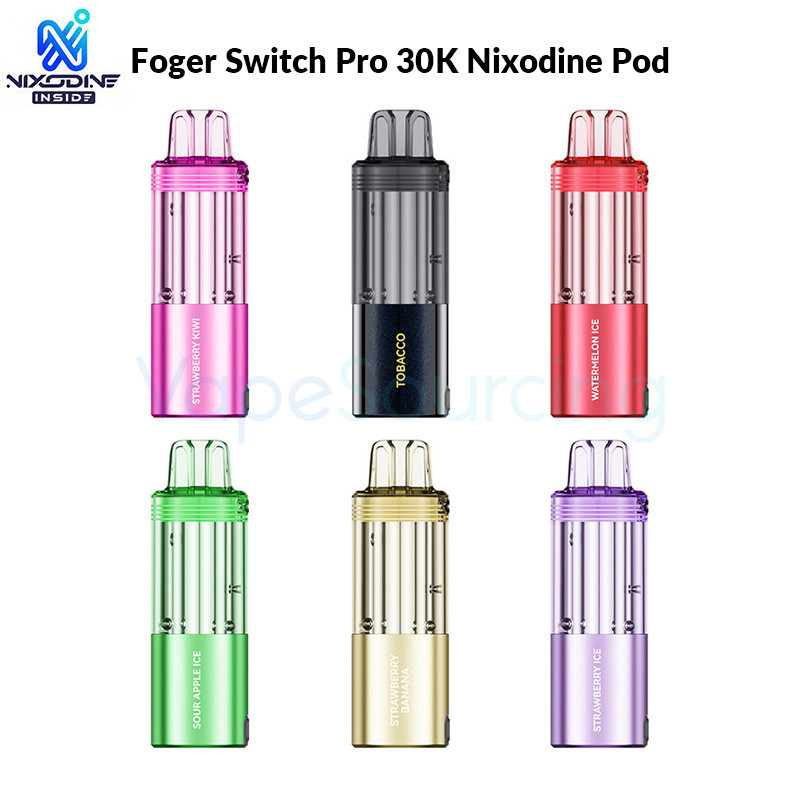
FOGER has introduced the Switch Pro 30K Nixodine Pod in U.S. retail channels, bringing a 6-methylnicotine (6-MN)-related formulation into its reusable Switch Pro 30K pod ecosystem. The product retains the existing reusable dock and magnetic replacement pod architecture, featuring a 19ml prefilled pod, dual-mesh heating and Normal/Boost modes. The Nixodine version is labeled nicotine-free in terms of conventional nicotine but uses a 5% Nixodine-related formulation. The product has appeared in U.S. retail and wholesale channels, with some listings indicating Kentucky-only availability.
Aug.28
Reuters Tracks Big Tobacco’s Shift Beyond Cigarettes as Nicotine Pouches Vie for the Next Growth Curve
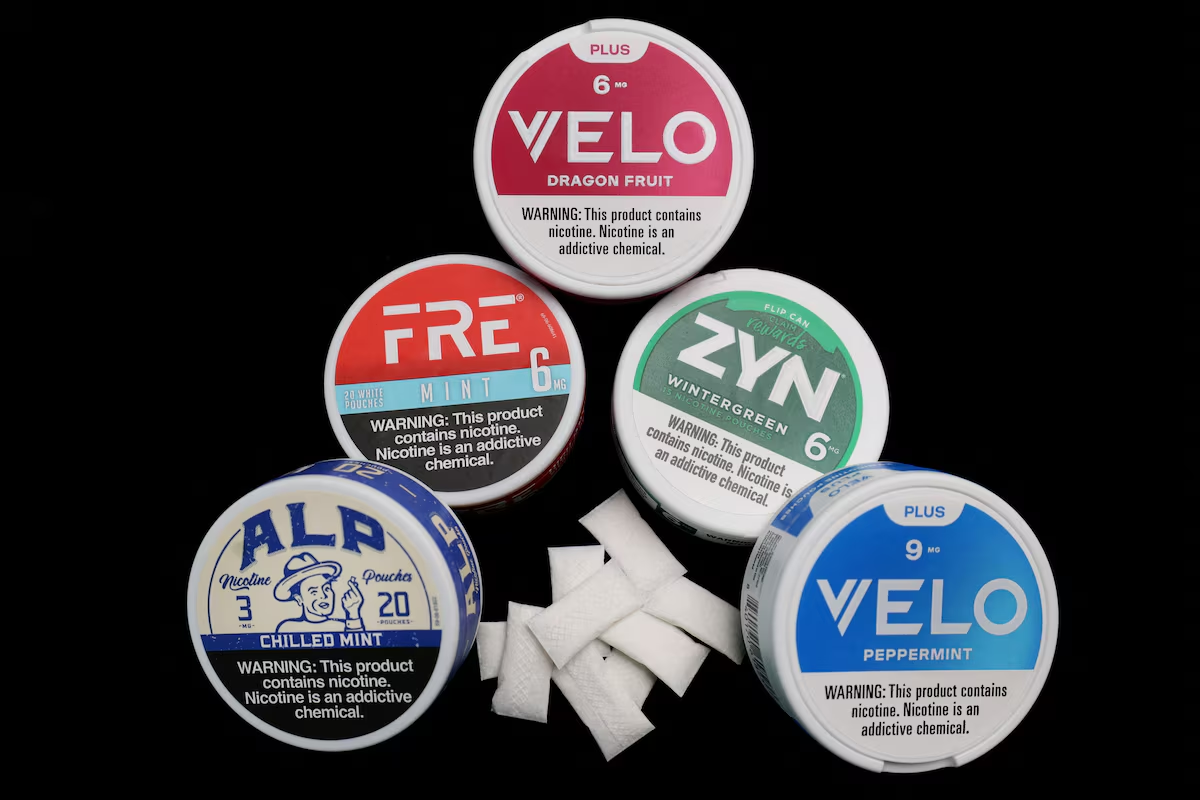
As cigarette markets face long-term pressure, major tobacco companies are increasingly turning to nicotine pouches in search of growth beyond combustible tobacco. Reuters has examined whether nicotine pouches can become the next strategic growth platform for companies including Philip Morris International, British American Tobacco and Japan Tobacco. PMI strengthened its position through the acquisition of Swedish Match and its ZYN brand, while BAT and JTI continue expanding their own nicotine pouch portfolios. The category has gained attention because of its smoke-free, device-free format, but regulation, youth-use concerns and market scale will determine whether it can become a long-term growth engine.
Regulations
Aug.18 by 2Firsts Perspectives
HG Innovation, linked to IMiracle and ELFBAR, wins China patent for 6-methylnicotine salts covering vaping and oral products
HG Innovation Limited has been granted a Chinese invention patent covering 6-methylnicotine salt formulations and their use in oral and vaping products. The technology forms salts between 6-methylnicotine and alicyclic carboxylic acids, with granted claims extending to oral products, atomization substrates and electronic atomization devices. Applicant-generated tests reported differences in oxidation stability, in-vitro cytotoxicity and aerosol heavy-metal performance compared with selected benzoate or lactate controls. HG Innovation is directly linked to the broader IMiracle and ELFBAR business network.
Sep.04
Russia Adds Vapes to “Strategic Goods” List, Illegal Cross-Border Trade Faces Up to Five Years in Prison
Russia will place e-cigarettes and related nicotine products under its “strategic goods” framework from August 20, 2026. According to TVP World’s report published on August 19, the newly listed items include e-cigarettes, electronic smoking devices, vape liquids and nicotine salts. Individuals who illegally move these products across Russia’s customs border or its state border with other Eurasian Economic Union (EAEU) members could face up to five years in prison if shipment values exceed 100,000 rubles (about €1,000), provided all elements of a criminal offence are established.
Aug.20
FDA Authorizes JUUL2, Cites Adult Switching Amid Efforts to Speed PMTA Reviews
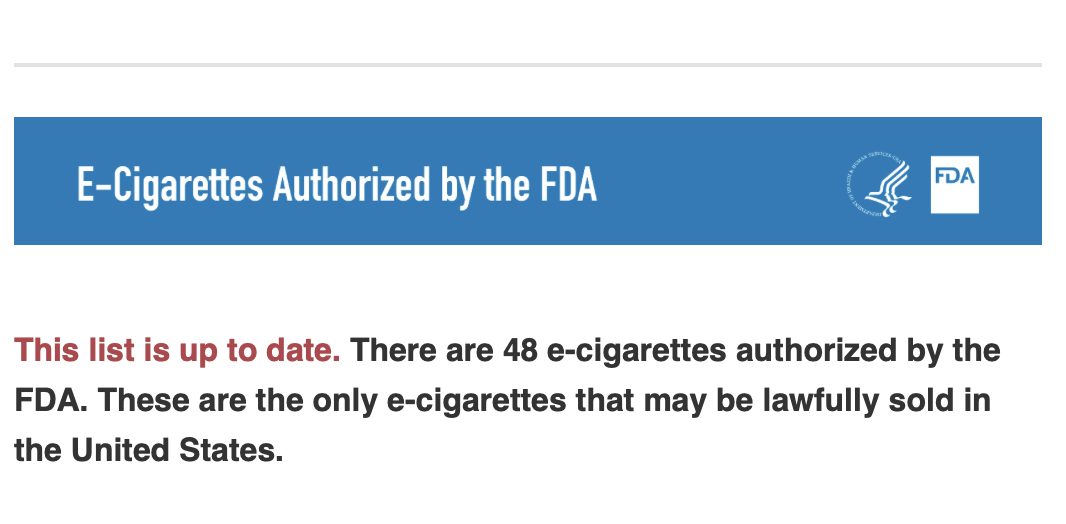
The FDA authorized the JUUL2 device and tobacco- and menthol-flavored pods on Aug. 28, bringing the number of authorized e-cigarette products to 48. The agency highlighted complete switching among adult smokers, with six-week switching rates reaching 28.4%–49.3% for the menthol pod. The decision comes as FDA works to speed PMTA reviews, reduce application backlogs and expand authorized e-cigarette and nicotine-pouch products while maintaining enforcement priorities for unauthorized products.
Regulations
Aug.29