Key Points:
·New regulations: E-cigarette stores must obtain specific permits, flashing lights and related advertisements are prohibited, and new stores cannot be built within one mile of residential areas and schools.
·Regulatory background: Public dissatisfaction has been sparked by the advertising and products of e-cigarette stores, and they are seen as potentially leading to increased e-cigarette use among teenagers.
·Significance: This is the first county-level ordinance in West Virginia to simultaneously restrict hallucinogens and e-cigarettes. Supporters are now pushing for other cities to follow suit.
【2Firsts News Flash】According to WVVA on July 17th, thanks to a new ordinance passed on July 15th by the Raleigh County Commission in West Virginia, regulations on e-cigarette shops have become stricter, aiming to curb the expansion of these popular establishments, especially to prevent them from having a negative impact on children.
Chairman of the Board of Commissioners of Wake County, Greg Duckworth, stated that public dissatisfaction with e-cigarette shops is "quite strong," with some even "pleading for regulation.
Davos said:
“Those flashing lights, the products they are selling, marijuana-related accessories, and prominent signs, we completely do not approve of them. It is time to introduce some regulatory measures, at least to control the expansion speed of e-cigarette stores in the southern region of West Virginia - they are truly ubiquitous.”
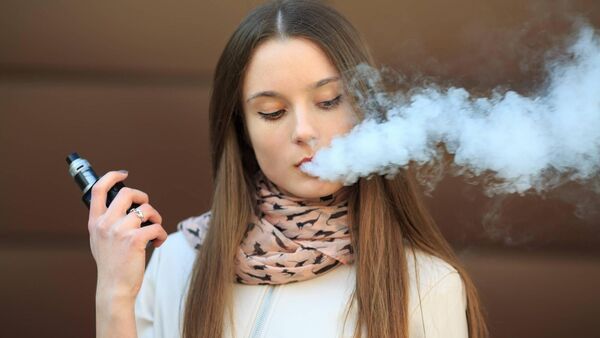
Another concerning issue is that these prominent advertising campaigns, along with the widespread availability of e-cigarettes, have led to an increase in the use of e-cigarettes among children. The Centers for Disease Control and Prevention (CDC) in the United States reports that e-cigarettes are now more popular among children than traditional cigarettes.
“Why do children like e-cigarettes? It is reiterated that this is related to fitting in with a group, the pleasure of using them, and excellent marketing: the related devices are colorful, electronic, visually appealing, fun, and look very attractive, and they come in various flavors, don't they? Whether it's traditional cigarettes or other e-cigarette devices, many of them are carefully designed to attract children.”
Dr. Edwin Leap, an emergency room physician at Princeton Community Hospital of the West Virginia University School of Medicine, explained.
Dr. Li pointed out that although the dangers of modern e-cigarettes are not as severe as earlier products, they may still have harmful effects, especially on the bodies and brains of those in developmental stages. Today, thanks to the new regulations in Raleigh County, e-cigarette shops are restricted in terms of licensing approval, advertising promotion, and location selection.
These shops must now obtain a "conditional use permit"; the use of flashing or moving lights, as well as images related to hallucinogens, marijuana, or other drug paraphernalia (including kratom and delta-8), is no longer allowed; new shops are also prohibited from being built in residential areas, as well as within one mile of schools, daycare centers, or other e-cigarette stores.
According to Dakvos, e-cigarette shops have only a minimal positive impact on employment or the economy, as their potential drawbacks far outweigh any supposed benefits.
“... They attract a young generation to try e-cigarettes, and students and even younger children are buying them. Now, e-cigarettes are everywhere, and one of the significant issues facing our schools (including middle schools and even some elementary schools) is the use of e-cigarettes. The widespread availability of e-cigarettes makes it easy for children to access them, so measures must be taken to control their use.”
Davos said.
This is also the first county-level regulation in West Virginia to restrict e-cigarettes while including hallucinogens in the scope of restrictions.
Supporters of the ordinance - the Wake County Preventive Policy Coalition - are working with the city of Berkeley to push for the passage of a similar law, and are hoping other cities will also create relevant regulations.
We welcome news tips, article submissions, interview requests, or comments on this piece.
Please contact us at info@2firsts.com, or reach out to Alan Zhao, CEO of 2Firsts, on LinkedIn
Notice
1. This article is intended solely for professional research purposes related to industry, technology, and policy. Any references to brands or products are made purely for objective description and do not constitute any form of endorsement, recommendation, or promotion by 2Firsts.
2. The use of nicotine-containing products — including, but not limited to, cigarettes, e-cigarettes, nicotine pouchand heated tobacco products — carries significant health risks. Users are responsible for complying with all applicable laws and regulations in their respective jurisdictions.
3. This article is not intended to serve as the basis for any investment decisions or financial advice. 2Firsts assumes no direct or indirect liability for any inaccuracies or errors in the content.
4. Access to this article is strictly prohibited for individuals below the legal age in their jurisdiction.
Copyright
This article is either an original work created by 2Firsts or a reproduction from third-party sources with proper attribution. All copyrights and usage rights belong to 2Firsts or the original content provider. Unauthorized reproduction, distribution, or any other form of unauthorized use by any individual or organization is strictly prohibited. Violators will be held legally accountable.
For copyright-related inquiries, please contact: info@2firsts.com
AI Assistance Disclaimer
This article may have been enhanced using AI tools to improve translation and editorial efficiency. However, due to technical limitations, inaccuracies may occur. Readers are encouraged to refer to the cited sources for the most accurate information.
We welcome any corrections or feedback. Please contact us at: info@2firsts.com