BAT Kenya Promotes Nicotine Pouch Velo Amid Regulatory Challenges

BAT by 2FIRSTS.ai
Jan.04.2024
BAT Kenya Promotes Nicotine Pouch Velo Amid Regulatory Challenges
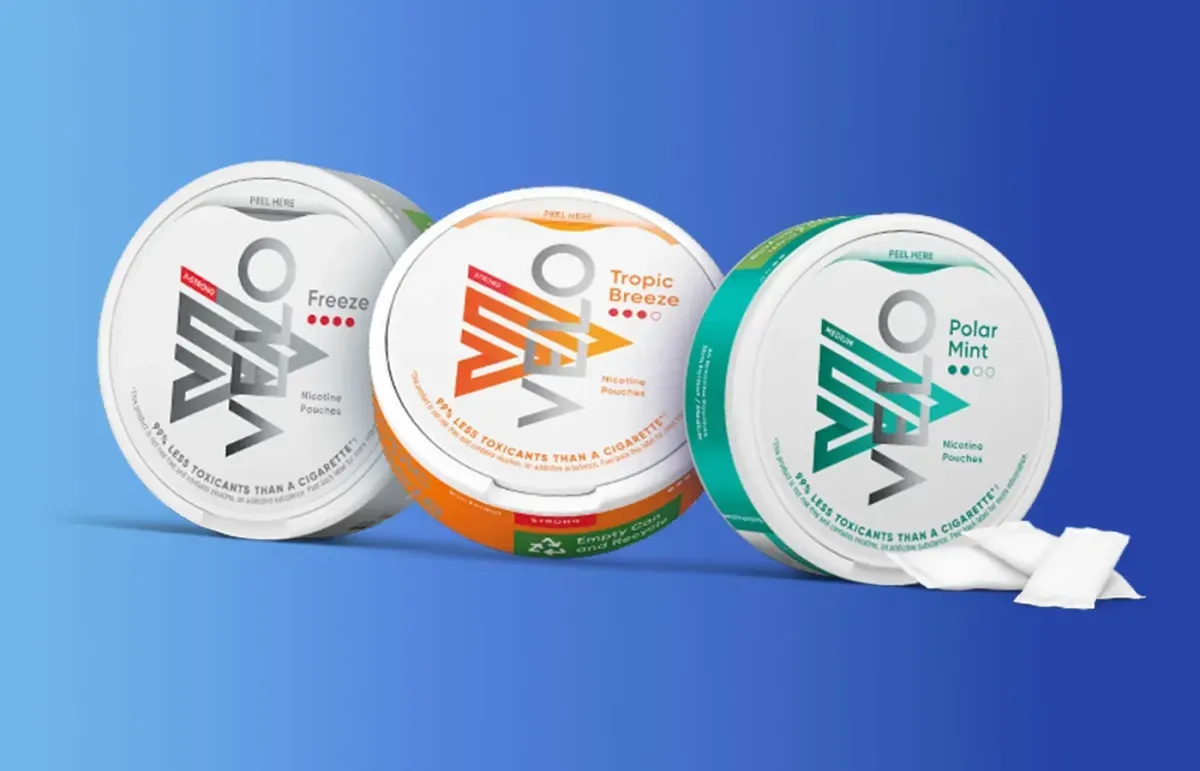
BAT's nicotine pouch product Velo is being actively promoted in Kenya, as the government plans to regulate the item.

According to a report by Businessdailyafrica on January 4th, British American Tobacco Kenya (BAT) is actively promoting its nicotine pouch product, Velo, indicating that the company and the government have found common ground in regulating this commodity.
 

BAT Kenya Promotes Nicotine Pouch Velo Amid Regulatory Challenges
Velo nicotine pouch | Image source: BAT


British American Tobacco (BAT) introduced this product in Kenya in 2019 under the brand name Lyft, with the aim of diversifying their product line and combating the increasing global regulatory and tax pressures on cigarette products. However, in 2020, the government highlighted that this product should be regulated as a tobacco product, leading BAT to halt the marketing of the product, despite having already established a production factory in Kenya.


The company stated that it rebranded this product as Velo in 2022 and started promoting it nationwide. Government officials also mentioned working on regulations to accommodate this new product and similar offerings from other market participants.


British American Tobacco (BAT) states that in Pakistan, there has been robust growth for their brand Velo, with an increase in consumer numbers and an average daily consumption of nearly 5 packs. Furthermore, they have successfully conducted pilot tests in Kenya and are now accelerating their nationwide promotion efforts.


British American Tobacco (BAT) has announced plans to eventually produce smokeless tobacco nicotine pouches in the country. To achieve this, the company intends to utilize a factory worth 2.5 billion Kenyan Shillings ($15.87 million). However, due to regulatory uncertainty, the factory has remained idle. BAT stated, "Although the factory was constructed in 2021, it is still awaiting regulatory approval and has yet to commence operations.


Currently, the major sources of revenue for BAT are the sale of cigarettes and semi-processed tobacco, both in the domestic and export markets. The company achieved a net profit of 2.8 billion Kenyan shillings ($17.78 million) in the first half of the year ending in June, slightly down from the previous year's 2.9 billion. During the same period, net sales also decreased from 14 billion to 13.1 billion Kenyan shillings ($83.17 million).


We welcome news tips, article submissions, interview requests, or comments on this piece.

Please contact us at info@2firsts.com, or reach out to Alan Zhao, CEO of 2Firsts, on LinkedIn


Notice

1.  This article is intended solely for professional research purposes related to industry, technology, and policy. Any references to brands or products are made purely for objective description and do not constitute any form of endorsement, recommendation, or promotion by 2Firsts.

2.  The use of nicotine-containing products — including, but not limited to, cigarettes, e-cigarettes, nicotine pouchand heated tobacco products — carries significant health risks. Users are responsible for complying with all applicable laws and regulations in their respective jurisdictions.

3.  This article is not intended to serve as the basis for any investment decisions or financial advice. 2Firsts assumes no direct or indirect liability for any inaccuracies or errors in the content.

4.  Access to this article is strictly prohibited for individuals below the legal age in their jurisdiction.


Copyright


This article is either an original work created by 2Firsts or a reproduction from third-party sources with proper attribution. All copyrights and usage rights belong to 2Firsts or the original content provider. Unauthorized reproduction, distribution, or any other form of unauthorized use by any individual or organization is strictly prohibited. Violators will be held legally accountable.

For copyright-related inquiries, please contact: info@2firsts.com


AI Assistance Disclaimer


This article may have been enhanced using AI tools to improve translation and editorial efficiency. However, due to technical limitations, inaccuracies may occur. Readers are encouraged to refer to the cited sources for the most accurate information.

We welcome any corrections or feedback. Please contact us at: info@2firsts.com

BAT Japan rolls out limited-edition “Rose Quartz” colourway for glo Hilo, launches new virto click-capsule flavour
British American Tobacco (BAT) Japan will introduce its first Valentine’s-season limited-edition colourway, “Rose Quartz,” for the glo Hilo heated tobacco device lineup, covering both the glo Hilo and glo Hilo Plus. The devices are priced at JPY 3,980 (about $25.2) and JPY 6,980 (about $44.1), respectively, and will go on sale via official channels from Feb. 9. BAT Japan will also launch a new glo Hilo-compatible virto tobacco stick variant, “virto Bright Cherry Click,” on Feb. 2.
Jan.20 by 2FIRSTS.ai
German Environment Minister Backs Ban on Disposable E-Cigarettes, Citing Safety Risks
Germany’s Environment Minister Carsten Schneider has expressed clear support for banning disposable e-cigarettes, citing safety hazards, environmental damage, and waste management risks. While the ban has not yet been finalized, Germany’s parliament has instructed the government to examine the proposal. Several European countries, including Belgium, France, and the UK, have already implemented similar bans.
Dec.30 by 2FIRSTS.ai
PMI reports full-year 2025 results with net revenues of $40.6 billion and smoke-free net revenues were about $16.9 billion
Philip Morris International (PMI) released its Q4 and full-year 2025 results on February 6, 2026. PMI reported full-year net revenues of $40,648 million ($40.6 billion), reported diluted EPS of $7.26 and adjusted diluted EPS of $7.54. PMI said smoke-free net revenues were $16.9 billion and represented 41.5% of total net revenues, with smoke-free products available in 106 markets and over 43 million estimated adult consumers.
Feb.06 by 2FIRSTS.ai
Product | Claiming a “first multi-beverage vaporizer” with refillable juice/cocktail water chamber, PEAKBAR launches new device in the U.S.
PEAKBAR’s new H2O 40K has begun selling through U.S. online retailers including Vape Sourcing. Marketed as the “world’s first multi-beverage vaporizer,” the device is promoted as allowing users to add liquids such as juice and cocktails into a water chamber for pairing. Publicly listed specifications include 20 ml of e-liquid, a rated 40,000 puffs, 0.5% nicotine, a 1,000 mAh rechargeable battery, and two power modes at 22W and 12W.
Jan.22 by 2FIRSTS.ai
Puerto Rico House Files P.C. 1070 to Ban Flavored Vaping Product Sales to Under-21s
According to a statement from the Puerto Rico House of Representatives, House Speaker Carlos Méndez and Rep. Pedro Julio Santiago announced the filing of House Bill 1070 (P.C. 1070), which would prohibit sales to people under 21 of vaping devices, liquids, or cartridges featuring a flavor and/or aroma other than nicotine.
Jan.29 by 2FIRSTS.ai
FDA Details Carcinogenicity Tiering and ELCR Framework as Small Manufacturers Press for Predictability
During the “Toxicological Profile” session at FDA’s Feb 10 PMTA roundtable, officials outlined the carcinogenicity tiering system and Excess Lifetime Cancer Risk (ELCR) framework used in ENDS reviews under the APPH standard. Small manufacturers questioned database transparency, exposure assumptions, and the existence of clear compliance benchmarks. FDA reiterated toxicological risk is assessed case by case within a broader population-level determination.
Feb.11