U.S. FDA and NIH Back Smoking Cessation Innovation, Highlight E-Cigarette Research Needs

Oct.16.2024
U.S. FDA and NIH Back Smoking Cessation Innovation, Highlight E-Cigarette Research Needs
FDA and NIH leaders emphasize the need for smoking cessation treatment research and innovation in a new commentary.

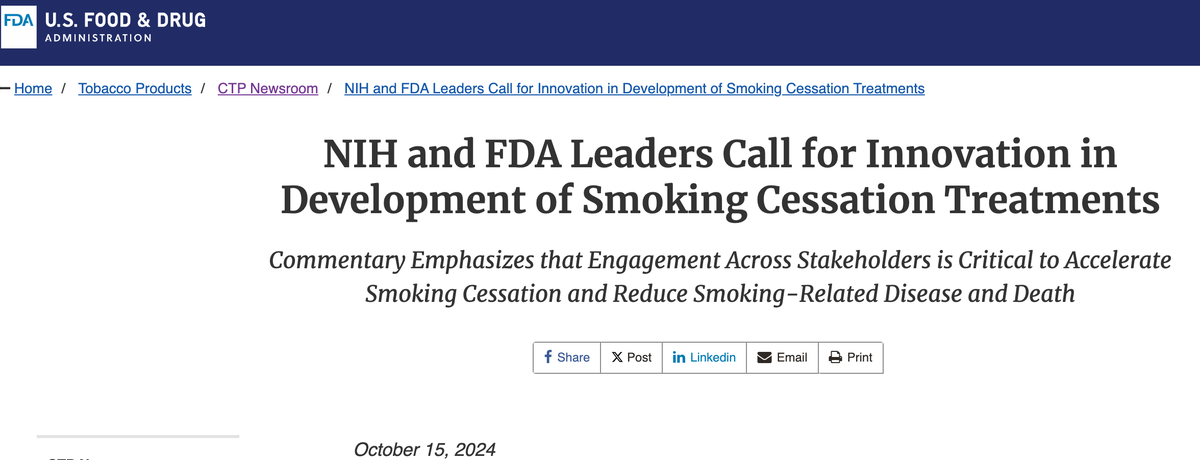
According to a news release posted on the official website of the U.S. Food and Drug Administration (FDA) on October 15, leaders from the National Institutes of Health (NIH) and FDA emphasized the importance of advancing research and development for smoking cessation treatments in a new commentary published in the Annals of Internal Medicine. The authors of the article updated regulatory pathways for smoking cessation treatments and outlined innovative treatment targets, research gaps, and development opportunities. They stressed the crucial role of active participation from clinical physicians, academia, industry, public health agencies, patient groups, and other stakeholders.


Data shows that nearly 500,000 people die from smoking in the United States each year, with over 28 million adults smoking in the country. While most smokers express a desire to quit, only 31% of those intending to quit actually seek counseling or medication treatment. The success rate for quitting smoking each year is less than 8%.


The commentator proposed solutions to these issues, including recommendations from the FDA 2023 Nicotine Replacement Therapy guidelines. In order to inspire innovation in smoking cessation product development, the commentator suggested that in smoking cessation trials, in addition to focusing on abstinence, meaningful endpoints should also be considered, such as clinically significant reduction in smoking, especially if this reduction increases the likelihood of eventual cessation.


The authors also emphasized the urgent need for more in-depth research on e-cigarettes, including long-term health outcomes and rigorous toxicology studies. They also discussed programs being conducted by the NIH and FDA aimed at promoting innovative research on smoking cessation, particularly targeting underrepresented groups in historical research trials.


This commentary was released prior to the joint public meeting of the FDA and NIH on advancing smoking cessation priorities, which is scheduled to take place on October 21 from 9:00 AM to 4:30 PM (Eastern Time).


We welcome news tips, article submissions, interview requests, or comments on this piece.

Please contact us at info@2firsts.com, or reach out to Alan Zhao, CEO of 2Firsts, on LinkedIn


Notice

1.  This article is intended solely for professional research purposes related to industry, technology, and policy. Any references to brands or products are made purely for objective description and do not constitute any form of endorsement, recommendation, or promotion by 2Firsts.

2.  The use of nicotine-containing products — including, but not limited to, cigarettes, e-cigarettes, nicotine pouchand heated tobacco products — carries significant health risks. Users are responsible for complying with all applicable laws and regulations in their respective jurisdictions.

3.  This article is not intended to serve as the basis for any investment decisions or financial advice. 2Firsts assumes no direct or indirect liability for any inaccuracies or errors in the content.

4.  Access to this article is strictly prohibited for individuals below the legal age in their jurisdiction.


Copyright


This article is either an original work created by 2Firsts or a reproduction from third-party sources with proper attribution. All copyrights and usage rights belong to 2Firsts or the original content provider. Unauthorized reproduction, distribution, or any other form of unauthorized use by any individual or organization is strictly prohibited. Violators will be held legally accountable.

For copyright-related inquiries, please contact: info@2firsts.com


AI Assistance Disclaimer


This article may have been enhanced using AI tools to improve translation and editorial efficiency. However, due to technical limitations, inaccuracies may occur. Readers are encouraged to refer to the cited sources for the most accurate information.

We welcome any corrections or feedback. Please contact us at: info@2firsts.com

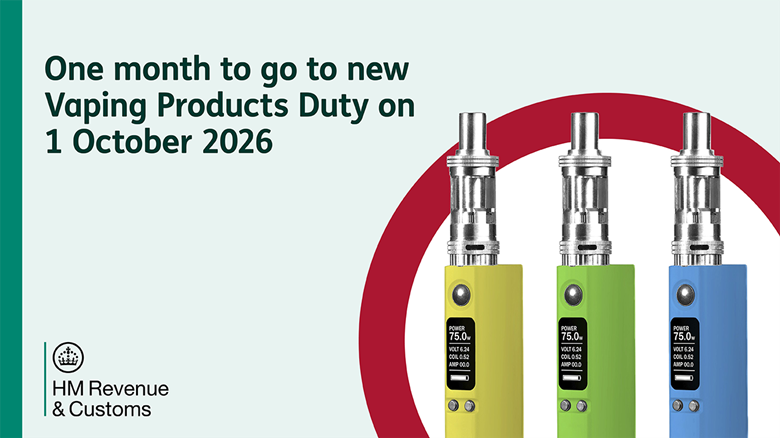
UK HMRC Issues One-Month Countdown Warning, Urges Vape Businesses to Prepare for New Tax Rules
The UK’s Vaping Products Duty and Vaping Duty Stamps Scheme will take effect on October 1, 2026. All vaping liquids manufactured in or imported into the UK will face a flat excise duty of £2.20 per 10ml, whether or not they contain nicotine. Newly manufactured or imported products released onto the UK market from October 1 will require a valid duty stamp, while eligible existing unstamped inventory can continue to be sold through March 31, 2027. From April 1, 2027, all vaping products outside duty suspension must carry a valid stamp.
Sep.03
Malaysia Liquid Nicotine Returns to Poisons List, Leaving Vape Retail and RM354 Million Tax Collection in Legal Uncertainty
Malaysia’s withdrawal of its appeal in a landmark liquid-nicotine case has left a High Court ruling that struck down the 2023 nicotine exemption in force, bringing liquid and gel nicotine used in vaping products back under the Poisons Act 1952. At the same time, the Control of Smoking Products for Public Health Act 2024 continues to provide a regulatory framework for vaping products, creating uncertainty over retail sales, taxation and existing inventory. MPs are calling for nicotine vape sales and excise collection to stop, including refunds of more than RM354 million collected since 2023, while industry and consumer groups are asking the government to clarify the current legal position.
Sep.04
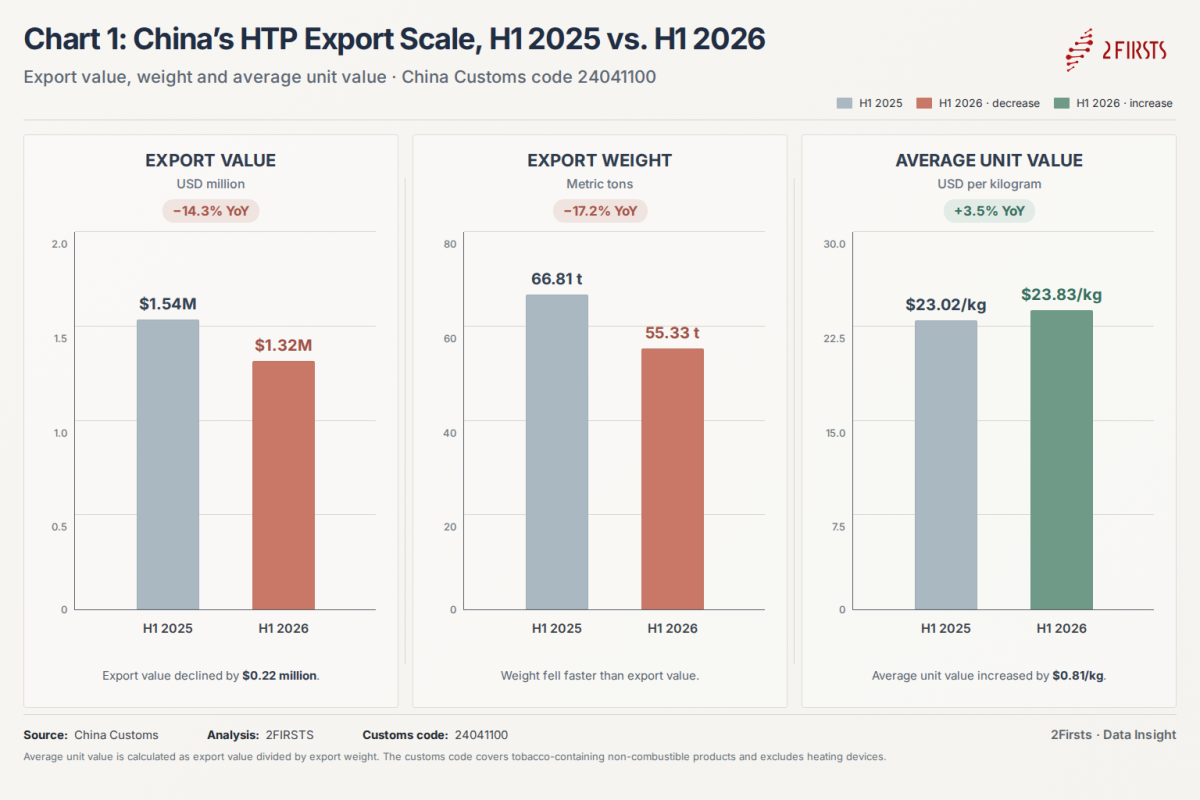
China’s HTP Exports Fell 14.3% in H1 2026 as Russia and Belarus Accounted for 76% Lead
In H1 2026, China’s HS 24041100 exports stood at $1.32 million, down 14.3% YoY, with volume falling 17.2% to 55.33 tons. Market distribution shifted drastically amid overall export drops. Exports to Russia and Belarus totaled $1 million, taking 76.0% of all shipments versus 29.5% in H1 2025. Belarus became the top destination with export value jumping 177.5%, while the Philippines, Singapore and Indonesia’s combined share slumped from 49.3% to 11.2%.Domestically, Yunnan led exporter registrations; Jiangsu and Shanghai were key suppliers, yet Anhui and Sichuan had no exports. Heavy concentration means order or declaration changes for Russia/Belarus greatly affect national aggregate data. The data shows customs entry points (not end markets), covering tobacco consumables only, excluding heating equipment and the complete HTP supply chain.
Aug.11
JTI Makes Third Bet on South Korea as Ploom AURA Enters a Market Dominated by lil and IQOS
Japan Tobacco International is stepping up its heated tobacco push in South Korea with Ploom AURA. Since its official launch in April 2026, the device's limited First Edition and Glacier White version have sold out, while distribution has expanded across Seoul, Incheon, Gyeonggi Province and airport duty-free channels. The rollout marks JTI's third major attempt to build a stronger heated tobacco position in South Korea, following Ploom TECH in 2019 and Ploom X Advanced in 2024. At the group level, JT plans to invest about ¥800 billion, approximately $5 billion, in reduced-risk products from 2026 through 2028, with heated products and Ploom identified as its primary investment priority.
Aug.14
Imperial Brands Acquires Helwit Owner Yoik Group for SEK 515 Million, More Than Doubling Swedish Nicotine Pouch Share
Imperial Brands has agreed to acquire 100% of Swedish modern oral nicotine company Yoik Group AB for an initial SEK515 million, equivalent to about US$53.9 million, plus a deferred payment linked to performance over the next two years. Yoik owns nicotine pouch brand Helwit, which held about 3.4% of Sweden’s modern oral nicotine market over the past 12 months. Imperial says the acquisition will more than double its existing share of the Swedish market. Helwit is also sold elsewhere in the Nordics, through European online channels and in selected UK retail outlets.
Sep.08
As Regulators Focus on Nicotine Pouch Child Safety, Safeguard Pursues an External Packaging Route
As regulators pay closer attention to child safety in nicotine pouches, manufacturers face a practical challenge: how to strengthen child-resistant packaging without unnecessarily reworking products, production lines and regulatory submissions already in place. In a written interview with 2Firsts, Chemular detailed Safeguard’s external packaging approach, its customer-specific testing requirements and possible PMTA pathways. The model remains early-stage, but it offers a new way to think about an increasingly important regulatory and manufacturing issue.
Industry Insight
Sep.19