ITC Upholds No Infringement Ruling in Juul Case

Mar.06.2025
ITC Upholds No Infringement Ruling in Juul Case
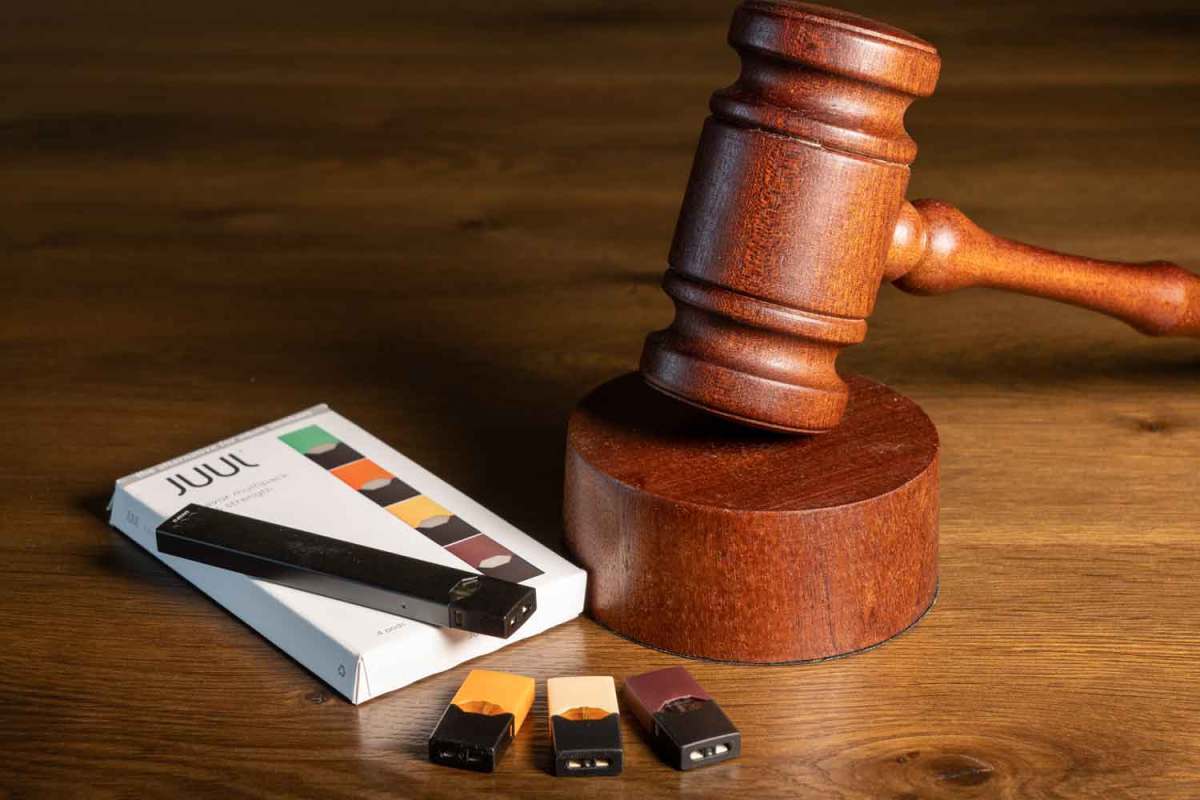
ITC supports Juul in patent infringement case against NJOY, rejects economic argument. At the center of the dispute lies e-cigarette technology.

Key points:


NJOY accuses Juul of infringing on e-cigarette patents, but Juul receives a non-infringement ruling.


The United States International Trade Commission (ITC) supports the preliminary ruling after review.


ITC refused to take a stance on the economic aspects and decided to support Juul.


According to a report by Tobaccoreporter on March 5th, the U.S. International Trade Commission (ITC) has ruled in favor of Juul Labs in a patent infringement case, finding no infringement.


In January 2025, Administrative Law Judge Doris Johnson Hines ruled that Juul Labs' e-cigarette products did not violate Section 337 of the Tariff Act. Altria claimed that these products infringed on two patents related to e-cigarette technology, but the judge did not agree.


In a three-page decision, the International Trade Commission (ITC) reviewed a non-infringement finding and made modifications to the judge's initial ruling by modifying the citations. The decision stated that NJOY failed to provide an economic example of meeting domestic industry requirements, which would require the complainant to prove significant investments in products protected by patents. The ITC did not express a position on the economic aspect and also refused to review the remaining decisions, including the judge's conclusion that Juul did not violate Section 337 of the Tariff Act.


According to court documents, the Juul products being investigated by the ITC are classified as "electronic nicotine delivery systems" and related pods, pod components, including atomizers, sub-components, device sub-components, and chargers.


We welcome news tips, article submissions, interview requests, or comments on this piece.

Please contact us at info@2firsts.com, or reach out to Alan Zhao, CEO of 2Firsts, on LinkedIn


Notice

1.  This article is intended solely for professional research purposes related to industry, technology, and policy. Any references to brands or products are made purely for objective description and do not constitute any form of endorsement, recommendation, or promotion by 2Firsts.

2.  The use of nicotine-containing products — including, but not limited to, cigarettes, e-cigarettes, nicotine pouchand heated tobacco products — carries significant health risks. Users are responsible for complying with all applicable laws and regulations in their respective jurisdictions.

3.  This article is not intended to serve as the basis for any investment decisions or financial advice. 2Firsts assumes no direct or indirect liability for any inaccuracies or errors in the content.

4.  Access to this article is strictly prohibited for individuals below the legal age in their jurisdiction.


Copyright


This article is either an original work created by 2Firsts or a reproduction from third-party sources with proper attribution. All copyrights and usage rights belong to 2Firsts or the original content provider. Unauthorized reproduction, distribution, or any other form of unauthorized use by any individual or organization is strictly prohibited. Violators will be held legally accountable.

For copyright-related inquiries, please contact: info@2firsts.com


AI Assistance Disclaimer


This article may have been enhanced using AI tools to improve translation and editorial efficiency. However, due to technical limitations, inaccuracies may occur. Readers are encouraged to refer to the cited sources for the most accurate information.

We welcome any corrections or feedback. Please contact us at: info@2firsts.com

Special Report | Can Nicotine Be Replaced? 6-MN Is Already on the Market While Key Human Evidence Is Still Missing
Nicotine analogues such as 6-methylnicotine are already appearing in e-cigarettes and oral pouches, even as key human evidence remains limited. A new Nixodine-S study adds nonclinical data showing differences from nicotine in cytotoxicity and receptor activity, while independent studies point to a more complex toxicological picture. With supply-chain activity growing and FDA seeking clearer authority over nicotine analogues, the industry now faces a larger question: what evidence is needed before these substances can credibly replace nicotine?
SCIENCE
Sep.23
China Tobacco Yunnan files patent for cellulose-free nicotine pouch scaffold to replace microcrystalline cellulose
China Tobacco Yunnan Industrial Co., Ltd. has filed a patent application for a cellulose-free scaffold material for nicotine pouches, proposing a combination of bioceramic material, polydextrose and sugar alcohols to replace conventional microcrystalline cellulose and cellulose derivatives. The filing aims to address issues including powdery mouthfeel, residue and limited release control, while also reducing reliance on existing cellulose-based patent portfolios. In patent examples, one fast-release formulation reached a nicotine release rate of 50% at 10 minutes and more than 90% at 20 minutes.
Sep.02
STIIIZY Redesign Fails to Escape PAX Labs Patent Import Ban as Section 337 Case Also Involves China ALD
U.S. Customs and Border Protection ruled that STIIIZY had not shown that the redesigned cannabis-vape products covered by its latest request fall outside an ITC limited exclusion order tied to PAX Labs patents. CBP accepted some of STIIIZY’s claim-construction and non-infringement arguments, but the company did not address two additional claims in the same patent. Earlier STIIIZY redesigned cartridges and certain associated components imported with them had received separate CBP clearance.
Sep.16
 PMI Opens Generative AI Center in Portugal to Support Global Operations
PMI Opens Generative AI Center in Portugal to Support Global Operations
According to information released by Portugal’s Trade & Investment Agency (AICEP) in July 2026, Philip Morris International (PMI) has established a global Generative Artificial Intelligence Factory (GenAI Factory) at its Portuguese subsidiary Tabaqueira. The center will support PMI’s global operations by developing and deploying AI solutions focused on industrial process optimization, data analytics, operational automation and AI application development. The initiative strengthens Portugal’s role in PMI’s global technology and innovation network.
Aug.27
F1 Faces Renewed Pressure Over Tobacco and Nicotine Sponsorships as 67 Groups Target ZYN and VELO Ahead of Madrid Race
Ahead of the Formula 1 race in Madrid, 67 Spanish and international public-health, medical and consumer organizations have sent an open letter to F1 President and CEO Stefano Domenicali calling for an end to sponsorships linked to the tobacco and nicotine industry, including nicotine pouches, vaping products and heated tobacco. The letter focuses on Philip Morris International’s ZYN partnership with Ferrari and British American Tobacco’s long-running partnership with McLaren and exposure for VELO. The campaign follows a March letter in which more than 160 organizations worldwide made a similar request to Formula 1.
Sep.10
EU Tobacco Tax Reform Targets November Push as Sweden Holds Nicotine-Pouch Minimum at €20 per Kilogram
The Irish presidency of the Council of the European Union is using bilateral talks to push the bloc’s Tobacco Taxation Directive toward a political agreement in November. According to Law360, citing an EU official, Sweden is unwilling to accept a minimum excise threshold above €20 per kilogram for nicotine pouches. Council negotiations have already lowered the European Commission’s original proposal, but a May 2026 presidency compromise still set the minimum at 10% of the tax-inclusive retail price or €30 per kilogram in 2028-29, with higher levels later.
Market
Sep.17 by 2Firsts Perspectives