Lawsuit Against JUUL and Altria in Alaska Dismissed

Dec.17.2024
Lawsuit Against JUUL and Altria in Alaska Dismissed
Alaska lawsuit against JUUL and Altria dismissed on procedural grounds, disappointing state Attorney General. Plans for possible retrial.

According to Alaska's News Source on December 17th, a lawsuit filed by the state of Alaska against JUUL Labs, Inc. and Altria Group, Inc. was deemed invalid due to procedural errors.


Alaska Attorney General Treg Taylor expressed disappointment in the verdict of the case in a statement. He added that this does not affect the substance of the case, and they are still evaluating various options, including retrying the case.


In subsequent questioning, the media asked the state's Attorney General about specific details of procedural errors and whether they involved jury tampering. The Attorney General responded that although the verdict was invalidated due to procedural issues, the facts remained unchanged—that youth e-cigarette use is still a threat, and companies should be held accountable for the harm their products pose to children.


JUUL's Vice President of External Affairs, Stefanie Miller, released a statement criticizing Alaska for having one of the highest smoking rates in the country, yet continuing to target an American company that provides alternative combustible cigarette products. She hopes that the efforts of the court and jury will be taken into consideration, rather than investing resources into events that happened almost a decade ago.


The lawsuit is scheduled to go to trial in November and is expected to continue through December. The first oral arguments began on August 27, 2021. According to a press release from former Acting Attorney General Ed Sniffen on November 24, 2020, the state government accuses JUUL of using marketing strategies similar to those used by big tobacco companies in the past, updated for the digital age, including social media campaigns targeting teenagers and paid "influencers.


The lawsuit alleges that Altria conspired with JUUL to maintain and expand the youth e-cigarette market created by JUUL, and attempted to cover up their marketing practices targeting teenagers. According to the 2019 Alaska Youth Risk Behavior Survey, 45.8% of high school students in Alaska have tried e-cigarettes, while 26.1% reported using e-cigarettes. This is a significant increase since 2017, and the state government's lawsuit argues that this is a direct result of JUUL and Altria's marketing strategies targeting youth.


We welcome news tips, article submissions, interview requests, or comments on this piece.

Please contact us at info@2firsts.com, or reach out to Alan Zhao, CEO of 2Firsts, on LinkedIn


Notice

1.  This article is intended solely for professional research purposes related to industry, technology, and policy. Any references to brands or products are made purely for objective description and do not constitute any form of endorsement, recommendation, or promotion by 2Firsts.

2.  The use of nicotine-containing products — including, but not limited to, cigarettes, e-cigarettes, nicotine pouchand heated tobacco products — carries significant health risks. Users are responsible for complying with all applicable laws and regulations in their respective jurisdictions.

3.  This article is not intended to serve as the basis for any investment decisions or financial advice. 2Firsts assumes no direct or indirect liability for any inaccuracies or errors in the content.

4.  Access to this article is strictly prohibited for individuals below the legal age in their jurisdiction.


Copyright


This article is either an original work created by 2Firsts or a reproduction from third-party sources with proper attribution. All copyrights and usage rights belong to 2Firsts or the original content provider. Unauthorized reproduction, distribution, or any other form of unauthorized use by any individual or organization is strictly prohibited. Violators will be held legally accountable.

For copyright-related inquiries, please contact: info@2firsts.com


AI Assistance Disclaimer


This article may have been enhanced using AI tools to improve translation and editorial efficiency. However, due to technical limitations, inaccuracies may occur. Readers are encouraged to refer to the cited sources for the most accurate information.

We welcome any corrections or feedback. Please contact us at: info@2firsts.com

UK HMRC Issues One-Month Countdown Warning, Urges Vape Businesses to Prepare for New Tax Rules
The UK’s Vaping Products Duty and Vaping Duty Stamps Scheme will take effect on October 1, 2026. All vaping liquids manufactured in or imported into the UK will face a flat excise duty of £2.20 per 10ml, whether or not they contain nicotine. Newly manufactured or imported products released onto the UK market from October 1 will require a valid duty stamp, while eligible existing unstamped inventory can continue to be sold through March 31, 2027. From April 1, 2027, all vaping products outside duty suspension must carry a valid stamp.
Sep.03
Cochrane 2026 Update Adds Nine Trials, Keeps High-Certainty Finding That Nicotine E-Cigarettes Improve Quit Rates Over NRT
Cochrane’s 2026 update of its living review on electronic cigarettes for smoking cessation included 80 randomized controlled trials involving 29,861 adult smokers, with nine trials added in this update. The review retained its high-certainty conclusion that nicotine e-cigarettes increase smoking cessation rates compared with nicotine replacement therapy. In absolute terms, about 10 in 100 people using nicotine e-cigarettes may quit smoking for at least six months, compared with about 6 in 100 using NRT. The review found no clear difference in serious adverse event rates between the two groups, while longer-term safety and the relative effectiveness of newer device types remain less certain.
Sep.07
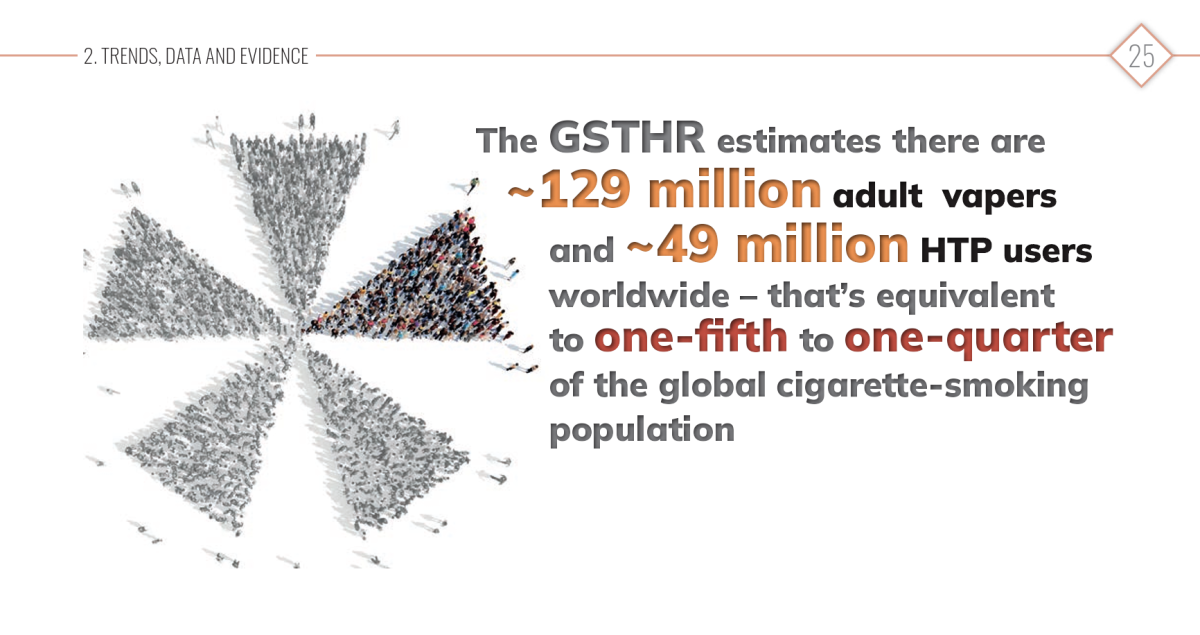
GSTHR Estimates 200 Million People Use Non-Combustible Nicotine Products as 28 Countries Show Rising Use Alongside Falling Smoking Rates
The Global State of Tobacco Harm Reduction, a project operated by Knowledge·Action·Change, estimates that about 200 million people worldwide use non-combustible nicotine products including vapes, heated tobacco, nicotine pouches and snus. Its 2026 report says use of these products rose alongside declining smoking rates in 28 countries it analyzed. The data do not establish that all 200 million users have quit smoking, nor do they prove a direct causal relationship. GSTHR also says regulatory restrictions on the products continue to expand in many markets.
Sep.10
Russia Adds Vapes to “Strategic Goods” List, Illegal Cross-Border Trade Faces Up to Five Years in Prison
Russia will place e-cigarettes and related nicotine products under its “strategic goods” framework from August 20, 2026. According to TVP World’s report published on August 19, the newly listed items include e-cigarettes, electronic smoking devices, vape liquids and nicotine salts. Individuals who illegally move these products across Russia’s customs border or its state border with other Eurasian Economic Union (EAEU) members could face up to five years in prison if shipment values exceed 100,000 rubles (about €1,000), provided all elements of a criminal offence are established.
Aug.20
JAMA Study: U.S. Vape Directories Fail to Sustainably Curb Unlisted Sales as Product Shifts May Redistribute Brand Share 2Firsts Recommended
A study by CDC Foundation researchers found no sustained decline in e-cigarette sales across Alabama, Oklahoma and Louisiana, the first three U.S. states to implement e-cigarette directory laws. Louisiana initially saw a significant sales decline, followed by a rebound and a persistent reduction in product availability. Sales also shifted from nontobacco-flavored disposables toward prefilled cartridges, with Vuse Alto driving much of the increase in menthol cartridges. By April 2025, unlisted products still accounted for more than half of e-cigarette nicotine sales in all three states.
Sep.18
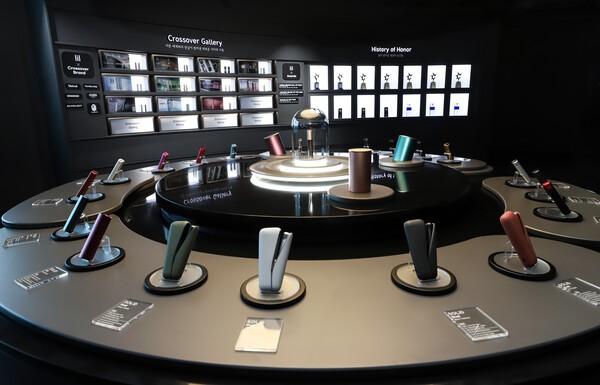
From a 2017 Launch to 48% of South Korea’s Heated Tobacco Market, KT&G Looks Back on a Decade of lil
KT&G announced on Aug. 13, 2026, that it has opened “lil Archive,” a brand exhibition space in Seoul showcasing the evolution, technology platforms and future direction of its heated tobacco brand lil since its launch in 2017. KT&G said lil now spans three major platforms — lil SOLID, lil HYBRID and lil AIBLE — with more than 30 dedicated consumables, and held a 48% share of South Korea's heated tobacco market in the second quarter of 2026. The opening comes as lil enters its 10th year, with KT&G continuing to position the brand for expansion beyond its domestic market.
Aug.14