Malaysia's Kelantan State Has Banned E-Cigarettes for a Decade, but Illegal Sales Persist

May.15.2025
Malaysia's Kelantan State Has Banned E-Cigarettes for a Decade, but Illegal Sales Persist
Malaysia’s Kelantan state has enforced a total ban on e-cigarettes since 2015. Despite the ban, illegal sales persist, with 16 shops shut down so far this year, compared to 67 in 2024.

Key points:


1.Early control started early: The government of the Malaysian state of Kelantan began promoting the health risks of e-cigarettes in 2012 and implemented a two-year policy transition period in 2013, ultimately banning the sale of e-cigarettes in 2015.


2.For ten years, Kelantan has not issued any licenses for the sale of e-cigarettes, leading to a systemic ban in place until 2025.


3.Strict law enforcement mechanism: In 2024, 40 law enforcement actions were carried out, resulting in the closure of 67 shops illegally selling e-cigarettes. As of 2025, 16 shops have been closed so far.


4.Social concern is increasing: The public and non-governmental organizations express strong concern over the issue of youth e-cigarette abuse, calling on other states to emulate the policies of Kelantan and implement the national "2024 Public Health Tobacco Control Act".


According to a report by Harakahdaily on May 14, the state government of Kelantan, Malaysia, started a campaign highlighting the health risks of e-cigarettes in 2012 and officially banned the sale of e-cigarettes in 2015. According to Hilmi Abdullah, the chairman of the state's Local Government, Housing, Health and Environment Committee, the government provided a two-year "grace period" in 2013 before implementing the ban for businesses to adjust and for the public to transition.


Since the ban was implemented, Kelantan has not approved any e-cigarette related sales or business licenses for 10 consecutive years. Hilmi stated that this policy is based on public health considerations, as the ingredients in e-cigarettes are seen as substances that pose significant health risks to users.


Despite the clear prohibition in the law, Shermy stated that there are still businesses illegally selling e-cigarette products through covert means, including borrowing other business fronts or using online platforms for sales. In response to this, the state government, in conjunction with customs, the National Anti-Drug Agency (AADK), and the Ministry of Health, have launched comprehensive enforcement actions.


In 2024, a total of 40 law enforcement actions were carried out throughout the year, resulting in the closure of 67 establishments engaged in illegal activities, some of which were repeat offenders. Since the beginning of 2025, 10 actions have already been completed, resulting in the closure of 16 shops.


Hill emphasized that with the full implementation of the "2024 Public Health Tobacco Control Act" in October this year, he expects the law to give law enforcement agencies greater authority and further tighten regulatory efforts.


In addition, the Consumers Association of Penang (CAP) criticized states that have not yet implemented similar bans and openly called on the government to take faster action.


We welcome news tips, article submissions, interview requests, or comments on this piece.

Please contact us at info@2firsts.com, or reach out to Alan Zhao, CEO of 2Firsts, on LinkedIn


Notice

1.  This article is intended solely for professional research purposes related to industry, technology, and policy. Any references to brands or products are made purely for objective description and do not constitute any form of endorsement, recommendation, or promotion by 2Firsts.

2.  The use of nicotine-containing products — including, but not limited to, cigarettes, e-cigarettes, nicotine pouchand heated tobacco products — carries significant health risks. Users are responsible for complying with all applicable laws and regulations in their respective jurisdictions.

3.  This article is not intended to serve as the basis for any investment decisions or financial advice. 2Firsts assumes no direct or indirect liability for any inaccuracies or errors in the content.

4.  Access to this article is strictly prohibited for individuals below the legal age in their jurisdiction.


Copyright


This article is either an original work created by 2Firsts or a reproduction from third-party sources with proper attribution. All copyrights and usage rights belong to 2Firsts or the original content provider. Unauthorized reproduction, distribution, or any other form of unauthorized use by any individual or organization is strictly prohibited. Violators will be held legally accountable.

For copyright-related inquiries, please contact: info@2firsts.com


AI Assistance Disclaimer


This article may have been enhanced using AI tools to improve translation and editorial efficiency. However, due to technical limitations, inaccuracies may occur. Readers are encouraged to refer to the cited sources for the most accurate information.

We welcome any corrections or feedback. Please contact us at: info@2firsts.com

Smoke-Free Business Hits 42% of Q2 Net Revenue as PMI’s First TNFD Report Covers Single-Use Electronics, Critical Raw Materials and IQOS Repairs
Philip Morris International has published its first report aligned with the Taskforce on Nature-related Financial Disclosures, bringing its electronics supply chain and the use and end-of-life stages of smoke-free devices and consumables into its nature-related assessment. PMI said its smoke-free business accounted for about 42% of total net revenues in the second quarter of 2026. The report says non-circular electronic products, particularly single-use items, can increase consumption of limited natural resources and also details an IQOS repair pilot. A 2040 circularity scenario tests assumptions including a 50% reduction in product waste-related costs, 10% raw-material savings and a 25% substitution rate for refurbished products versus new products.
Sep.23
JTI Makes Third Bet on South Korea as Ploom AURA Enters a Market Dominated by lil and IQOS
Japan Tobacco International is stepping up its heated tobacco push in South Korea with Ploom AURA. Since its official launch in April 2026, the device's limited First Edition and Glacier White version have sold out, while distribution has expanded across Seoul, Incheon, Gyeonggi Province and airport duty-free channels. The rollout marks JTI's third major attempt to build a stronger heated tobacco position in South Korea, following Ploom TECH in 2019 and Ploom X Advanced in 2024. At the group level, JT plans to invest about ¥800 billion, approximately $5 billion, in reduced-risk products from 2026 through 2028, with heated products and Ploom identified as its primary investment priority.
Aug.14
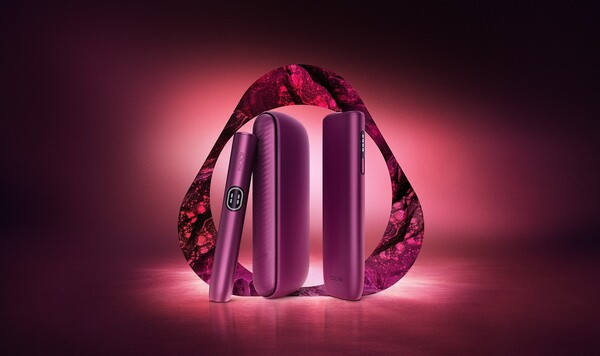
Product | PMJ Adds Bold Ruby to IQOS ILUMA i Lineup in Japan, Convenience-Store Rollout Starts Sept. 29
Philip Morris Japan (PMJ) launched Bold Ruby as a new regular color for the IQOS ILUMA i and IQOS ILUMA i ONE in Japan on September 16, 2026, priced at JPY 6,980 and JPY 3,980, respectively. Initial sales began through IQOS online and physical channels, with convenience stores and selected tobacco retailers set to follow from September 29. Bold Ruby is a regular rather than limited-edition colorway and is available for the ILUMA i and ILUMA i ONE, but not the ILUMA i PRIME. The release does not involve changes to the devices' core hardware or functions.
Sep.22
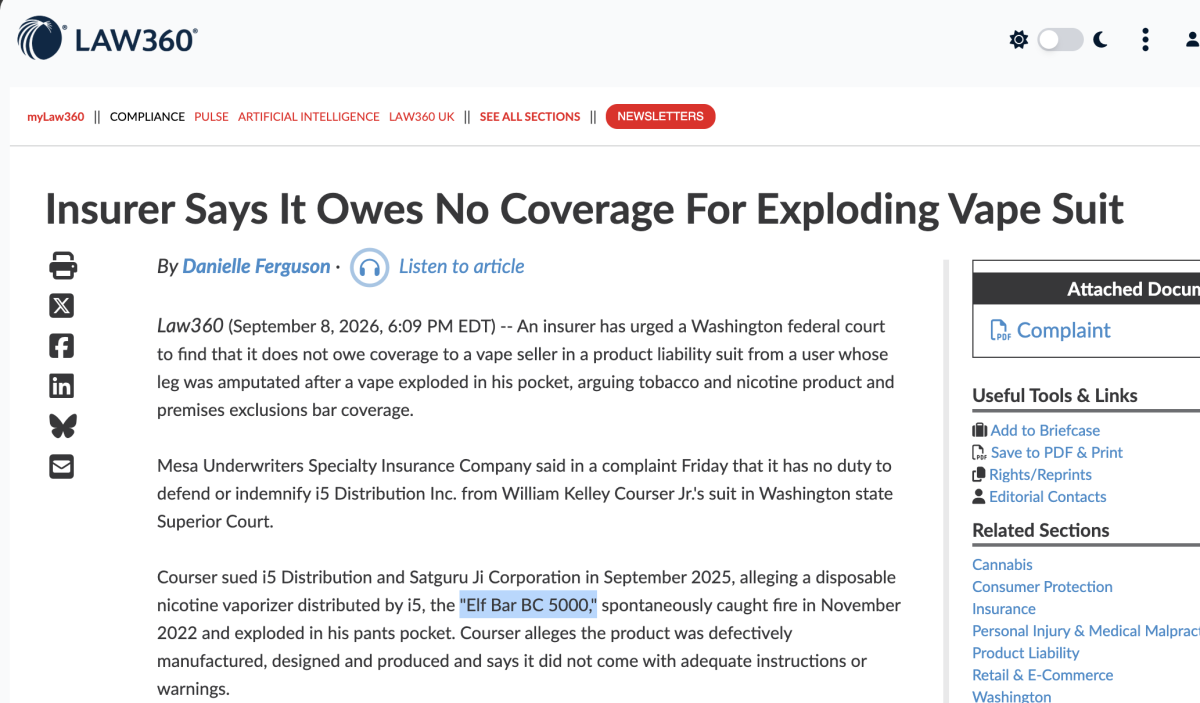
Elf Bar Vape Explosion and Amputation Claim Spurs Coverage Suit, U.S. Insurer MUSIC Seeks Ruling It Owes No Duty to Defend or Indemnify Distributor i5
Mesa Underwriters Specialty Insurance Company has asked a federal court in Washington to declare that it has no duty to defend or indemnify vape distributor i5 Distribution in a product liability case involving an Elf Bar BC5000. The plaintiff alleges that the disposable vape caught fire and exploded in his pocket, causing severe burns and ultimately requiring an above-the-knee amputation of his left leg. MUSIC is relying on a tobacco, nicotine or nicotine replacement products exclusion and a premises limitation endorsement. The court has not ruled on the coverage dispute.
News
Sep.10
Science | International Experts Propose a New Smoking Cessation Pathway, Citing Higher Quit Rates With E-Cigarettes Than Nicotine Replacement Therapy
A new expert paper in JAMA urges U.S. clinicians to include nicotine e-cigarettes in smoking-cessation discussions, citing higher quit rates than nicotine replacement therapy. It also stresses that products must deliver enough nicotine to replace cigarettes, dual use should be brief, and complete switching is the goal. 2Firsts argues the recommendations matter beyond clinics: public-health professionals should reassess relative risk, regulators should preserve sufficient product appeal for adult smokers, and manufacturers should focus on helping users quit cigarettes more sustainably.
SCIENCE
Aug.03 by 2Firsts Perspectives
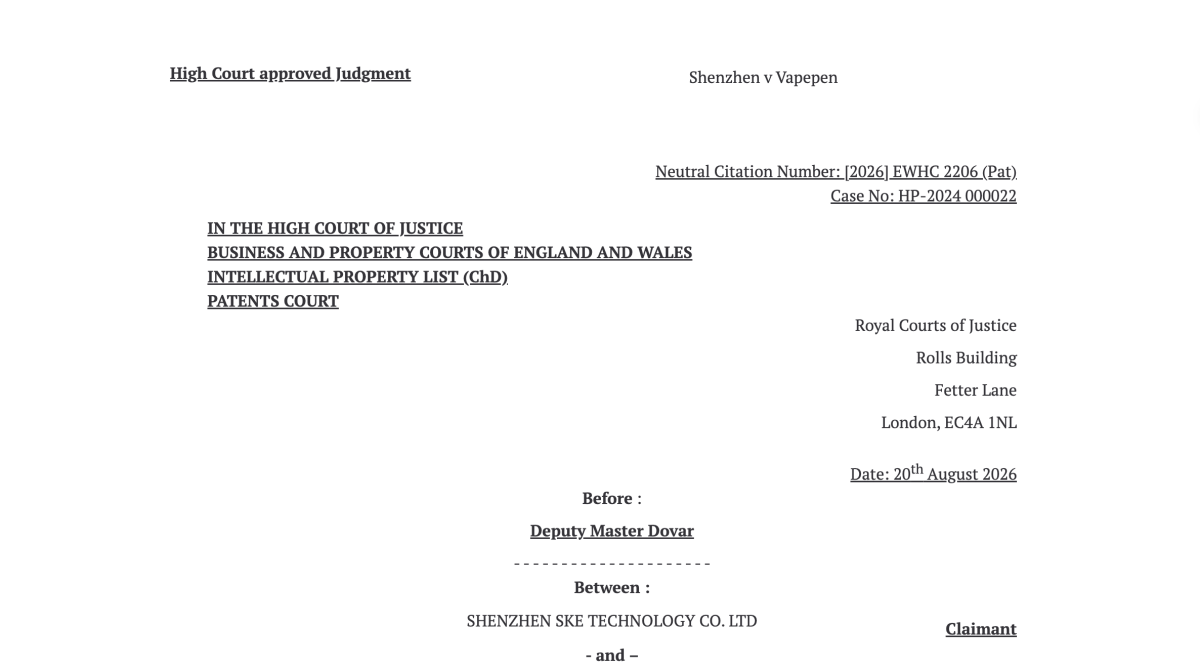
Yinghe-Controlled Vape Maker SKE Ordered to Post £569,039 Security as It Pursues Crystal Bar Design Infringement Case in UK
The UK High Court has ordered Chinese vape manufacturer Shenzhen SKE Technology to provide £569,039 ($776,000) in security for costs in its design infringement proceedings against Vapepen London and other defendants over its Crystal Bar vape product. The court did not accept the defendants’ main argument that recovering costs from a China-based company would face significant enforcement obstacles, but found that SKE had not sufficiently disclosed its own financial position. The order is procedural and does not determine the underlying infringement claims.
News
Aug.21