Nebraska State Council Holds Public Hearing on E-Cigarette Legislation

Feb.25.2025
Nebraska State Council Holds Public Hearing on E-Cigarette Legislation
Nebraska General Affairs Committee holds public hearing on bills LB285 and LB688, proposing flavor ban on e-cigarettes.

According to a report from Chadronradio on February 24th, the General Affairs Committee of the Nebraska State Legislature held a public hearing on bills LB285 and LB688.


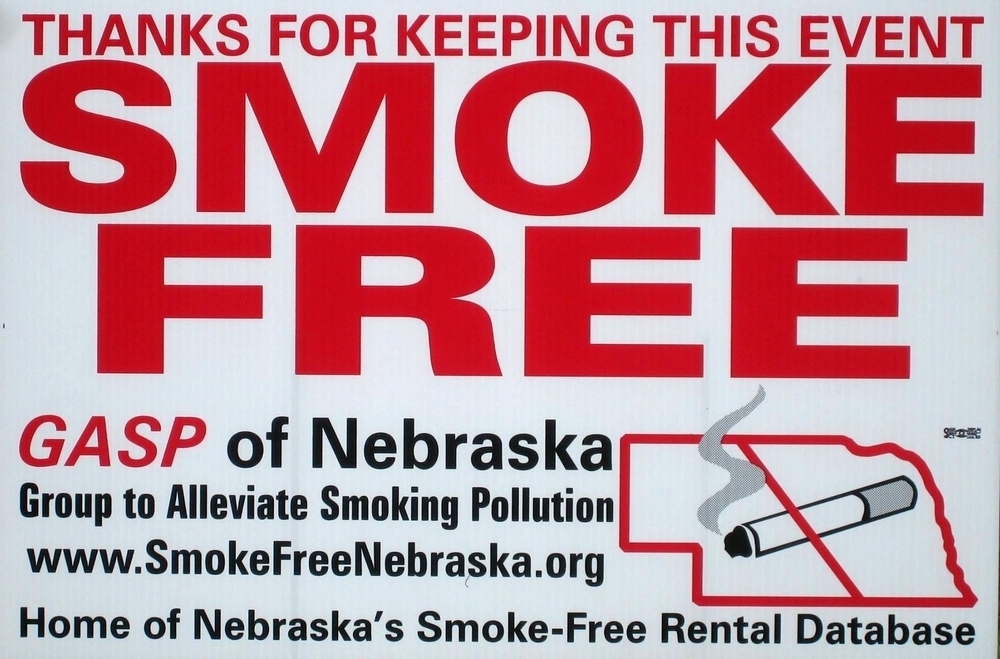
In the LB285 bill, it is proposed to ban the sale of most flavored e-cigarette products, however, tobacco and mint flavors remain legal in the state. The GASP organization recommends the committee to amend the bill to include mint flavor as one of the prohibited flavored products. Data shows that mint flavor is preferred by most African American and Hispanic children and adults, while candy and fruit flavors are mainly favored by white children and adults. The bill proposes to ban all flavors, not just those favored by white communities.


LB688 bill prohibits advertising and promotion of e-cigarette products in Nebraska.


We welcome news tips, article submissions, interview requests, or comments on this piece.

Please contact us at info@2firsts.com, or reach out to Alan Zhao, CEO of 2Firsts, on LinkedIn


Notice

1.  This article is intended solely for professional research purposes related to industry, technology, and policy. Any references to brands or products are made purely for objective description and do not constitute any form of endorsement, recommendation, or promotion by 2Firsts.

2.  The use of nicotine-containing products — including, but not limited to, cigarettes, e-cigarettes, nicotine pouchand heated tobacco products — carries significant health risks. Users are responsible for complying with all applicable laws and regulations in their respective jurisdictions.

3.  This article is not intended to serve as the basis for any investment decisions or financial advice. 2Firsts assumes no direct or indirect liability for any inaccuracies or errors in the content.

4.  Access to this article is strictly prohibited for individuals below the legal age in their jurisdiction.


Copyright


This article is either an original work created by 2Firsts or a reproduction from third-party sources with proper attribution. All copyrights and usage rights belong to 2Firsts or the original content provider. Unauthorized reproduction, distribution, or any other form of unauthorized use by any individual or organization is strictly prohibited. Violators will be held legally accountable.

For copyright-related inquiries, please contact: info@2firsts.com


AI Assistance Disclaimer


This article may have been enhanced using AI tools to improve translation and editorial efficiency. However, due to technical limitations, inaccuracies may occur. Readers are encouraged to refer to the cited sources for the most accurate information.

We welcome any corrections or feedback. Please contact us at: info@2firsts.com

Special Report|Reynolds’ 337 Patent Case Ends, but a Harsher 337 Compliance Battle Now Targets the Entire Vape Supply Chain
The U.S. International Trade Commission (ITC) has terminated Investigation 337-TA-1410 after invalidating key vape patent claims asserted by R.J. Reynolds Vapor Company, removing the immediate risk of import bans for dozens of companies. However, a new case—337-TA-1486—has already opened a more consequential legal front, shifting the focus from patent disputes to regulatory compliance across the vape supply chain, including PACT Act reporting, tax compliance, and FDA marketing authorization.
BAT
Mar.11
BBC survey: over half of secondary teachers in England say vaping is a problem at their school
Granville Academy in Swadlincote, Derbyshire, has joined a county pilot overseen by Derbyshire County Council that puts pupils in charge of reducing vaping in school. After reports of pupils stealing vapes, vaping in toilets and using them while walking home, the school found detentions were not effective and shifted to peer-led education sessions, assemblies and health-warning signage.
Feb.05 by 2FIRSTS.ai
Alabama House Health Committee advances SB9 to restrict vaping in public spaces under Clean Indoor Air Act
The Alabama House Health Committee passed Senate Bill 9 on Wednesday to restrict vaping in public areas under the state’s Clean Indoor Air Act. Introduced by Sen. Gerald Allen, SB9 would add vapes—defined as “electronic nicotine delivery systems”—to the forms of “smoking” currently prohibited in enclosed public places.
Feb.13 by 2FIRSTS.ai
EVO NXT 2026 Offers Unique Insights Into A Dynamic Industry
Feb.09
Malaysian police raids across five states: 51 held and over RM1 million in vapes seized
Police in Malaysia detained 51 individuals and seized over RM1 million worth of electronic cigarettes and liquid refills in a five-state operation dubbed “Op E-CIG,” conducted by the GOF Central Brigade on February 10. The report said the operation involved 30 raids across Kuala Lumpur, Johor, Melaka, Selangor and Negeri Sembilan. Authorities seized 2,263 vape units and 165.463 litres of liquid.
Feb.12 by 2FIRSTS.ai
Special Report | China’s Two Sessions Revisit Consumption Tax Reform, Tobacco Tax Outlook Draws Attention
China’s 2026 “Two Sessions” again raised the issue of consumption tax reform. As the largest source of consumption tax revenue, the tobacco tax system—its collection stages, tax structure and regional revenue distribution—has re-entered the policy discussion. This article outlines the structure of China’s tobacco consumption tax, past adjustments and key areas of debate, providing international readers with background on one of the country’s most important tax categories.
Special Report
Mar.08