Philip Morris International and others agree to pay $23.6 billion

Oct.21.2024
Philip Morris International and others agree to pay $23.6 billion
Philip Morris International, British American Tobacco, and Japan Tobacco agree to pay $236 billion to resolve long-standing Canadian tobacco litigation.

According to a recent report by Reuters, Philip Morris International (PMI), British American Tobacco, and Japan Tobacco have agreed to pay 32.5 billion Canadian dollars (23.6 billion US dollars) to settle long-standing tobacco litigation in Canada. This is part of a plan proposed by a court-appointed mediator.


Jacob Shelley, co-director of the Western Canada University Laboratory for Ethics, Law, and Health Policy, stated that if the plan is accepted, this would be the largest settlement agreement in a similar case outside the United States.


According to reports, in 2015, subsidiaries of the three largest tobacco companies in Canada suffered a major blow in Quebec. A court ruled for them to compensate around 100,000 smokers or former smokers, as they claimed the companies knew since the 1950s that their products could cause cancer and other illnesses, but failed to warn consumers.


After an appeal, the Quebec Court upheld the 2015 ruling requiring tobacco companies to pay over $15.5 billion Canadian dollars in compensation to smokers. This has forced the subsidiaries of the three major tobacco manufacturers to seek bankruptcy protection. Canadian Tobacco Company is required to pay the largest amount of compensation, totaling $10.5 billion Canadian dollars. Philip Morris is obligated to pay $3.1 billion Canadian dollars, while Japan Tobacco's compensation amount is $2 billion Canadian dollars. The case is expected to be appealed to the Supreme Court of Canada.


Afterwards, the three companies entered into court-supervised mediation to discuss possible settlement agreements. It has been reported that the distribution of the total amount of the agreement remains unresolved.


Despite some important issues still to be resolved in the planned legal process, we hope that this will be concluded quickly, allowing RBH (Rothmans, Benson & Hedges) and stakeholders to focus on the future," said Jacek Olczak, CEO of Philip Morris International (PMI), on Friday. Rothmans, Benson & Hedges is a Canadian subsidiary of Philip Morris International (PMI).


On Friday, British American Tobacco announced that the proposed plan represents a step towards finding a solution. The company did not provide details of the plan like Philip Morris International (PMI) did. The company stated that its subsidiary, Imperial Tobacco Canada, supports the framework and structure of the plan, and the settlement will be funded by existing funds and future funds from the sale of tobacco products in Canada.


Philip Morris International (PMI) has stated that the plaintiffs (smokers) will decide by December 2024 whether to accept the plan, with judicial approval expected in the first half of the following year. A subsidiary of Japan Tobacco, JTI-Macdonald, has stated, "To find a viable solution, key issues must be addressed," but did not provide further details.


Jacob Shelley of Western Canada University believes that the settlement agreement missed an opportunity to incorporate company policy terms, but emphasizes the responsibility of manufacturers to warn consumers of the risks of their products. This could have implications for industries such as alcohol. He added, "We have not given sufficient warnings about the risks of many products. Manufacturers have a duty to alert us to these risks... Hopefully this will change manufacturers' views on potential liability.


We welcome news tips, article submissions, interview requests, or comments on this piece.

Please contact us at info@2firsts.com, or reach out to Alan Zhao, CEO of 2Firsts, on LinkedIn


Notice

1.  This article is intended solely for professional research purposes related to industry, technology, and policy. Any references to brands or products are made purely for objective description and do not constitute any form of endorsement, recommendation, or promotion by 2Firsts.

2.  The use of nicotine-containing products — including, but not limited to, cigarettes, e-cigarettes, nicotine pouchand heated tobacco products — carries significant health risks. Users are responsible for complying with all applicable laws and regulations in their respective jurisdictions.

3.  This article is not intended to serve as the basis for any investment decisions or financial advice. 2Firsts assumes no direct or indirect liability for any inaccuracies or errors in the content.

4.  Access to this article is strictly prohibited for individuals below the legal age in their jurisdiction.


Copyright


This article is either an original work created by 2Firsts or a reproduction from third-party sources with proper attribution. All copyrights and usage rights belong to 2Firsts or the original content provider. Unauthorized reproduction, distribution, or any other form of unauthorized use by any individual or organization is strictly prohibited. Violators will be held legally accountable.

For copyright-related inquiries, please contact: info@2firsts.com


AI Assistance Disclaimer


This article may have been enhanced using AI tools to improve translation and editorial efficiency. However, due to technical limitations, inaccuracies may occur. Readers are encouraged to refer to the cited sources for the most accurate information.

We welcome any corrections or feedback. Please contact us at: info@2firsts.com

Reuters Tracks Big Tobacco’s Shift Beyond Cigarettes as Nicotine Pouches Vie for the Next Growth Curve
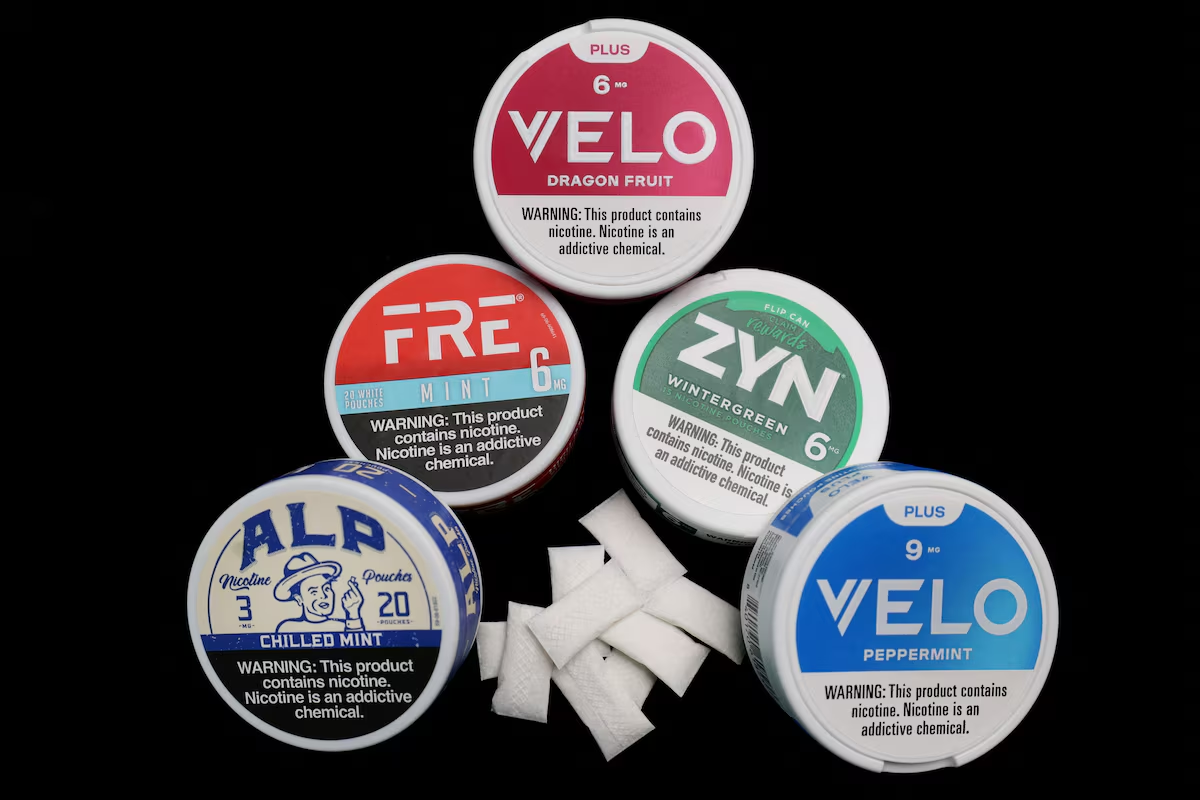
As cigarette markets face long-term pressure, major tobacco companies are increasingly turning to nicotine pouches in search of growth beyond combustible tobacco. Reuters has examined whether nicotine pouches can become the next strategic growth platform for companies including Philip Morris International, British American Tobacco and Japan Tobacco. PMI strengthened its position through the acquisition of Swedish Match and its ZYN brand, while BAT and JTI continue expanding their own nicotine pouch portfolios. The category has gained attention because of its smoke-free, device-free format, but regulation, youth-use concerns and market scale will determine whether it can become a long-term growth engine.
Regulations
Aug.18 by 2Firsts Perspectives
Bret Koplow Takes Permanent Charge of FDA Tobacco Center After Pushing Faster PMTA Reviews, as HHS Emphasizes Innovation and Access to Lower-Risk Alternatives
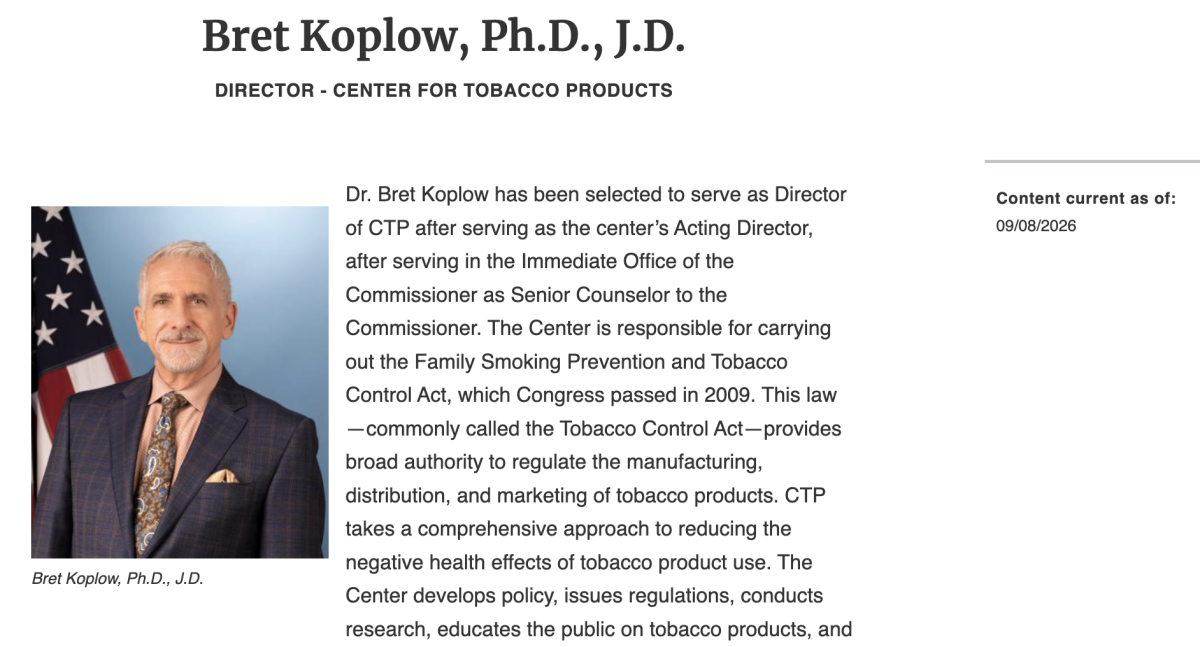
The U.S. Department of Health and Human Services has named Bret Koplow permanent director of the FDA’s Center for Tobacco Products, ending his period as acting chief. Koplow has spent years working on tobacco regulation, law and policy inside the FDA and, while serving as acting director, pushed for faster PMTA reviews and nicotine pouch review pilots. HHS also said CTP will prioritize innovation and access to less harmful alternatives for adult smokers while continuing efforts to protect youth.
Sep.09
Canada Considers Easing Pharmacy-Only Nicotine Pouch Sales Rules, Potentially Reopening Convenience Store Channel
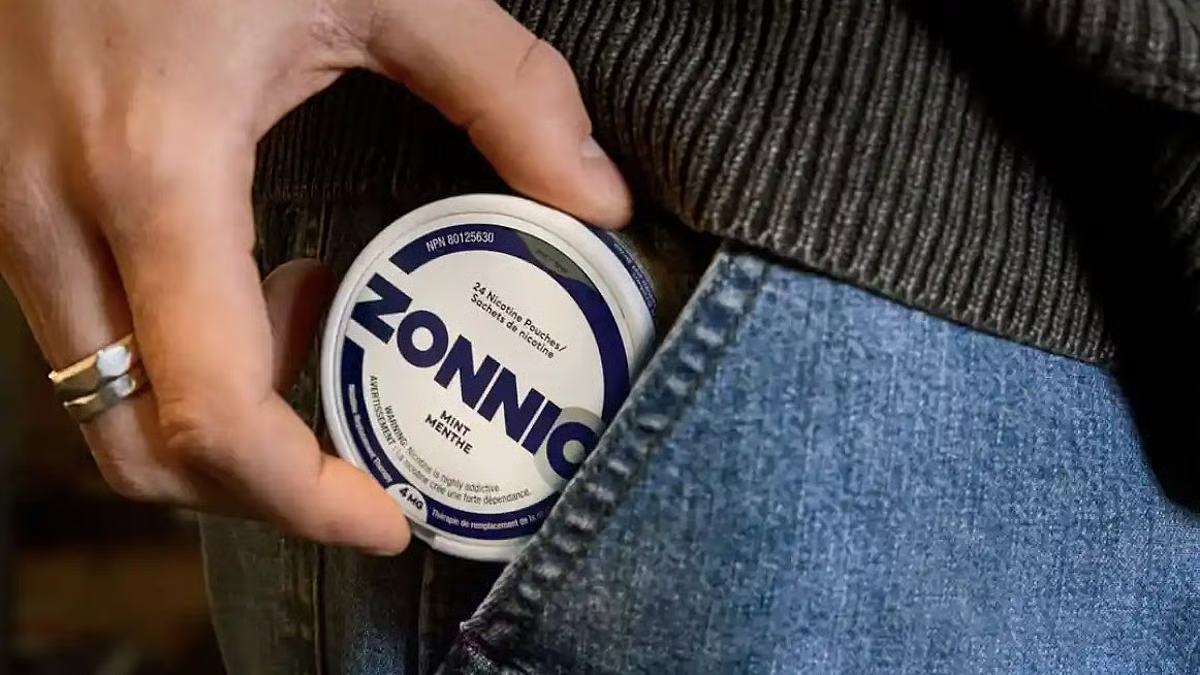
Canada's federal government is considering changes to current restrictions on where nicotine pouches can be sold, potentially allowing authorized products to return to convenience stores and other general retail channels, although no decision has been made. Since 2024, emerging nicotine replacement therapy products such as nicotine pouches have been largely restricted to behind-the-counter pharmacy sales. Health Canada, meanwhile, continues to recall unauthorized and higher-strength nicotine pouches, indicating that the current discussion concerns retail access for authorized products rather than a broad relaxation of nicotine pouch regulation.
Sep.14
Product | RELX Partners With UK E-Liquid Brand T-Juice for Prime Pro × Red Astaire Bundle in France
RELX and UK e-liquid brand T-Juice have launched the Prime Pro × Red Astaire bundle in France, combining the RELX Prime Pro open-system pod device with T-Juice’s signature Red Astaire nicotine salt e-liquid. The collaboration retains the existing Prime Pro hardware platform while using an established flavor brand to create a complete open-system offering. The product appeared in French retail and distribution channels in August 2026 and represents a co-branded retail bundle rather than a new device launch.
Aug.27
Special Report|AIR H1 Revenue Rises 3.7% as Shisha Volumes Fall 9%, Testing Its Shift Beyond Traditional Hookah
AIR’s first half-year results as a listed company offer a new test of how far a traditional hookah business can transform. H1 2026 revenue rose 3.7%, even as Flavored Shisha Molasses shipments fell 9%, with pricing and mix supporting growth. Traditional shisha still generates almost all revenue, while OOKA, Crown Switch, Greentank and U.S. regulatory spending point to accelerating diversification. The next test is whether those investments can become a second business of meaningful scale and profitability.
Capital Markets
Aug.21
China’s Zhengzhou Tobacco Research Institute develops end-to-end heated tobacco analysis to trace aerosol compound origins
The Zhengzhou Tobacco Research Institute of China National Tobacco Corporation has filed a patent application for an end-to-end method to analyze the migration and transformation of chemical compounds in heated tobacco products. Using GC-Orbitrap/MS non-targeted analysis, the method compares tobacco substrate and aerosol samples to distinguish compounds transferred directly from the substrate from those newly formed during heating, while also calculating transfer rates. In an example involving nine heated tobacco products, the patent identified 17 newly formed thermal decomposition compounds and 38 transferred compounds.
Aug.13