Regulations Released to Limit Smoking Scenes in Korean OTT Content

Regulations by 2FIRSTS.ai
Dec.25.2023
Regulations Released to Limit Smoking Scenes in Korean OTT Content
South Korea's Ministry of Health and Welfare has released guidelines to limit smoking scenes in OTT platforms and protect teenagers.

According to a report on December 22 by Chosun Daily, the Health Promotion Development Institute of South Korea has released data revealing that out of 14 popular dramas on major OTT (online video streaming) platforms like Netflix last year, only 4 of them did not feature any smoking scenes throughout the entire series. However, the remaining 10 dramas collectively included a total of 142 smoking scenes.


The South Korean Ministry of Health and Welfare announced on December 22nd the "Guidelines for the Production and Broadcasting of Anti-Smoking Media for Children and Adolescents" to address the excessive influence of smoking scenes in OTT content on young people. This regulation aims to improve the creation and broadcasting of smoking-related content on OTT and Youtube platforms in order to protect children and adolescents. Specific provisions include: not indirectly or directly promoting smoking, regulating the frequency of smoking scenes featuring celebrities, refraining from using expressions that may suggest smoking is harmless or less harmful, and avoiding the depiction of smoking in content aimed at children and adolescents.


The Ministry of Health and Welfare also stated that as many as 44% of teenagers start smoking after being exposed to smoking scenes in the media. The more smoking scenes children are exposed to, the higher the likelihood they will start using e-cigarettes, three times more likely than regular teenagers. Therefore, the Ministry of Welfare recommends that OTT content and online comics, among others, should control the exposure to smoking products and the depiction of smoking scenes during production.


A spokesperson from the Ministry of Health and Welfare stated that "smoking scenes in recent OTT content have reached a concerning level.


In the Netflix drama "Glory," the main characters are often seen with cigarettes in their mouths, while in the Tving drama "Drunk City Girl," there is a scene where a teacher reprimands a student for smoking, but ends up smoking himself. Currently, television shows and broadcasts are subject to regulations that prohibit the glorification or promotion of smoking. However, OTT content is only regulated by the Information and Communication Network Act, which focuses on harmful sites and illegal information distribution. As a result, OTT platforms are free to depict smoking scenes.


We welcome news tips, article submissions, interview requests, or comments on this piece.

Please contact us at info@2firsts.com, or reach out to Alan Zhao, CEO of 2Firsts, on LinkedIn


Notice

1.  This article is intended solely for professional research purposes related to industry, technology, and policy. Any references to brands or products are made purely for objective description and do not constitute any form of endorsement, recommendation, or promotion by 2Firsts.

2.  The use of nicotine-containing products — including, but not limited to, cigarettes, e-cigarettes, nicotine pouchand heated tobacco products — carries significant health risks. Users are responsible for complying with all applicable laws and regulations in their respective jurisdictions.

3.  This article is not intended to serve as the basis for any investment decisions or financial advice. 2Firsts assumes no direct or indirect liability for any inaccuracies or errors in the content.

4.  Access to this article is strictly prohibited for individuals below the legal age in their jurisdiction.


Copyright


This article is either an original work created by 2Firsts or a reproduction from third-party sources with proper attribution. All copyrights and usage rights belong to 2Firsts or the original content provider. Unauthorized reproduction, distribution, or any other form of unauthorized use by any individual or organization is strictly prohibited. Violators will be held legally accountable.

For copyright-related inquiries, please contact: info@2firsts.com


AI Assistance Disclaimer


This article may have been enhanced using AI tools to improve translation and editorial efficiency. However, due to technical limitations, inaccuracies may occur. Readers are encouraged to refer to the cited sources for the most accurate information.

We welcome any corrections or feedback. Please contact us at: info@2firsts.com

Juul Sublicense Reshapes Vuse Alto Patent Bill as Court Ends R.J. Reynolds’ 5.25% Royalty Obligation to Altria
According to Law360 on August 31, 2026, a federal judge in North Carolina ruled that a patent sublicense between R.J. Reynolds Vapor Co. and Juul Labs Inc. relieves Reynolds of its obligation to continue paying royalties to Altria Client Services LLC over Vuse Alto. A jury had previously found that Vuse Alto infringed three Altria patents and awarded approximately $95.2 million in past damages, after which Reynolds was ordered to pay an ongoing royalty equal to 5.25% of positive net sales. The new ruling finds that a valid sublicense can eliminate future infringement, potentially ending what Altria described as hundreds of millions of dollars in future royalties.
Sep.01
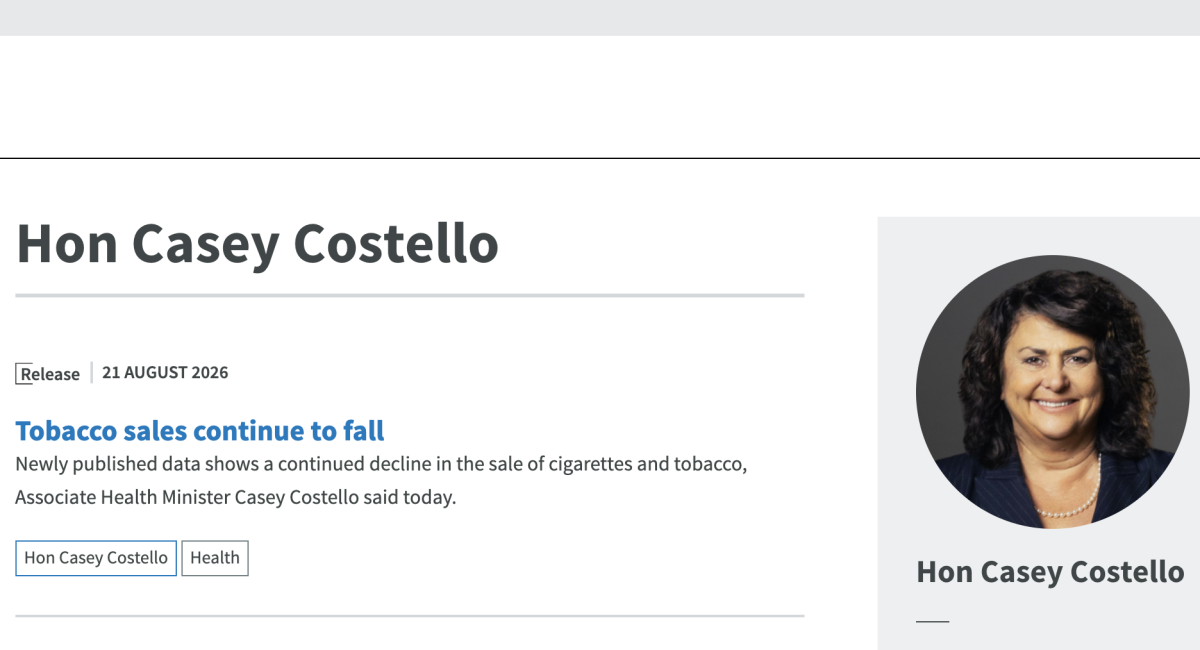
New Zealand Associate Health Minister Casey Costello Warns on Illicit Cigarettes as Legal Tobacco Sales Halve Over Decade
New Zealand Associate Health Minister Casey Costello said legal tobacco sales in the country have fallen by more than half over the past decade, with sales declining more than 20% in 2025 compared with the previous year. She warned that the decline may not fully reflect lower smoking rates, as increased availability of illicit cigarettes could also be contributing. The government said it would continue strengthening tobacco and vape retail enforcement while monitoring the impact of illicit tobacco on public health and tax revenue.
Aug.26
PMI Global R&D Chief Meets Chinese Tobacco Regulator as China Advances Heated Cigarette Standards
Philip Morris International’s global R&D chief Michele Cattoni met Liu Sanjiang, deputy director of China’s State Tobacco Monopoly Administration, in Beijing on Aug. 27. The meeting comes as China advances mandatory standards for heated cigarettes and nicotine pouches, laying groundwork for their domestic introduction. Cattoni has held senior roles in PMI’s heated tobacco development, while China’s draft standard covers multiple heating architectures, including systems similar in principle to PMI’s IQOS ILUMA technology.
Aug.27
2Firsts Hosts China Market Forum at InterTabac as Global Industry Attention to China’s Tobacco Sector Deepens
On September 16, 2Firsts hosted a China-focused industry forum during InterTabac in Dortmund, bringing together more than 30 participants from North America, Europe, India, South Korea and other markets. The session covered traditional tobacco, next-generation products, exports, technology, regulation and supply chains, while examining how China’s tobacco sector operates, where its transformation may be heading, and why its growing role matters increasingly to companies across the global tobacco and nicotine industry.
Sep.21
As JUUL2 Wins FDA Authorization, Harm Reduction Journal Highlights the Role of Real-World Evidence in Nicotine Product Regulation
A commentary published in the international open-access, peer-reviewed Harm Reduction Journal argues that randomized controlled trials remain central to evaluating smoking cessation efficacy but cannot alone capture real-world uptake, complete switching, longer-term use and population impact of non-combustible nicotine products such as e-cigarettes, heated tobacco and nicotine pouches. The authors frame impact as “reach × efficacy” and call for real-world evidence to complement RCTs. Three days after publication, the FDA authorized three JUUL2 products and highlighted complete switching among adult smokers in explaining its decision, providing a timely regulatory backdrop to the debate.
Sep.08
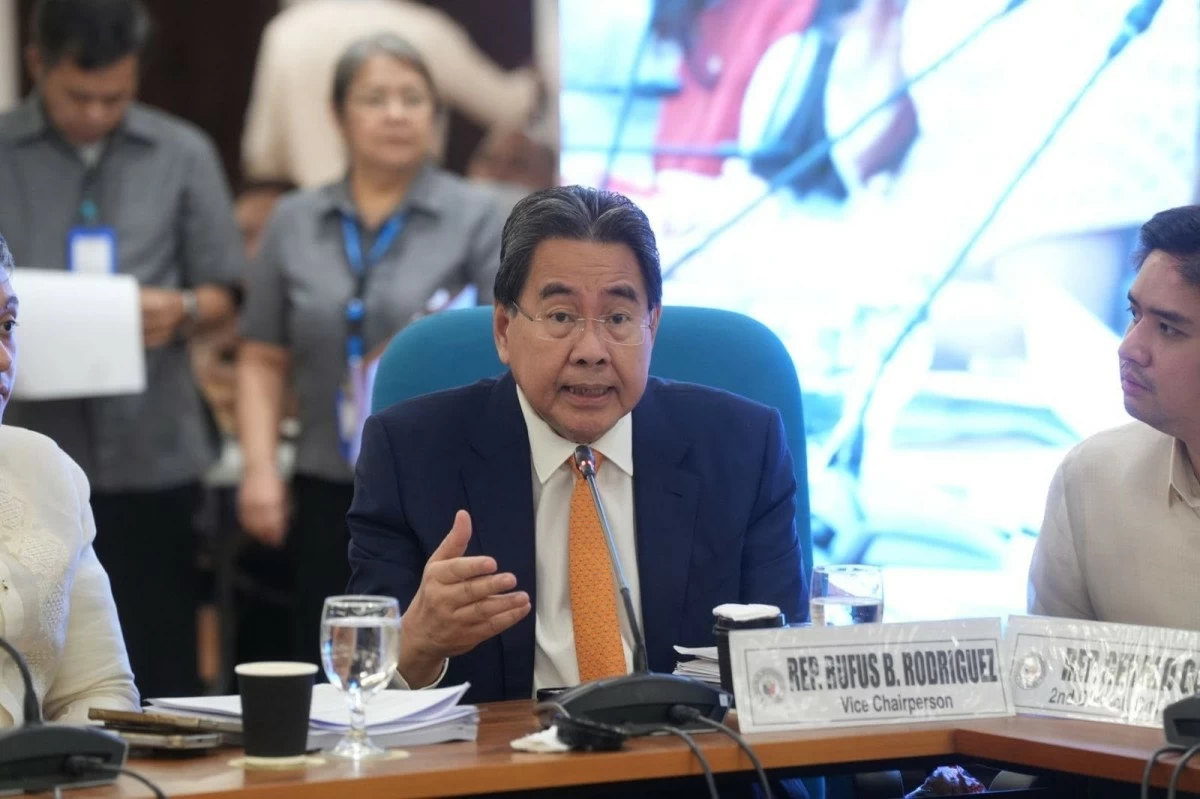
Philippines Weighs Unified Vape Tax as Lawmakers Back Risk-Based Rates and Government Seeks to Fill ₱66 Billion Revenue Gap
Philippine lawmakers are considering an overhaul of the country's vape excise-tax regime to eliminate the wide gap between taxes on nicotine salt and freebase nicotine liquids and reduce incentives for misdeclaration. House Bill 5364, filed by Rep. Rufus Rodriguez and Rep. Maximo Rodriguez Jr., would impose a unified ₱10-per-milliliter tax on vapor products, with 5% annual increases beginning in 2027. Rodriguez says the proposal could generate an average ₱6 billion in annual collections from 2027 through 2030. The debate comes as the Philippine government considers tobacco, vape and other health-tax reforms to help offset around ₱66 billion in revenue expected to be forgone under a proposed tax-relief package.
Aug.18