Rising Concerns: The Spread of E-Cigarette Among Malaysian Youth

Sep.10.2024
Rising Concerns: The Spread of E-Cigarette Among Malaysian Youth
Over 8,000 Malaysian students, including 4,000 primary schoolers, found using e-cigarettes, alarming Penang Consumers Association (CAP) survey.

According to a report by Oriental Daily on September 10th, a recent survey conducted by the Consumers Association of Penang (CAP) on 15,000 students in Penang, Perak, Kedah, Selangor, and Kuala Lumpur revealed that up to 8,000 students are using e-cigarettes, with 4,000 of them being primary school students.


The education director of the Penang Consumer Association, Mr. Subaru, stated that around 1,000 children have not used their own money to purchase e-cigarettes, but instead obtained them from older family members such as grandparents, fathers, or older brothers. These children sneakily try using e-cigarettes when their family members are not around, and are able to provide detailed information about the flavors, stores where they are purchased, prices, and the feeling of using nicotine e-cigarettes. However, they are not aware of the dangers of nicotine or the ingredients in the flavors.


Subaru pointed out that the association conducted investigations in several states starting from 2021 and found that the spread of e-cigarettes among young people on campus is extremely serious. In colleges, the use of e-cigarettes has reached crisis levels, with the ratio of men to women using e-cigarettes being about six to four.


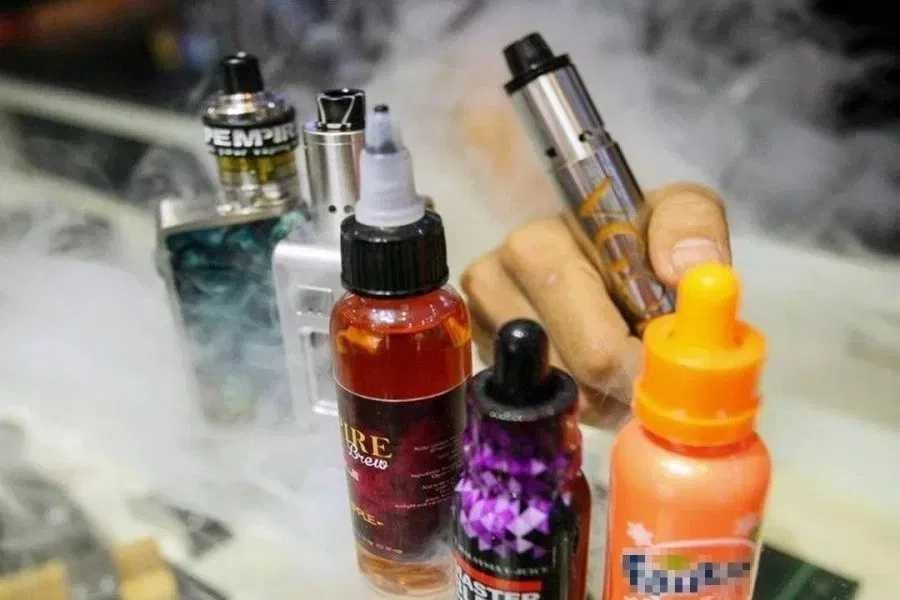
In addition, he emphasized that e-cigarettes are very easily accessible, sold in grocery stores and roadside stalls for as low as 5 to 10 ringgit ($1 to $2), lacking regulations that make it easy for teenagers to obtain e-cigarettes. He expressed concerns about the current situation, fearing that if products containing nicotine are not effectively regulated, it may lead to more teenagers becoming addicted to nicotine in the future.


He added that many countries such as Singapore and Thailand have already banned the use of e-cigarettes, while Malaysia has become a haven for e-cigarette users, with the number of e-cigarette shops rapidly increasing in places like George Town.


We welcome news tips, article submissions, interview requests, or comments on this piece.

Please contact us at info@2firsts.com, or reach out to Alan Zhao, CEO of 2Firsts, on LinkedIn


Notice

1.  This article is intended solely for professional research purposes related to industry, technology, and policy. Any references to brands or products are made purely for objective description and do not constitute any form of endorsement, recommendation, or promotion by 2Firsts.

2.  The use of nicotine-containing products — including, but not limited to, cigarettes, e-cigarettes, nicotine pouchand heated tobacco products — carries significant health risks. Users are responsible for complying with all applicable laws and regulations in their respective jurisdictions.

3.  This article is not intended to serve as the basis for any investment decisions or financial advice. 2Firsts assumes no direct or indirect liability for any inaccuracies or errors in the content.

4.  Access to this article is strictly prohibited for individuals below the legal age in their jurisdiction.


Copyright


This article is either an original work created by 2Firsts or a reproduction from third-party sources with proper attribution. All copyrights and usage rights belong to 2Firsts or the original content provider. Unauthorized reproduction, distribution, or any other form of unauthorized use by any individual or organization is strictly prohibited. Violators will be held legally accountable.

For copyright-related inquiries, please contact: info@2firsts.com


AI Assistance Disclaimer


This article may have been enhanced using AI tools to improve translation and editorial efficiency. However, due to technical limitations, inaccuracies may occur. Readers are encouraged to refer to the cited sources for the most accurate information.

We welcome any corrections or feedback. Please contact us at: info@2firsts.com

Special Report|South Korean Lawmaker Queries China Tobacco Regulator Over Synthetic Nicotine as Export-Rule Gaps Emerge
A South Korean lawmaker has asked China’s tobacco regulator to clarify rules for e-cigarettes containing synthetic nicotine amid questions over product declarations and possible tax losses. The dispute exposes gaps between Chinese export requirements and destination-market rules, while underscoring the global impact of China’s licensing and traceability policies.
Jul.10
Reemtsma says German illegal e-cigarette seizures reached 70% of 2025 total, pouches 179%
Reemtsma said its first-half 2026 black-market tracker for tobacco and nicotine products showed a continued rise in officially reported seizures in Germany, with illegal e-cigarette seizures reaching 70% of the full-year 2025 level and snus and nicotine pouch seizures reaching 179% of last year’s total.
Jul.08
Australia’s Daily Smoking Rate Falls to Record Low of 5.8% as Nicotine Use Patterns Shift
According to the Australian Institute of Health and Welfare’s National Drug Strategy Household Survey, daily smoking among Australians aged 18 and over fell to a record low of 5.8% in 2025. Health Minister Mark Butler said Australia now has around 500,000 fewer daily smokers than three years ago and credited the government’s vaping reforms as part of broader progress. Among people aged 14 and over, daily smoking declined from 8.3% in 2022-23 to 5.6% in 2025. Daily vaping rates stabilised at 3.6%, while the government also moved to further restrict access to nicotine pouches through unapproved therapeutic import pathways.
Jul.21
China’s Zhengzhou Tobacco Research Institute develops end-to-end heated tobacco analysis to trace aerosol compound origins
The Zhengzhou Tobacco Research Institute of China National Tobacco Corporation has filed a patent application for an end-to-end method to analyze the migration and transformation of chemical compounds in heated tobacco products. Using GC-Orbitrap/MS non-targeted analysis, the method compares tobacco substrate and aerosol samples to distinguish compounds transferred directly from the substrate from those newly formed during heating, while also calculating transfer rates. In an example involving nine heated tobacco products, the patent identified 17 newly formed thermal decomposition compounds and 38 transferred compounds.
Aug.13
China Tobacco International HK Warns First-Half Revenue May Fall 25%-30%, Tobacco Leaf and Duty-Free Exposure Highlight Reliance on Traditional Tobacco
CTIHK expects first-half 2026 revenue to fall 25%-30%, mainly due to lower tobacco leaf imports and delayed cigarette shipments to China’s domestic duty-free market. Its 2025 revenue mix—nearly 90% from tobacco leaf-related businesses and less than 1% from new tobacco products—shows continued exposure to traditional supply chains and trade variables.
Jun.18
North Carolina Adds $1,000 Vape Shop Tax and 21+ Age Verification Requirement
North Carolina’s new state budget introduces additional vape retail regulations, including a $1,000 tax on vape shops and mandatory age verification requiring customers to be at least 21.
Jul.08