Moscow Sets High Fines for Online Tobacco and E-cigarette Sales

Regulations by 2FIRSTS.ai
Aug.14.2024
Moscow Sets High Fines for Online Tobacco and E-cigarette Sales
Russia imposes high fines on online tobacco and e-cigarette sales violators, with a maximum penalty of 30,000 rubles.

According to a report by PNP on August 14th, online sales of tobacco and e-cigarettes in Russia will be subject to heavy fines, with violators facing fines of up to 300,000 rubles (approximately $3,300). This amendment was proposed by the Moscow City Duma as part of the Administrative Offenses Code.


According to reports, current laws have already banned the remote sale of tobacco products, products containing nicotine, shisha, and related equipment, but in practice, this regulation is often overlooked. Legislators proposing amendments have pointed out that between November 2023 and January 2024, a total of 471 potentially harmful online resources were discovered, with these websites either selling nicotine-containing products or advertising related products.


To this end, the new law proposes establishing regulations for the remote sale of tobacco and nicotine products, mirroring the management of remote alcohol sales, to ensure responsible information dissemination.


According to this amendment, ordinary citizens who violate the regulations will be fined between 3000 and 5000 rubles, government officials will face fines of 20,000 to 40,000 rubles, and businesses may be fined 100,000 to 300,000 rubles.


We welcome news tips, article submissions, interview requests, or comments on this piece.

Please contact us at info@2firsts.com, or reach out to Alan Zhao, CEO of 2Firsts, on LinkedIn


Notice

1.  This article is intended solely for professional research purposes related to industry, technology, and policy. Any references to brands or products are made purely for objective description and do not constitute any form of endorsement, recommendation, or promotion by 2Firsts.

2.  The use of nicotine-containing products — including, but not limited to, cigarettes, e-cigarettes, nicotine pouchand heated tobacco products — carries significant health risks. Users are responsible for complying with all applicable laws and regulations in their respective jurisdictions.

3.  This article is not intended to serve as the basis for any investment decisions or financial advice. 2Firsts assumes no direct or indirect liability for any inaccuracies or errors in the content.

4.  Access to this article is strictly prohibited for individuals below the legal age in their jurisdiction.


Copyright


This article is either an original work created by 2Firsts or a reproduction from third-party sources with proper attribution. All copyrights and usage rights belong to 2Firsts or the original content provider. Unauthorized reproduction, distribution, or any other form of unauthorized use by any individual or organization is strictly prohibited. Violators will be held legally accountable.

For copyright-related inquiries, please contact: info@2firsts.com


AI Assistance Disclaimer


This article may have been enhanced using AI tools to improve translation and editorial efficiency. However, due to technical limitations, inaccuracies may occur. Readers are encouraged to refer to the cited sources for the most accurate information.

We welcome any corrections or feedback. Please contact us at: info@2firsts.com

South Korea Imports 12,126 Kg of Nicotine Analogues From April to August After Bringing Synthetic Nicotine Under Tobacco Law
South Korea's liquid-vape market is showing changes across raw-material imports, product types and sales channels after synthetic nicotine came under the Tobacco Business Act on April 24. Customs data show nicotine-analogue imports totaled 12,126 kilograms from April through August, while synthetic-nicotine imports over the same five months totaled 231,663 kilograms, just 39.3% of the amount imported in March alone. Physical liquid-vape stores tracked in Seoul and Gyeonggi Province fell 9.9%, unmanned outlets edged higher and online sales listings increased from 27,774 to 42,437. Government testing of 105 liquid inhalation products promoted as nicotine-free separately found nicotine in 13 and 6-methylnicotine in 12.
Sep.22
2Firsts Data|China’s Vape-Related Exports Rose 3.3% in August 2026 as UK Shipments Jumped 51.4% and U.S. Exports Fell 12.4%
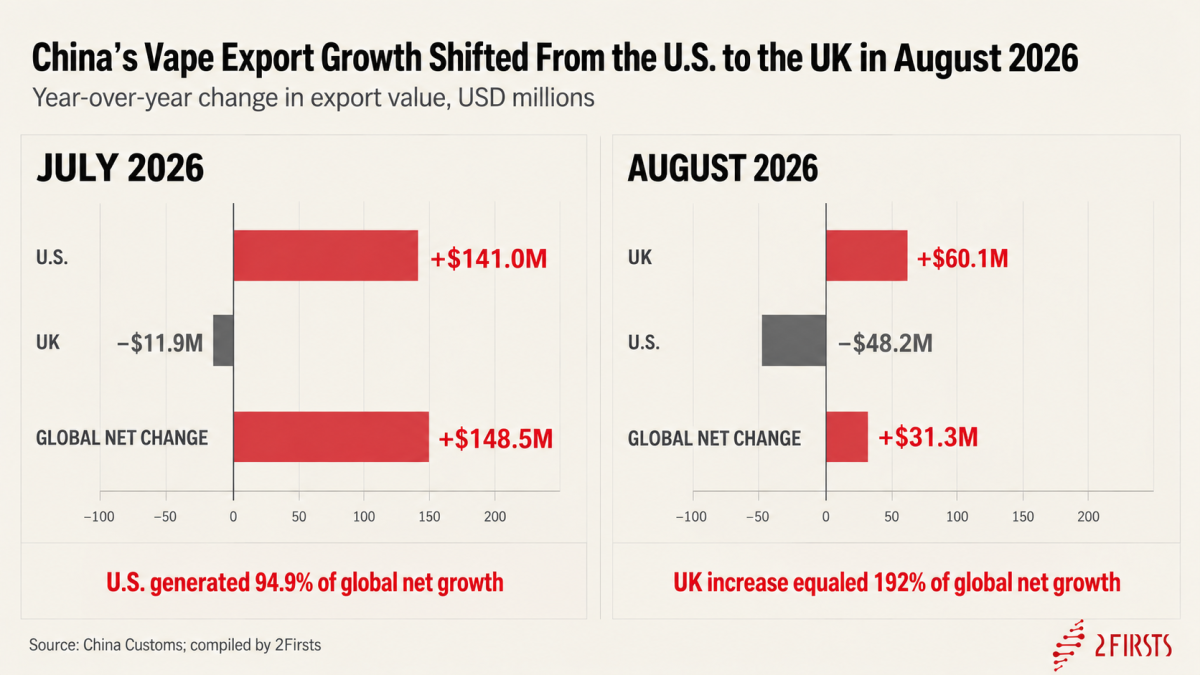
China exported $979 million of vape-related products in August 2026, up 3.3% from a year earlier but down 6.4% from July. The UK replaced the U.S. as the main source of growth: UK-bound shipments jumped 51.4% to a 2026 high of $177 million, while exports to the U.S. fell 12.4% to $339 million. Shipments to markets outside the U.S. increased 14.2%, broadening growth beyond the market that had driven July’s rebound.
News
Sep.23 by 2Firsts Perspectives
Science | International Experts Propose a New Smoking Cessation Pathway, Citing Higher Quit Rates With E-Cigarettes Than Nicotine Replacement Therapy
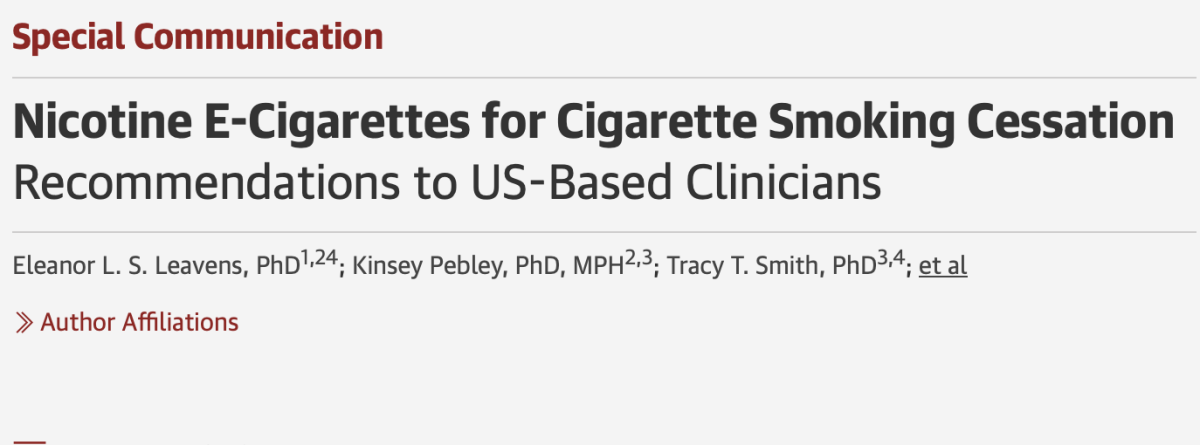
A new expert paper in JAMA urges U.S. clinicians to include nicotine e-cigarettes in smoking-cessation discussions, citing higher quit rates than nicotine replacement therapy. It also stresses that products must deliver enough nicotine to replace cigarettes, dual use should be brief, and complete switching is the goal. 2Firsts argues the recommendations matter beyond clinics: public-health professionals should reassess relative risk, regulators should preserve sufficient product appeal for adult smokers, and manufacturers should focus on helping users quit cigarettes more sustainably.
SCIENCE
Aug.03 by 2Firsts Perspectives
Australia Adds 6-Methylnicotine to Schedule 9 Prohibited Substances, Effective October 1
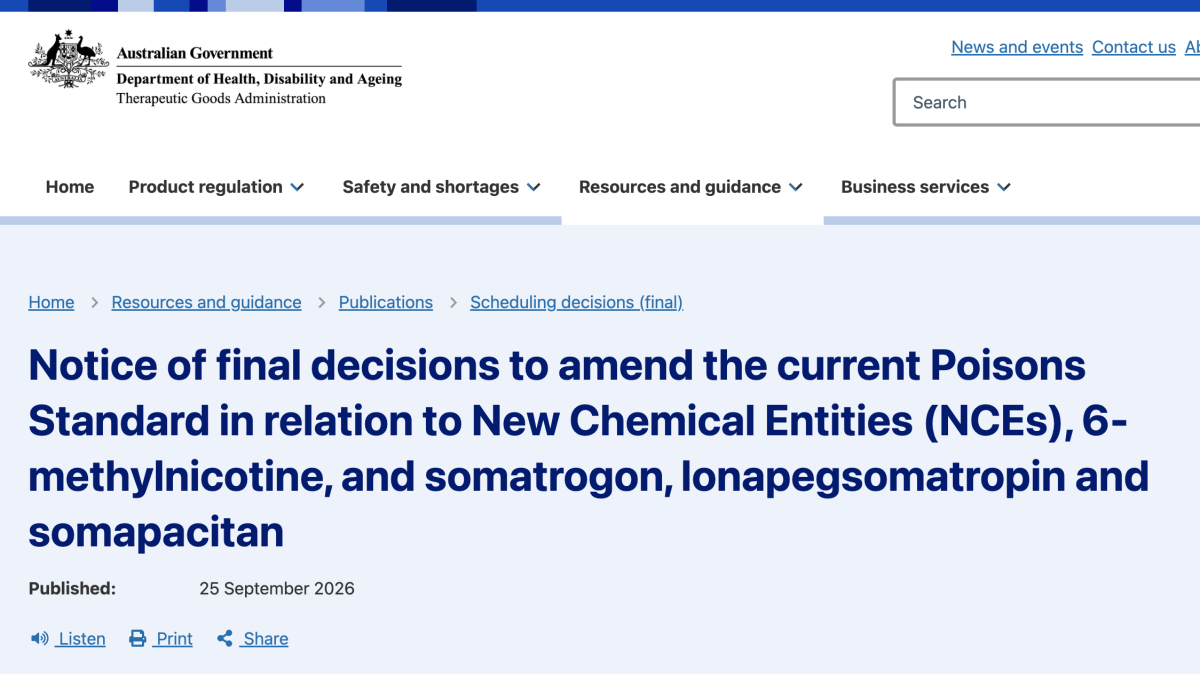
Australia's Therapeutic Goods Administration published a final decision on September 25 to classify 6-methylnicotine as a Schedule 9 prohibited substance under the Poisons Standard, effective October 1, 2026. TGA said the chemical has been reported in e-cigarette liquids sold in Australia and marketed as nicotine-free or nicotine alternatives, while evidence also indicates its use in preparations such as oral pouches. The government originally proposed a Schedule 7 classification but ultimately adopted the stricter Schedule 9 designation, citing acute toxicity, dependence risk, use in unapproved consumer products and misleading marketing.
News
Sep.29 by 2Firsts Perspectives
Product | HQD SiSA 80K Enters the U.S. Market With a Hookah-Inspired Approach to the High-Capacity Disposable Segment
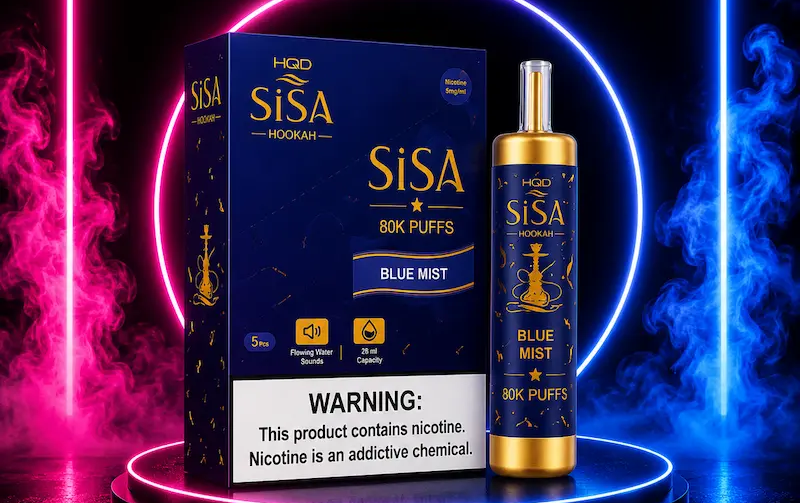
The HQD SiSA 80K Hookah Disposable Vape has appeared across U.S. and cross-border online retail channels. The device comes prefilled with 28ml of e-liquid, uses a 5% nicotine salt configuration and carries a brand claim of up to 80,000 puffs. Beyond puff count, the product differentiates itself through hookah-inspired features including adjustable airflow, a flowing-water sound effect and flavor options associated with traditional hookah consumption.
Aug.18
F1 Faces Renewed Pressure Over Tobacco and Nicotine Sponsorships as 67 Groups Target ZYN and VELO Ahead of Madrid Race
Ahead of the Formula 1 race in Madrid, 67 Spanish and international public-health, medical and consumer organizations have sent an open letter to F1 President and CEO Stefano Domenicali calling for an end to sponsorships linked to the tobacco and nicotine industry, including nicotine pouches, vaping products and heated tobacco. The letter focuses on Philip Morris International’s ZYN partnership with Ferrari and British American Tobacco’s long-running partnership with McLaren and exposure for VELO. The campaign follows a March letter in which more than 160 organizations worldwide made a similar request to Formula 1.
Sep.10