Russia Successfully Closes 45 Illegal Tobacco Factories in 5 Years

Regulations by 2FIRSTS.ai
May.13.2024
Russia Successfully Closes 45 Illegal Tobacco Factories in 5 Years
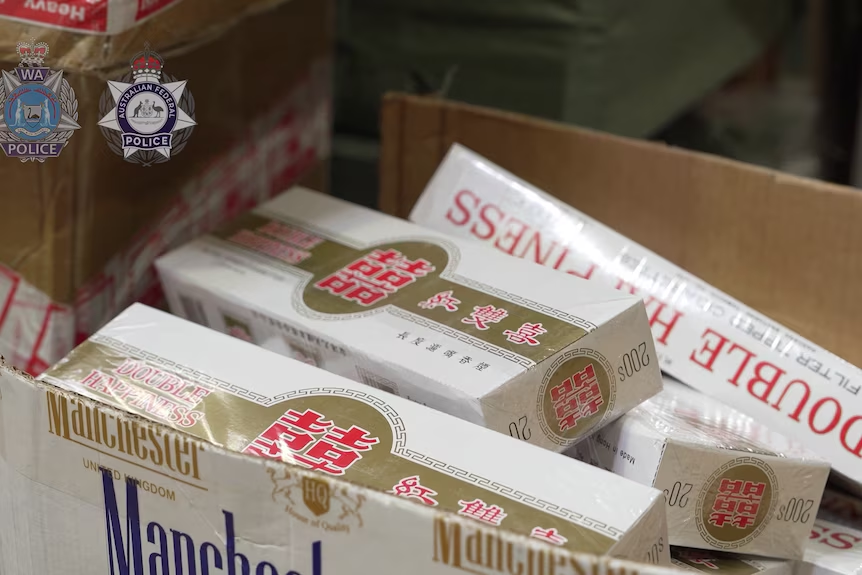
Russia successfully closed about 45 illegal tobacco factories in the past five years, implementing a strict labeling system for tobacco products.

According to the Russian media outlet Newsland.com, on May 12, the Russian government has cracked down on the tobacco market over the past five years, successfully closing approximately 45 illegal tobacco factories and fully implementing a tobacco product labeling system. This is to strengthen market supervision and ensure the legal production and sale of tobacco products.


The operator of the "Honesty Label" tagging system stated that in the context of introducing labels, increasing tax revenues, and legal production quantities in the industry, Russia has closed about 45 illegal tobacco factories in the past five years.


Mikhail Dubin, head of the Advanced Technology Development Center, stated in an interview with the Russian News Agency that the labeling of tobacco products in the Russian market began in 2019. The labeling codes apply to cigarettes, e-cigarettes, disposable e-cigarettes, and other products. During this period, the budget revenue from tobacco products has "more than doubled.


During the implementation of this system, the country closed 45 illegal tobacco factories and legalized 18 production facilities. In addition, Russia today may be one of the very few (if not the only) countries in the world where all tobacco factories have been legalized. Tobacco products are labeled strictly according to the recommendations of the World Health Organization," Düben said.


We welcome news tips, article submissions, interview requests, or comments on this piece.

Please contact us at info@2firsts.com, or reach out to Alan Zhao, CEO of 2Firsts, on LinkedIn


Notice

1.  This article is intended solely for professional research purposes related to industry, technology, and policy. Any references to brands or products are made purely for objective description and do not constitute any form of endorsement, recommendation, or promotion by 2Firsts.

2.  The use of nicotine-containing products — including, but not limited to, cigarettes, e-cigarettes, nicotine pouchand heated tobacco products — carries significant health risks. Users are responsible for complying with all applicable laws and regulations in their respective jurisdictions.

3.  This article is not intended to serve as the basis for any investment decisions or financial advice. 2Firsts assumes no direct or indirect liability for any inaccuracies or errors in the content.

4.  Access to this article is strictly prohibited for individuals below the legal age in their jurisdiction.


Copyright


This article is either an original work created by 2Firsts or a reproduction from third-party sources with proper attribution. All copyrights and usage rights belong to 2Firsts or the original content provider. Unauthorized reproduction, distribution, or any other form of unauthorized use by any individual or organization is strictly prohibited. Violators will be held legally accountable.

For copyright-related inquiries, please contact: info@2firsts.com


AI Assistance Disclaimer


This article may have been enhanced using AI tools to improve translation and editorial efficiency. However, due to technical limitations, inaccuracies may occur. Readers are encouraged to refer to the cited sources for the most accurate information.

We welcome any corrections or feedback. Please contact us at: info@2firsts.com

The Volume Illusion: Measuring the Future of Nicotine with the Tools of the Past
As next-generation nicotine products become economically central rather than marginal, traditional volume-based metrics are increasingly unable to explain consumption, risk, and value. Units designed for a cigarette-based economy struggle to describe systems defined by delivery speed, pharmacokinetics, and adaptive user behavior. Drawing on financial reporting, regulation, and nicotine science, a fundamental question: can the future of nicotine still be measured using the tools of its past?
Feb.09 by Alan Zhao | 2Firsts Perspectives
BAT faces London shareholder lawsuit over alleged disclosure failures tied to North Korea business
British American Tobacco is facing a shareholder lawsuit in London alleging it failed to properly disclose to markets information about breaches of U.S. sanctions linked to its North Korea-related business. BAT agreed in 2023 to pay more than $635 million to U.S. authorities after a subsidiary admitted conspiring to violate U.S. sanctions by selling tobacco products to North Korea and committing bank fraud from 2007 to 2017.
Mar.05 by 2FIRSTS.ai
Scandinavian Tobacco Group to Hold Annual General Meeting on April 15
Scandinavian Tobacco Group A/S has issued notice of its annual general meeting, which will be held on April 15, 2026 at 4:30 p.m. in Copenhagen and will also be available by live webcast.
Mar.25 by 2FIRSTS.ai
Small ENDS Manufacturers Press FDA on Abuse Liability Standards as Agency Defines Pharmacological Review Framework
At the third session of its PMTA roundtable, the FDA outlined its framework for assessing abuse liability in ENDS products, emphasizing the role of nicotine pharmacokinetics and product-specific data in APPH determinations. Small manufacturers questioned the high cost of clinical PK studies and the absence of defined numeric thresholds, while raising bridging strategies and PBPK modeling as potential alternatives.
Feb.11
NYC makers turn discarded disposable vapes into “Vape Synth” mini digital instruments
The report says disposable vapes are sold at more than 11 million units per month and often end up in landfills after flavored nicotine juice runs out, along with lithium-ion batteries, microcontrollers, and LEDs, increasing the risk of waste fires. A New York City maker trio known as Paper Bag Team has built “Vape Synth” by cracking open spent Elf Bar cartridges—specifically the EB BC5000—and hacking them into tiny digital instruments.
Feb.12 by 2FIRSTS.ai
PMI Faces Setback in India: Global Regulatory Fragmentation Complicates Its Smoke-Free Transition
India has reaffirmed its 2019 ban on e-cigarettes and heated tobacco devices, effectively blocking Philip Morris International (PMI) from launching IQOS in the country despite years of lobbying. Together with Taiwan, China’s conditional opening of heated tobacco products, and Japan’s planned 2026 excise tax hikes, these moves highlight increasingly divergent national regulatory pathways—an external uncertainty shaping PMI’s smoke-free growth trajectory.
Feb.12