South Australia Proposes Tough Laws to Combat Illegal Tobacco Trading

Aug.28.2024
South Australia Proposes Tough Laws to Combat Illegal Tobacco Trading
South Australia introduces strict new laws to combat illegal tobacco and e-cigarette sales, aligning with national legislation trends.

According to miragenews on August 28, the South Australian government has today introduced a new legislation proposal to the state parliament aimed at imposing the strictest penalties nationwide for illegal tobacco and e-cigarette sales. This is the state government's latest initiative to combat illegal tobacco and e-cigarette markets, as well as crimes targeting children.


This new state regulation aligns with strict national laws, prohibiting the retail supply of e-cigarettes and further banning the provision of prescription e-cigarettes to minors.


The new legislation also includes the following provisions:


Fines have increased for certain violations related to e-cigarettes, with penalties reaching up to 1.5 million Australian dollars (approximately 1.02 million US dollars); the sale of tobacco products through vending machines in public places is prohibited; supplying e-cigarettes to minors is banned, even if they are for therapeutic use; new products that serve as alternatives to e-cigarettes, such as nicotine pouches, can be prohibited; a five-meter smoke-free buffer zone is to be set up in public transport areas; authorities are empowered to control purchase operations in order to effectively monitor sales to minors.


The changes in penalties for corporate entities include:


Penalties for advertising tobacco products have increased from $10,000 to $750,000 for a first offense, with repeat offenses potentially reaching up to $1.1 million; selling without a license has also increased from $20,000 to $750,000 for a first offense, with a maximum of $1.1 million for repeat offenses; selling to minors now carries a maximum penalty of $1 million for a first offense, with repeat offenses reaching up to $1.5 million (previously $20,000 and $40,000); selling or possessing illegal tobacco for sale has increased from $50,000 to $750,000 for a first offense, with a maximum of $1.1 million for repeat offenses; and selling or possessing e-cigarettes or other prohibited products carries a maximum penalty of $750,000 for a first offense, with repeat offenses potentially reaching up to $1.1 million.


According to reports, since July 1, the Consumer and Business Services (CBS) has conducted a series of successful raids, leading to the seizure of illegal tobacco, e-cigarettes, and other tobacco products totaling $285,000 Australian dollars (approximately $190,000 USD). In response to the increasing severity of this illegal trade, the government has invested an additional $16 million Australian dollars to establish a dedicated task force within the Consumer and Business Services agency to strengthen enforcement of tobacco and e-cigarette product sales and licensing.


According to data, the percentage of secondary school students who have used e-cigarettes increased from 13.5% to 29.9% between 2017 and 2023. Among 15 to 29-year-olds in South Australia, the rate of e-cigarette use also significantly increased from 2.6% in 2014 to 8.4% in 2022, and nearly doubled to 15.1% in 2023.


Marina Bowshall, interim CEO of South Australia Health Prevention, stated that...


Our consultation on this legislation has shown that the community has significant concerns about the health effects of smoking and e-cigarettes, and strongly supports stricter regulations. Smoking has a devastating human cost, being a major factor in cancer, stroke, and heart disease, as well as a leading cause of hospital admissions in Australia. If we can help more people quit smoking and prevent the increase in e-cigarette use, our community will become healthier.


We welcome news tips, article submissions, interview requests, or comments on this piece.

Please contact us at info@2firsts.com, or reach out to Alan Zhao, CEO of 2Firsts, on LinkedIn


Notice

1.  This article is intended solely for professional research purposes related to industry, technology, and policy. Any references to brands or products are made purely for objective description and do not constitute any form of endorsement, recommendation, or promotion by 2Firsts.

2.  The use of nicotine-containing products — including, but not limited to, cigarettes, e-cigarettes, nicotine pouchand heated tobacco products — carries significant health risks. Users are responsible for complying with all applicable laws and regulations in their respective jurisdictions.

3.  This article is not intended to serve as the basis for any investment decisions or financial advice. 2Firsts assumes no direct or indirect liability for any inaccuracies or errors in the content.

4.  Access to this article is strictly prohibited for individuals below the legal age in their jurisdiction.


Copyright


This article is either an original work created by 2Firsts or a reproduction from third-party sources with proper attribution. All copyrights and usage rights belong to 2Firsts or the original content provider. Unauthorized reproduction, distribution, or any other form of unauthorized use by any individual or organization is strictly prohibited. Violators will be held legally accountable.

For copyright-related inquiries, please contact: info@2firsts.com


AI Assistance Disclaimer


This article may have been enhanced using AI tools to improve translation and editorial efficiency. However, due to technical limitations, inaccuracies may occur. Readers are encouraged to refer to the cited sources for the most accurate information.

We welcome any corrections or feedback. Please contact us at: info@2firsts.com

South Korea Vape Strategies Diverge as BAT Reconsiders Exit and PMI Takes VEEV to About 14,000 Stores
BAT Rothmans says it previously considered exiting South Korea's vaping market because of competitive pressure from unregulated products, but is now reassessing conditions following changes to the country's nicotine regulatory framework. Vuse and other BAT vaping products remain available through existing distribution channels. The statement followed a South Korean media report that interpreted BAT's broader withdrawal from selected Vapour markets as a full exit from South Korea. Meanwhile, Philip Morris International launched VEEV inPRIME in the country in June and began expanding distribution to around 14,000 convenience stores and other retail channels in July. The contrasting moves highlight differing investment strategies as South Korea's regulated vaping market evolves.
Aug.14
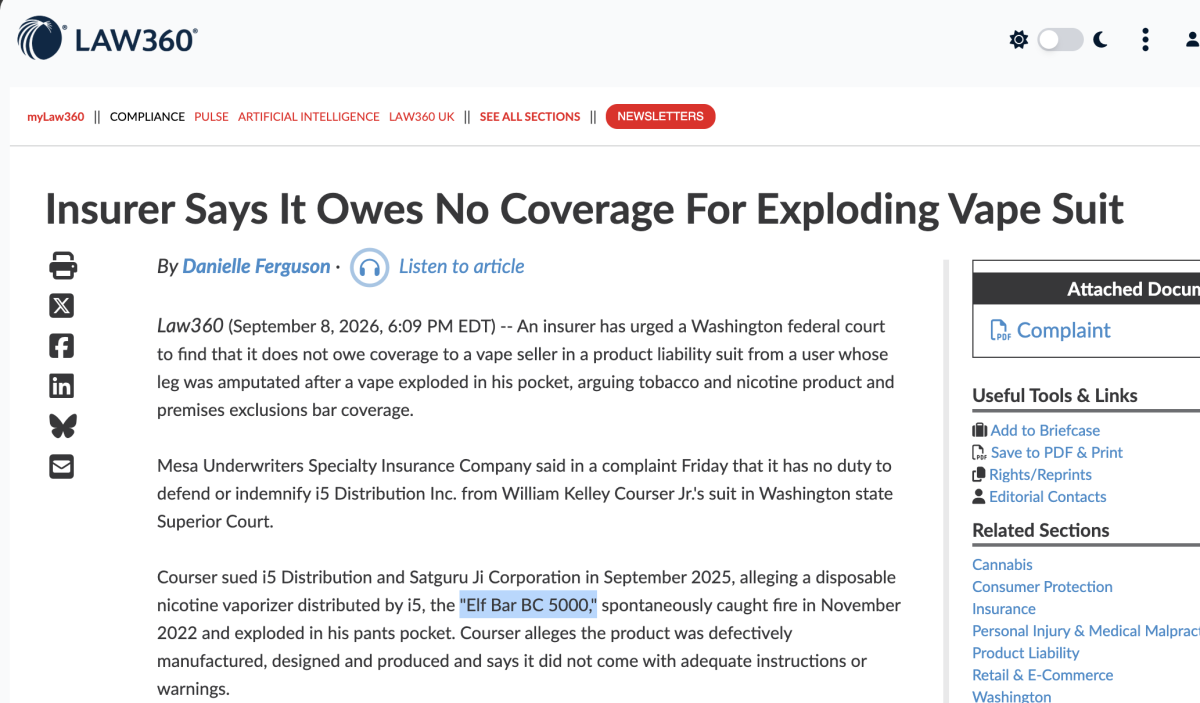
Elf Bar Vape Explosion and Amputation Claim Spurs Coverage Suit, U.S. Insurer MUSIC Seeks Ruling It Owes No Duty to Defend or Indemnify Distributor i5
Mesa Underwriters Specialty Insurance Company has asked a federal court in Washington to declare that it has no duty to defend or indemnify vape distributor i5 Distribution in a product liability case involving an Elf Bar BC5000. The plaintiff alleges that the disposable vape caught fire and exploded in his pocket, causing severe burns and ultimately requiring an above-the-knee amputation of his left leg. MUSIC is relying on a tobacco, nicotine or nicotine replacement products exclusion and a premises limitation endorsement. The court has not ruled on the coverage dispute.
News
Sep.10
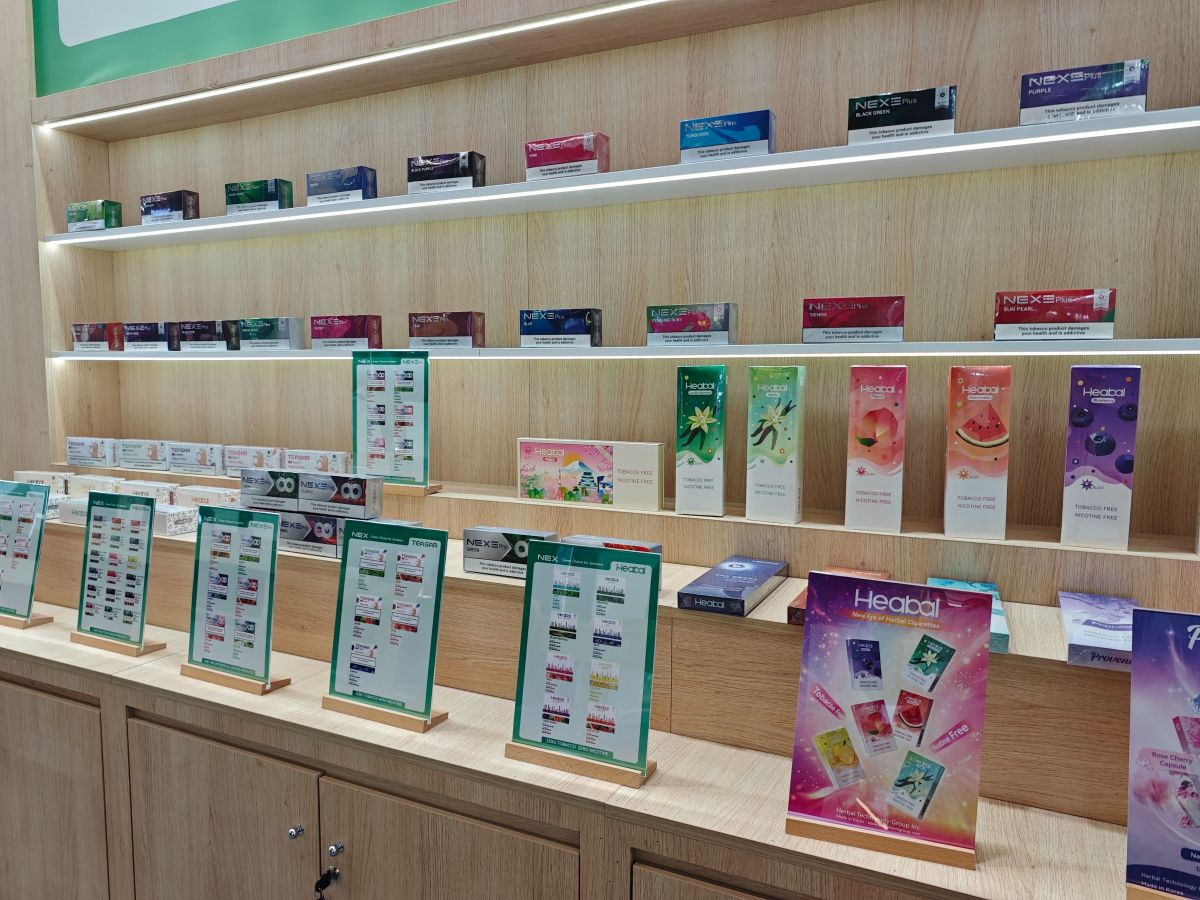
From Product Innovation to Integrated Solutions: NEXTECH Expands Its Global Heated Tobacco Solutions
NEXTECH launched its NEXE Pro circumferential-heating tobacco stick globally at InterTabac 2026, as the company expands from product innovation into broader heated tobacco solutions. Amid intensifying competition across global HTP markets, NEXTECH is strengthening its R&D, manufacturing and pre-launch support capabilities to serve different types of business customers.
Industry Insight
Sep.15
Russia’s Vape Device Labeling Regime Enters Force: Registration Starts in September, Mandatory Coding in December
Russia's digital labeling regime for reusable e-cigarettes and similar personal vaping devices entered its first mandatory phase in September 2026. From September 1, manufacturers, importers and other market participants must register with the national Chestny ZNAK tracking system. From December 1, newly manufactured and imported covered devices will be required to carry digital identification codes and be reported as entering circulation. Russia has also issued new operational guidance for imports, marking the transition from a voluntary pilot to phased mandatory implementation.
Sep.15
Science | International Experts Propose a New Smoking Cessation Pathway, Citing Higher Quit Rates With E-Cigarettes Than Nicotine Replacement Therapy
A new expert paper in JAMA urges U.S. clinicians to include nicotine e-cigarettes in smoking-cessation discussions, citing higher quit rates than nicotine replacement therapy. It also stresses that products must deliver enough nicotine to replace cigarettes, dual use should be brief, and complete switching is the goal. 2Firsts argues the recommendations matter beyond clinics: public-health professionals should reassess relative risk, regulators should preserve sufficient product appeal for adult smokers, and manufacturers should focus on helping users quit cigarettes more sustainably.
SCIENCE
Aug.03 by 2Firsts Perspectives
Cochrane 2026 Update Adds Nine Trials, Keeps High-Certainty Finding That Nicotine E-Cigarettes Improve Quit Rates Over NRT
Cochrane’s 2026 update of its living review on electronic cigarettes for smoking cessation included 80 randomized controlled trials involving 29,861 adult smokers, with nine trials added in this update. The review retained its high-certainty conclusion that nicotine e-cigarettes increase smoking cessation rates compared with nicotine replacement therapy. In absolute terms, about 10 in 100 people using nicotine e-cigarettes may quit smoking for at least six months, compared with about 6 in 100 using NRT. The review found no clear difference in serious adverse event rates between the two groups, while longer-term safety and the relative effectiveness of newer device types remain less certain.
Sep.07