Swiss Canton's Proposed Disposable Vape Ban Sparks Political Debate

Nov.21.2024
Swiss Canton's Proposed Disposable Vape Ban Sparks Political Debate
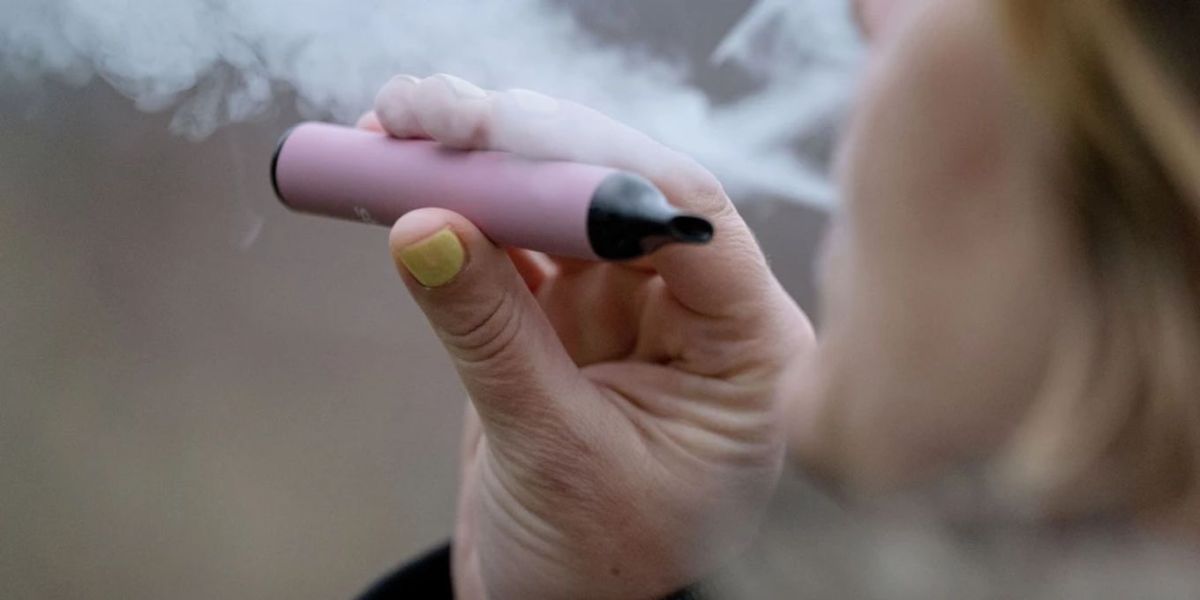
A Swiss canton has voted to ban the sale of disposable vapes, potentially becoming the first in the country to enact such a ban, as federal officials also consider a nationwide restriction.

According to Blick, on November 21, Switzerland's Basel-Stadt canton will ban the sale of disposable vapes.


On Wednesday evening (November 20), the Grand Council approved a motion proposed by the Evangelical People's Party (EVP) with a vote of 45 to 35, with 11 abstentions. The motion has now been referred to the government for a preliminary report.


The Free Democratic Party (LDP), the Liberal Party (FDP), and the Swiss People's Party (SVP) opposed submitting the motion to the government. SVP member Joël Thüring stated, "The sales ban should be discussed at the national level, not the cantonal level."


The government also opposed the motion. Health Director Lukas Engelberger noted that the scope for canton-level regulations is very limited.


Member of Parliament Christoph Hochuli pointed out that, aside from health risks, disposable vapes also poses serious environmental problems. The motion received support from the centrist EVP, the Green Liberal Party (GLP), and GAB, while the Social Democratic Party (SP) had mixed opinions on the issue.


Earlier in September, the Jura canton parliament also approved a motion for a full ban on disposable vapes. A national-level ban is also being discussed. In June, the National Council passed a related motion proposed by Christoph Clivaz, a national MP from Vaud, with a vote of 122 to 63, with four abstentions.


The Swiss upper house will vote on the ban.


We welcome news tips, article submissions, interview requests, or comments on this piece.

Please contact us at info@2firsts.com, or reach out to Alan Zhao, CEO of 2Firsts, on LinkedIn


Notice

1.  This article is intended solely for professional research purposes related to industry, technology, and policy. Any references to brands or products are made purely for objective description and do not constitute any form of endorsement, recommendation, or promotion by 2Firsts.

2.  The use of nicotine-containing products — including, but not limited to, cigarettes, e-cigarettes, nicotine pouchand heated tobacco products — carries significant health risks. Users are responsible for complying with all applicable laws and regulations in their respective jurisdictions.

3.  This article is not intended to serve as the basis for any investment decisions or financial advice. 2Firsts assumes no direct or indirect liability for any inaccuracies or errors in the content.

4.  Access to this article is strictly prohibited for individuals below the legal age in their jurisdiction.


Copyright


This article is either an original work created by 2Firsts or a reproduction from third-party sources with proper attribution. All copyrights and usage rights belong to 2Firsts or the original content provider. Unauthorized reproduction, distribution, or any other form of unauthorized use by any individual or organization is strictly prohibited. Violators will be held legally accountable.

For copyright-related inquiries, please contact: info@2firsts.com


AI Assistance Disclaimer


This article may have been enhanced using AI tools to improve translation and editorial efficiency. However, due to technical limitations, inaccuracies may occur. Readers are encouraged to refer to the cited sources for the most accurate information.

We welcome any corrections or feedback. Please contact us at: info@2firsts.com

How AI Is Rewriting the Talent Playbook for the Nicotine Industry: JTI’s Case
AI is moving from a back-office tool to a core organizational capability in the nicotine industry. Based on JTI’s responses, this 2Firsts feature examines how AI is reshaping talent strategy, internal mobility, decision-making and human accountability as global tobacco companies compete in the shift toward new nicotine categories.
Jun.17
CBP and FDA Seize 18 Million Illegal Vapes Worth $175 Million in Maritime Cargo Operation
U.S. Customs and Border Protection (CBP) announced that more than 18 million illegal e-cigarettes valued at over $175 million were seized during “Operation Red Mist,” a joint enforcement initiative involving the U.S. Coast Guard and the FDA. The operation primarily targeted maritime vape shipments originating from China and focused on combating illicit importation, transportation, and distribution activities.
Regulations
May.14
South Korea Rejects 16 Trillion Won Tax-Evasion Claim Over Chinese Synthetic Nicotine
The South Korean government rejected allegations that Chinese synthetic-nicotine e-liquids were linked to about 16 trillion won in tobacco tax evasion, saying China does not ban synthetic nicotine exports and the estimate is difficult to verify, while acknowledging that pre-law synthetic-nicotine inventory is effectively difficult to tax.
Market
Jun.25
Multi-State Coalition Urges F1 to End Nicotine Sponsorships, Citing Zyn and Velo
Hawaii Attorney General Anne Lopez is co-leading a coalition of 19 states and jurisdictions urging the Fédération Internationale de l’Automobile (FIA) and Formula 1 to end sponsorships involving tobacco and nicotine products, including nicotine pouch brands such as Zyn and Velo.
News
Jun.09
Malaysia Nicotine Vape Market Faces Legal Uncertainty Over Tax and Poisons List Ruling
Malaysia’s Finance Minister Anwar Ibrahim said duties and taxes on nicotine-containing vape products will be determined in line with the Court of Appeal’s ruling on whether liquid or gel nicotine can be exempted from the Poisons List under the Poisons Act 1952, a case that could affect the legal basis for vape taxation, retail sales and future ban policy.
Jun.29
Scotland Plans to Remove Business Rates Relief From Vape Shops From 2027
The Scottish Government plans to remove business rates relief from vape shops from April 1, 2027, saying the measure is intended to ensure vape retailers contribute to the high street and align rates relief with public health commitments, while the impact on convenience stores that sell vaping products remains unclear.
News
Jun.26 by 2Firsts Perspectives