Switzerland to implement New Tobacco Control Law from October

Regulations by 2FIRSTS.ai
Aug.29.2024
Switzerland to implement New Tobacco Control Law from October
Switzerland to implement new tobacco law banning sales to under 18s and tightening advertising restrictions, effective October 1st.

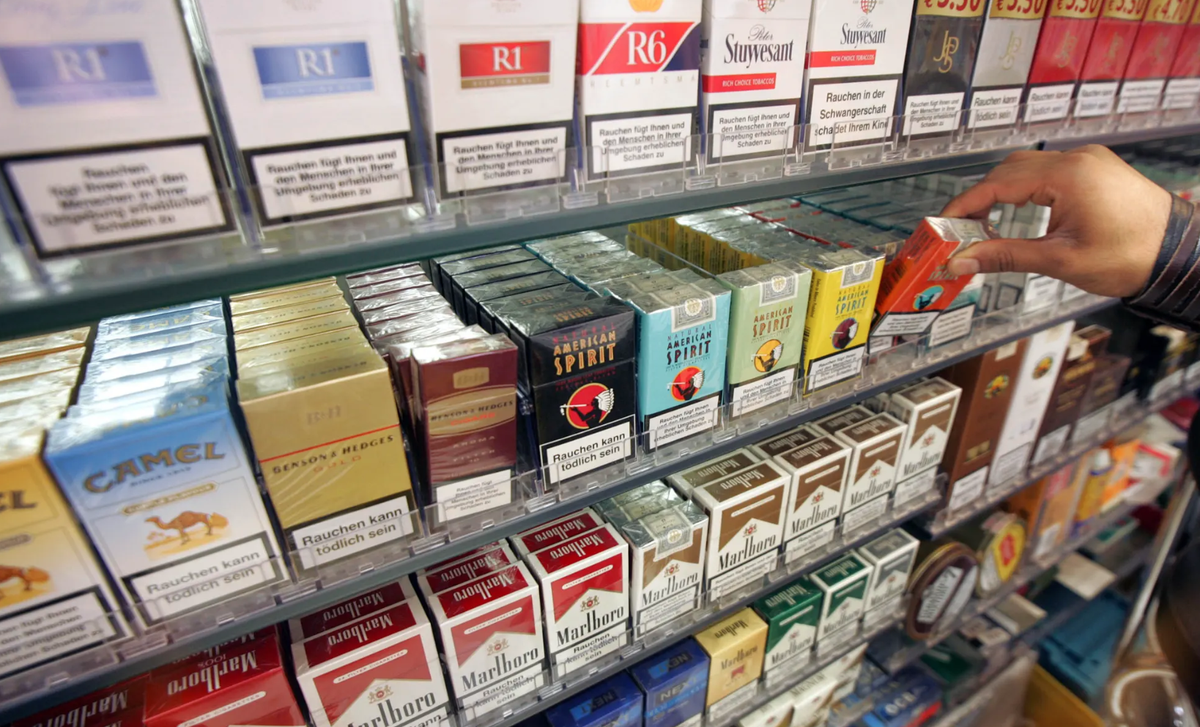
According to Berner Zeitung's report on August 28, the Swiss Federal Council announced that starting from October 1, Switzerland will implement a new Tobacco Products Act, prohibiting anyone under the age of 18 from purchasing any tobacco products and e-cigarettes.


The new regulations aim to further control the use of tobacco products and e-cigarettes through strict sales, advertising, and reporting requirements.


The new measures include:


A nationwide ban on the sale of tobacco products to minors has been implemented, along with strengthened advertising restrictions. For example, advertising related to tobacco products is prohibited on posters, public transportation, cinemas, and public places such as train stations, airports, and sports stadiums. All currently smoke-free areas will expand their restrictions to include heated tobacco products and e-cigarettes. Sponsorship of events targeting international audiences or minors is prohibited, and new picture warning signs will be added to tobacco packaging.


At present, Parliament is considering the Tobacco Products Act to strengthen control over tobacco products.


We welcome news tips, article submissions, interview requests, or comments on this piece.

Please contact us at info@2firsts.com, or reach out to Alan Zhao, CEO of 2Firsts, on LinkedIn


Notice

1.  This article is intended solely for professional research purposes related to industry, technology, and policy. Any references to brands or products are made purely for objective description and do not constitute any form of endorsement, recommendation, or promotion by 2Firsts.

2.  The use of nicotine-containing products — including, but not limited to, cigarettes, e-cigarettes, nicotine pouchand heated tobacco products — carries significant health risks. Users are responsible for complying with all applicable laws and regulations in their respective jurisdictions.

3.  This article is not intended to serve as the basis for any investment decisions or financial advice. 2Firsts assumes no direct or indirect liability for any inaccuracies or errors in the content.

4.  Access to this article is strictly prohibited for individuals below the legal age in their jurisdiction.


Copyright


This article is either an original work created by 2Firsts or a reproduction from third-party sources with proper attribution. All copyrights and usage rights belong to 2Firsts or the original content provider. Unauthorized reproduction, distribution, or any other form of unauthorized use by any individual or organization is strictly prohibited. Violators will be held legally accountable.

For copyright-related inquiries, please contact: info@2firsts.com


AI Assistance Disclaimer


This article may have been enhanced using AI tools to improve translation and editorial efficiency. However, due to technical limitations, inaccuracies may occur. Readers are encouraged to refer to the cited sources for the most accurate information.

We welcome any corrections or feedback. Please contact us at: info@2firsts.com

FDA Details Carcinogenicity Tiering and ELCR Framework as Small Manufacturers Press for Predictability
During the “Toxicological Profile” session at FDA’s Feb 10 PMTA roundtable, officials outlined the carcinogenicity tiering system and Excess Lifetime Cancer Risk (ELCR) framework used in ENDS reviews under the APPH standard. Small manufacturers questioned database transparency, exposure assumptions, and the existence of clear compliance benchmarks. FDA reiterated toxicological risk is assessed case by case within a broader population-level determination.
Feb.11
American Snuff Expands Manufacturing Hiring as Reynolds American Builds Future-Ready Operations
Reynolds American said American Snuff Company will add more than 50 manufacturing roles at its Clarksville, Tennessee facility as part of its wider U.S. manufacturing investment plan. The company said the hiring is one of the latest developments under its plan to invest more than USD 3.2 billion across U.S. operations by 2030.
Mar.27 by 2FIRSTS.ai
Cyprus customs seizes 269 packs containing cannabis and THC; Pharmacy Department flags unauthorized CBD products
The report says an international operation across EU countries aimed at detecting illicit substances in e-cigarettes also took place in South Cyprus, where multiple e-liquid items and products containing cannabis and THC were seized. It states the operation, titled “eVAPER8,” was conducted by the International Narcotics Control Board (INCB) in November and December to identify e-cigarette liquids that may contain synthetic drugs.
Feb.09 by 2FIRSTS.ai
Smoore International Reports 2025 Revenue of RMB 14.256 Billion, Up 20.8%
On March 17, Smoore International Holdings Limited released its annual results for the year ended December 31, 2025. Revenue reached RMB 14.256 billion, up 20.8% year on year. Gross profit was RMB 4.857 billion, with a gross margin of 34.1%. Profit for the year was RMB 1.062 billion, down 18.5%, while adjusted profit for the year was RMB 1.530 billion, up 1.3%. By segment, revenue from enterprise customers was RMB 11.344 billion and revenue from own-brand business was RMB 2.912 billion.
Mar.18 by 2FIRSTS.ai
FDA Outlines Manufacturing Requirements as Critical to ENDS PMTA Success
FDA officials said manufacturing consistency is a core prerequisite for ENDS PMTA reviews, not a procedural formality. During its February 10, 2026 roundtable, the agency outlined expectations for quality management systems, manufacturing documentation, nicotine control, stability studies, and risk mitigation, emphasizing that robust manufacturing evidence underpins determinations of whether products are appropriate for the protection of public health.
Feb.11
Special Report | China’s New Five-Year Plan Highlights “Health-First” Strategy, Providing Policy Context for Tobacco Sector
China’s 2026 “Two Sessions” reviewed the draft Outline of the 15th Five-Year Plan, which proposes implementing a health-first development strategy and strengthening the effectiveness of the Patriotic Health Campaign. Although the document does not address specific industries, this public-health governance framework provides a new policy context for observing the future regulation, product strategies, and market development of China’s tobacco and next-generation nicotine sectors.
Industry Insight
Mar.08