Taiwan to Announce First Approval of Heated Tobacco Products

Mar.10.2025
Taiwan to Announce First Approval of Heated Tobacco Products
Taiwan's first decision on approval of heated tobacco products expected next month, sparking criticism from anti-smoking groups.

Key points:


1. China's Taiwan for the first time has made a resolution on the approval of heated tobacco products, with the results of one manufacturer's application set to be announced as early as next month.


2. The Health Promotion Department stated that document reviews and product testing are key processes for evaluation.


3. The anti-smoking alliance strongly criticizes the new law.


Two years after the implementation of the "Amendments to the Tobacco Hazards Prevention Act," Taiwan is set to announce its first decision on whether to approve the sale of heated tobacco products, TaipeiTimes reported on March 8.


Wu Chao-chun, Director of the Health Promotion Agency (HPA), said that the amended Tobacco Act provides a case-by-case approval process for the legalization of heated tobacco products. 


Currently, 11 tobacco manufacturers have filed appeals with the HPA, with 6 of them completing the document review stage of the approval process.


He pointed out that product testing, as the second phase of evaluation, will take six months. He said that the results of an application from a manufacturer will be announced as soon as next month. If the evaluation is successful, the manufacturer will be authorized to legally sell their product with health warnings on the packaging. If the application is not approved, the manufacturer can resubmit the necessary documents to restart the process or challenge the decision through administrative remedies. 


Due to varying speeds of processing documents, the announcement of application results will be staggered. Wu added that any deficiencies or unsatisfactory documents must be corrected before the process can continue.


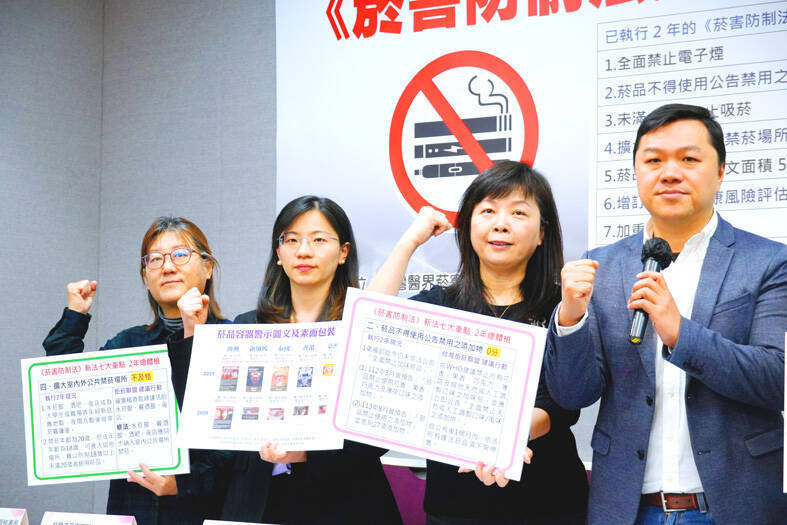
The Taiwan Tobacco Control Union criticized the revised law at a press conference. Members of the union pointed out that banning flavored cigarettes by specifically listing prohibited additives is flawed, as tobacco companies can easily circumvent regulations by developing new substances. 


In addition, the "health risk assessment" (misnamed by the Health Promotion Administration in the approval process) allows manufacturers to falsely advertise heated products as safer alternatives to cigarettes. They stated that tobacco product sales approval assessments or evaluations should be the correct terms for testing protocols.


Lo Su-ying, head of the tobacco control department of the Health Promotion Administration of Taiwan, said that the government has extensively consulted experts and medical professionals in drafting the law. The naming of the agency on the process reflects its aim to scientifically assess the impact of products on public health.


We welcome news tips, article submissions, interview requests, or comments on this piece.

Please contact us at info@2firsts.com, or reach out to Alan Zhao, CEO of 2Firsts, on LinkedIn


Notice

1.  This article is intended solely for professional research purposes related to industry, technology, and policy. Any references to brands or products are made purely for objective description and do not constitute any form of endorsement, recommendation, or promotion by 2Firsts.

2.  The use of nicotine-containing products — including, but not limited to, cigarettes, e-cigarettes, nicotine pouchand heated tobacco products — carries significant health risks. Users are responsible for complying with all applicable laws and regulations in their respective jurisdictions.

3.  This article is not intended to serve as the basis for any investment decisions or financial advice. 2Firsts assumes no direct or indirect liability for any inaccuracies or errors in the content.

4.  Access to this article is strictly prohibited for individuals below the legal age in their jurisdiction.


Copyright


This article is either an original work created by 2Firsts or a reproduction from third-party sources with proper attribution. All copyrights and usage rights belong to 2Firsts or the original content provider. Unauthorized reproduction, distribution, or any other form of unauthorized use by any individual or organization is strictly prohibited. Violators will be held legally accountable.

For copyright-related inquiries, please contact: info@2firsts.com


AI Assistance Disclaimer


This article may have been enhanced using AI tools to improve translation and editorial efficiency. However, due to technical limitations, inaccuracies may occur. Readers are encouraged to refer to the cited sources for the most accurate information.

We welcome any corrections or feedback. Please contact us at: info@2firsts.com

Sesh touts independence, 8VC backing and retail reach as it challenges tobacco-owned pouch brands
U.S. nicotine pouch brand Sesh has emphasized its independence from Altria, Philip Morris International and British American Tobacco, along with backing from investors including 8VC, celebrity supporters and a retail footprint of more than 7,500 stores, as it seeks to differentiate itself in a market where major pouch brands are owned by large tobacco companies.
Regulations
Jul.07 by 2Firsts Perspectives
Iowa Enforces Vape Registry Law as Retailers Warn Product Limits Could Increase Store Pressure
Iowa has begun enforcing its vape registry law, requiring vape products to be registered before they can be legally sold in the state. The move follows a decision by the U.S. Court of Appeals for the Eighth Circuit to lift an injunction that had blocked enforcement. Retailers have warned that tighter product availability rules could increase pressure on vape shops. One Iowa retailer said that if only a limited number of products remain available, many stores could face significant business challenges.
Aug.06
DOJ Trade Fraud Task Force Tops $1 Billion in Cases, Putting Vape Supply Chains at Risk of Fraud Enforcement
According to the U.S. Department of Justice (DOJ), Fox News and other reports, the DOJ’s Trade Fraud Task Force (TFTF) has been linked to more than $1 billion in recoveries, penalties, forfeitures and publicly charged losses in less than one year. The task force focuses on trade fraud issues including country-of-origin fraud, illegal transshipment, false declarations and tariff evasion. While vape products are not the main source of the $1 billion figure, the industry’s reliance on global manufacturing and cross-border supply chains places it within broader U.S. trade enforcement scrutiny. The development suggests that U.S. oversight of cross-border vape products may increasingly extend beyond product authorization into import compliance, supply-chain transparency and corporate accountability.
Jul.23
Senate Democrat Wyden Probes Trump Administration Vape Policy Shift, Seeks Records From HHS and Reynolds American
U.S. Senator Ron Wyden, the Democratic ranking member of the Senate Finance Committee, has launched an investigation into flavored vape policy changes and requested records from the Department of Health and Human Services (HHS), Reynolds American and Botanic Tonics. The investigation focuses on a timeline involving Reynolds American’s $5 million donation to MAGA Inc. in April 2026 and subsequent vape policy developments. Wyden said the review aims to examine potential links between political donations, corporate communications and government decisions. The investigation does not represent a finding of wrongdoing.
Innovation
Aug.07 by 2Firsts Perspectives
Japan Health Ministry Cites Limited Evidence in Decision Not to Tighten Heated Tobacco Rules
Japan’s health ministry has proposed not tightening regulations on heated tobacco products to the same level as cigarettes as part of a review of passive smoking measures, with an expert panel broadly agreeing with the proposal, Jiji Press reported.
Jul.10
JT’s Ploom Volumes Rise 43.5% as Cigarettes Anchor Its Transition
JT’s Ploom heated-tobacco volumes rose 43.5% in the first half of 2026, while combustibles still represented about 97% of its tobacco volume and remained the main earnings base. In Japan, reduced-risk products now account for 48.7% of industry shipments, shifting competition from category adoption towards brand share, pricing and consumer retention. JT’s results offer a revealing case of a traditional tobacco company pursuing a prolonged, dual-track transformation.
JTI
Jul.30