Key Points:
The Northern District Court of Texas ruled that the "civil penalty provision" imposed by the FDA on tobacco products such as e-cigarettes violates the Seventh Amendment of the U.S. Constitution (which guarantees the right to a trial by jury). Therefore, the penalty mechanism in its current form has been declared unconstitutional and the FDA is required to withdraw its administrative lawsuit against the brand Vapor Lab involved in the case.
Case Overview:
Background of the ruling: The Jarkesy case established a precedent in the Supreme Court.
·In 2024, the Jarkesy case ruled that the SEC cannot penalize securities fraud through administrative proceedings and must give the right to trial by jury; the case became the starting point for multiple challenges to the constitutionality of regulatory fine mechanisms.
·The court determined that if administrative fines are punitive rather than compensatory, they must go through the judicial process and be decided by a jury.
Details of the case: FDA fines Vapor Lab, sparking controversy.
·Vapor Lab faced civil monetary penalties (CMP) from the FDA for selling unauthorized e-liquid products.
·Vapor Lab argued that the penalties should be considered a "lawsuit in the common law sense," entitling them to a trial by jury and invoking the Seventh Amendment.
·The court ruled in favor of Vapor Lab, finding that the FDA's actions were unconstitutional.
·The court ruled that the fine mechanism is "punitive and deterrent" in nature, rather than purely administrative enforcement, making it a "dispute that should be adjudicated by the courts."
·The FDA attempted to argue that it falls under the "public health purpose" exception as a "public right," but the court rejected this, stating that "public health is a state police power, not a federal privilege."
·Ultimately, the FDA's administrative lawsuit against Vapor Lab was dismissed and they were prohibited from imposing administrative penalties on the case again.
This decision has broader implications as the FDA faces constitutional challenges.
·This case marks the first successful challenge to the constitutionality of FDA tobacco fine provisions. Several similar cases are now pending in other courts or preparing for appeal.
·While the ruling currently only applies to Vapor Lab, if this trend continues, FDA may no longer be able to quickly fine through "internal administrative procedures" and will have to turn to more complex judicial litigation in the future.
【2Firsts News Flash】According to the FDA Law Blog on August 5th, last weekend, the Northern District of Texas Federal District Court ruled that the Civil Monetary Penalty (CMP) provision for tobacco products administered by the United States Food and Drug Administration (FDA) violated the Constitution. The court cited a ruling in the case SEC v. Jarkesy (2024, docket number 603 U.S. 109) by the United States Supreme Court, stating that the provision infringed upon the right to a jury trial granted by the Seventh Amendment.
Background: The precedent set by the Jarkesy case's ruling is having an impact
In the Jarkesy case, the Supreme Court ruled that the Securities and Exchange Commission (SEC) cannot impose civil penalties for securities fraud through administrative law judges because doing so would violate citizens' right to a jury trial in common law litigation. We have previously written about this case, predicting that the civil penalty mechanism under the FD&C Act would face a similar challenge (we have also analyzed this case's impact on the Drug Enforcement Administration's hearing procedures and the potential consequences of the Affordable Generic and Biosimilar Drugs Provision Act).
E-liquid company Wulferic files lawsuit against FDA
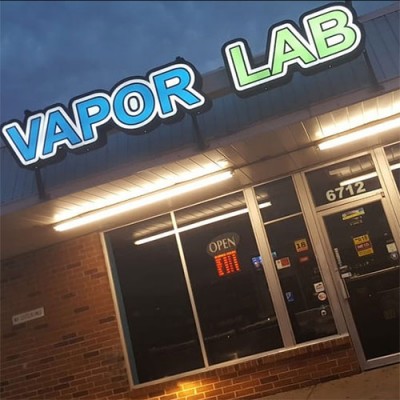
In the case of Wulferic, LLC v. FDA (Case No. 4:24-cv-1183-O, Northern District of Texas, August 1, 2025), the plaintiff Vapor Lab is a company that manufactures and sells tobacco products. They are facing administrative penalties from the FDA for selling e-cigarette liquid products without FDA authorization. The case was originally being heard by an administrative law judge from the Department of Health and Human Services (HHS), but Vapor Lab claims that this administrative process violates their right to a jury trial under the Seventh Amendment.
The court supported the plaintiff's arguments, stating that the Seventh Amendment applies to cases traditionally heard by English common law courts, rather than equity or admiralty courts. Although the court did not find a "common law analogue" to such penalties, it considered the punitive nature of the "remedial measure" to be the key criterion for judgment. The court found that the fines imposed by the FDA are essentially punitive and deterrent in nature, especially for intentional violations, and do not have the attribute of "restituting" or compensating the victims. Therefore, these matters fall under the jurisdiction of common law courts and must ensure the right to trial by jury.
The court further pointed out that the "public right exception" is an exception to Article III of the Constitution, which allows Congress to delegate certain matters to the executive branch to handle without a jury. However, the FDA's invocation of public health as a basis for trying to include an exception was denied by the court. The court stated, "Public health protection falls under the Tenth Amendment of the Constitution as a power reserved to the states, and has never been an exclusive power of the federal government.
Therefore, the court ruled that the civil fine proceedings initiated by the FDA against Vapor Lab were unconstitutional and invalid, ordering the government to withdraw the administrative lawsuit and prohibiting further pursuit of fines against Vapor Lab through administrative procedures. However, the court did not agree to the plaintiff's request for a nationwide injunction.
Case Impact and Subsequent Observations
This is the first ruling that declares the Civil Monetary Penalties (CMP) provision under the FD&C Act unconstitutional in relation to tobacco products. It is important to note that this ruling only applies to the parties involved in this case and does not prohibit the FDA from continuing to use the same provision in other cases. However, this case could significantly weaken the FDA's enforcement tools in tobacco regulation. If the agency maintains its current enforcement approach, similar challenges are likely to follow in the future.
In fact, earlier similar cases have been dismissed for lack of jurisdiction, such as Vape Central Grp., LLC v. FDA in February 2025. Another case, The Vaping Dragon LLC v. FDA, is currently awaiting judgment before another judge in the same district of Texas.
In addition, there are at least two cases preparing to engage in legal battles in the federal appellate court.
·Texas Tobacco Barn, LLC v. HHS (5th Circuit, case number 25-60200) and D and A Business Investments, LLC v. FDA (DC Circuit, case number 25-1074) both directly challenge the legality of the FDA's imposition of a $19,000 fine on businesses, citing the Jarkesy precedent as their basis.
It is currently unclear whether the FDA will appeal the Wulferic case or if they will suspend civil fine processes for other companies. Of particular interest is the outcome of The Vaping Dragon case, which could serve as a key signal in determining the FDA's next steps.
We welcome news tips, article submissions, interview requests, or comments on this piece.
Please contact us at info@2firsts.com, or reach out to Alan Zhao, CEO of 2Firsts, on LinkedIn
Notice
1. This article is intended solely for professional research purposes related to industry, technology, and policy. Any references to brands or products are made purely for objective description and do not constitute any form of endorsement, recommendation, or promotion by 2Firsts.
2. The use of nicotine-containing products — including, but not limited to, cigarettes, e-cigarettes, nicotine pouchand heated tobacco products — carries significant health risks. Users are responsible for complying with all applicable laws and regulations in their respective jurisdictions.
3. This article is not intended to serve as the basis for any investment decisions or financial advice. 2Firsts assumes no direct or indirect liability for any inaccuracies or errors in the content.
4. Access to this article is strictly prohibited for individuals below the legal age in their jurisdiction.
Copyright
This article is either an original work created by 2Firsts or a reproduction from third-party sources with proper attribution. All copyrights and usage rights belong to 2Firsts or the original content provider. Unauthorized reproduction, distribution, or any other form of unauthorized use by any individual or organization is strictly prohibited. Violators will be held legally accountable.
For copyright-related inquiries, please contact: info@2firsts.com
AI Assistance Disclaimer
This article may have been enhanced using AI tools to improve translation and editorial efficiency. However, due to technical limitations, inaccuracies may occur. Readers are encouraged to refer to the cited sources for the most accurate information.
We welcome any corrections or feedback. Please contact us at: info@2firsts.com