Key points:
·The World Health Organization supports Thailand's ban on e-cigarettes, stating that it aligns with the Framework Convention on Tobacco Control and is based on evidence of harm. The organization urges vigilance against the influence of the tobacco industry.
·In Thailand, a high percentage of students have been exposed to e-cigarettes, with 25% having tried them and 22% having friends who use them, highlighting the importance of social factors.
·The Thai Health Promotion Foundation is launching a denormalisation effort aimed at educating youth about the dangers of e-cigarettes.
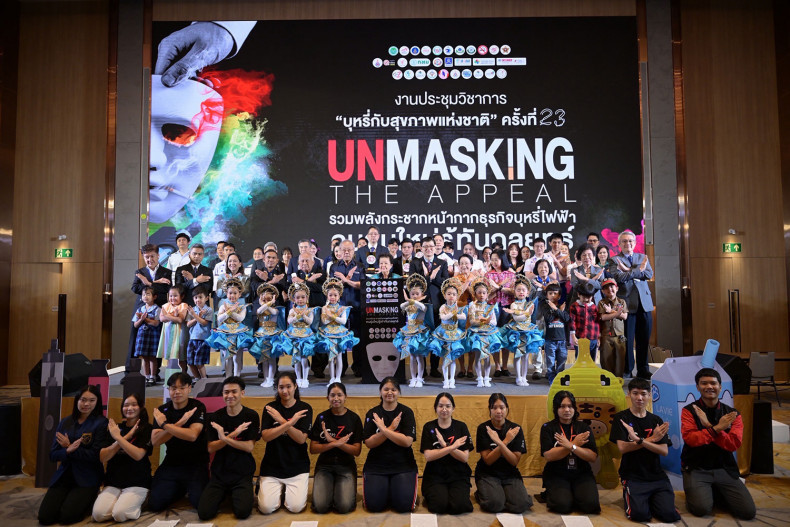
【2Firsts News Flash】Dr. Olivia Nieveras, a senior public health expert at the World Health Organization Thailand office, expressed support for Thailand's continued ban on the import and sale of e-cigarettes during the 23rd National Health and Tobacco Control Forum held in Thailand. She stated that the country's e-cigarette ban is in line with empirical research on the harms of e-cigarette products and is also consistent with the World Health Organization Framework Convention on Tobacco Control (FCTC), which Thailand joined in 2003.
She urged all relevant parties to follow Article 5.3 of the Framework Convention on Tobacco Control, which focuses on policies to protect society from the commercial and vested interests of the tobacco industry.
Dr. Prakit Vathesatogkit, President of the Smoke-Free Health Foundation, pointed out that the commercial and political influence held by companies selling e-cigarettes makes it harder for countries to adhere to the guidelines of Article 5.3.
Therefore, the World Health Organization has instructed these countries to prohibit tobacco company representatives from joining the e-cigarette control policy committee or any similar organization.
Dr. Prakit stated that over the past 32 years, his foundation and anti-tobacco network have helped Thailand reduce its smoking rate by 49%. However, there are still 9.8 million smokers in the country, with many young people still developing the habit.
Dr. Pongthep Wongwatcharapaiboon, manager of the Thailand Health Promotion Foundation, stated that e-cigarette manufacturers have adjusted their marketing strategies to portray e-cigarettes as a safer and more acceptable alternative to traditional tobacco products in order to attract more potential new users and young smokers.
A survey conducted by the Thailand Health Promotion Foundation, the Office of the Basic Education Commission, and the Equitable Education Fund (EEF) of 124,606 students from 1699 primary and secondary schools nationwide revealed that 25% of students have tried e-cigarettes, 22% have friends who use e-cigarettes, and 20% live in communities with high e-cigarette usage rates.
Dr. Pongtep stated that this indicates that the use of e-cigarettes is often related to the social environment in which individuals find themselves. He also added that the Thai Health Promotion Foundation has launched an initiative to "de-normalize" e-cigarettes.
The event aims to provide authentic information about the use of e-cigarettes, targeting primarily young people.
Dr. Peng Tie stated, "The aim of this activity is to change the concept of 'cannot smoke' to 'do not want to smoke'.
We welcome news tips, article submissions, interview requests, or comments on this piece.
Please contact us at info@2firsts.com, or reach out to Alan Zhao, CEO of 2Firsts, on LinkedIn
Notice
1. This article is intended solely for professional research purposes related to industry, technology, and policy. Any references to brands or products are made purely for objective description and do not constitute any form of endorsement, recommendation, or promotion by 2Firsts.
2. The use of nicotine-containing products — including, but not limited to, cigarettes, e-cigarettes, nicotine pouchand heated tobacco products — carries significant health risks. Users are responsible for complying with all applicable laws and regulations in their respective jurisdictions.
3. This article is not intended to serve as the basis for any investment decisions or financial advice. 2Firsts assumes no direct or indirect liability for any inaccuracies or errors in the content.
4. Access to this article is strictly prohibited for individuals below the legal age in their jurisdiction.
Copyright
This article is either an original work created by 2Firsts or a reproduction from third-party sources with proper attribution. All copyrights and usage rights belong to 2Firsts or the original content provider. Unauthorized reproduction, distribution, or any other form of unauthorized use by any individual or organization is strictly prohibited. Violators will be held legally accountable.
For copyright-related inquiries, please contact: info@2firsts.com
AI Assistance Disclaimer
This article may have been enhanced using AI tools to improve translation and editorial efficiency. However, due to technical limitations, inaccuracies may occur. Readers are encouraged to refer to the cited sources for the most accurate information.
We welcome any corrections or feedback. Please contact us at: info@2firsts.com