WHO Urges Equal Treatment and Ban on Flavored E-cigarettes

Regulations by 2FIRSTS.ai
Dec.14.2023
WHO Urges Equal Treatment and Ban on Flavored E-cigarettes
World Health Organization (WHO) urges governments to treat e-cigarettes like traditional tobacco, threatening tobacco companies' investment in tobacco alternatives.

According to a report by Reuters in London, the World Health Organization (WHO) released a document on December 14 urging governments worldwide to treat e-cigarettes on par with traditional tobacco and ban all flavors, which could potentially jeopardize tobacco companies' investments in tobacco alternatives.


Some researchers, advocates, and governments view e-cigarettes as a crucial tool in reducing deaths and diseases caused by tobacco. However, United Nations agencies state that "urgent action" is needed to control them.


The World Health Organization cites some studies stating that there is insufficient evidence to confirm e-cigarettes' effectiveness in helping smokers quit and that they are harmful to one's health, potentially leading to nicotine addiction, especially among non-smokers, particularly children and adolescents.


In global regions influenced by the World Health Organization, the number of 13-15 year old teenagers using e-cigarettes has surpassed that of adults. The WHO's press release cites strong marketing tactics as a driving force behind the popularity of e-cigarettes.


According to the World Health Organization, "children and adolescents are lured and enslaved by e-cigarette at an early age, which could lead to nicotine addiction.


The Director-General of the World Health Organization, Tedros Adhanom Ghebreyesus, has called on countries to implement stringent measures.


The World Health Organization (WHO) has called for changes that include banning all additives, such as menthol, in addition to implementing tobacco control measures on e-cigarettes, such as high taxes and restrictions on their use in public places. However, it is important to note that the WHO does not have authoritative power over national regulations and can only provide guidelines. These recommendations are usually voluntarily adopted and implemented.


The World Health Organization and several other anti-tobacco organizations are advocating for stricter regulations on new nicotine products, aiming to undermine the future strategies of tobacco giants like Philip Morris International (PMI) and British American Tobacco.


Major tobacco companies are seeking to establish new sources of revenue by embracing tobacco alternatives in order to counter the declining smoking rates and stringent regulations faced by certain markets.


The tobacco industry claims that e-cigarettes pose significantly fewer health risks than traditional tobacco and can help reduce the harms associated with smoking. They argue that certain flavors and lower prices are crucial in encouraging smokers to switch to e-cigarettes, a viewpoint that is also shared by some tobacco control advocates.


The World Health Organization has reported that e-cigarettes produce certain substances, some of which are known to be carcinogenic and pose risks to heart and lung health. The report cites studies indicating that they also harm the brain development of young individuals.


We welcome news tips, article submissions, interview requests, or comments on this piece.

Please contact us at info@2firsts.com, or reach out to Alan Zhao, CEO of 2Firsts, on LinkedIn


Notice

1.  This article is intended solely for professional research purposes related to industry, technology, and policy. Any references to brands or products are made purely for objective description and do not constitute any form of endorsement, recommendation, or promotion by 2Firsts.

2.  The use of nicotine-containing products — including, but not limited to, cigarettes, e-cigarettes, nicotine pouchand heated tobacco products — carries significant health risks. Users are responsible for complying with all applicable laws and regulations in their respective jurisdictions.

3.  This article is not intended to serve as the basis for any investment decisions or financial advice. 2Firsts assumes no direct or indirect liability for any inaccuracies or errors in the content.

4.  Access to this article is strictly prohibited for individuals below the legal age in their jurisdiction.


Copyright


This article is either an original work created by 2Firsts or a reproduction from third-party sources with proper attribution. All copyrights and usage rights belong to 2Firsts or the original content provider. Unauthorized reproduction, distribution, or any other form of unauthorized use by any individual or organization is strictly prohibited. Violators will be held legally accountable.

For copyright-related inquiries, please contact: info@2firsts.com


AI Assistance Disclaimer


This article may have been enhanced using AI tools to improve translation and editorial efficiency. However, due to technical limitations, inaccuracies may occur. Readers are encouraged to refer to the cited sources for the most accurate information.

We welcome any corrections or feedback. Please contact us at: info@2firsts.com

South Korea Extends Vape Rules to Unmanned Stores After Bringing Synthetic Nicotine Under Tobacco Law
South Korea's Ministry of Gender Equality and Family said on September 14 that it plans to designate unmanned e-cigarette stores as businesses where minors are prohibited from entering or working. Operators would be required to verify customers' ages and display notices restricting access by minors. The proposal is open for public comment through October 6. The move follows an April expansion of South Korea's statutory tobacco definition that brought products made with natural or synthetic nicotine under the Tobacco Business Act. Nicotine-free liquids and products using nicotine analogues such as 6-methylnicotine, however, remain an emerging regulatory issue.
Sep.21
China Tobacco Regulator Deputy Head Visits Laos as Both Sides Strengthen Cooperation on Illegal Tobacco Trade
China’s official Xinhua News Agency reported that Liu Sanjiang, deputy head and Party group member of China’s tobacco regulator, led a delegation to Laos from July 31 to Aug. 2, 2026, for discussions with Lao authorities on combating cross-border illegal tobacco trade. The two sides discussed areas including law enforcement cooperation, information sharing and efforts to address tobacco-related illegal activities such as counterfeiting and smuggling. The visit highlights cooperation between Chinese and Lao authorities on illicit tobacco control.
News
Aug.05
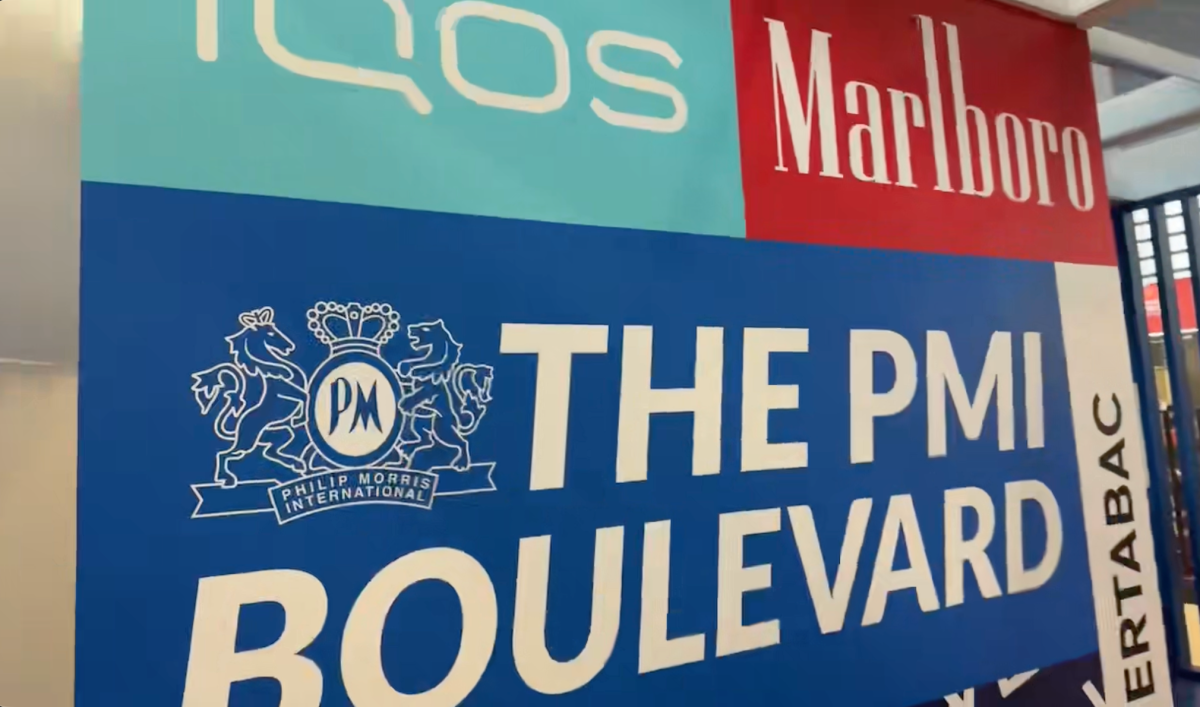
2Firsts On-Site | PMI Brings IQOS, ZYN, VEEV and Marlboro Together at Its “Boulevard” at InterTabac 2026
At InterTabac 2026 in Dortmund, PMI is presenting multiple brands and products along “The PMI Boulevard,” including IQOS, ZYN, VEEV and Marlboro. On-site images captured by 2Firsts show dedicated spaces including the IQOS Boutique, ZYN Café, PMI Gallery and Marlboro Office
Market
Sep.16 by 2Firsts Perspectives
Product | JTI Philippines Expands Nordic Spirit Nicotine Pouch Portfolio With Dark Pop and Red Frost
JTI Philippines has expanded the Nordic Spirit nicotine pouch portfolio in the Philippines with two new variants, Dark Pop and Red Frost. Both products maintain the brand’s tobacco-free nicotine pouch positioning, with Dark Pop featuring a fizzy cola profile with citrus and sweet notes, while Red Frost combines cool mint with sweet red berry flavors. The two variants are now available through Philippine online retail channels.
Aug.18
Philippines Weighs Unified Vape Tax as Lawmakers Back Risk-Based Rates and Government Seeks to Fill ₱66 Billion Revenue Gap
Philippine lawmakers are considering an overhaul of the country's vape excise-tax regime to eliminate the wide gap between taxes on nicotine salt and freebase nicotine liquids and reduce incentives for misdeclaration. House Bill 5364, filed by Rep. Rufus Rodriguez and Rep. Maximo Rodriguez Jr., would impose a unified ₱10-per-milliliter tax on vapor products, with 5% annual increases beginning in 2027. Rodriguez says the proposal could generate an average ₱6 billion in annual collections from 2027 through 2030. The debate comes as the Philippine government considers tobacco, vape and other health-tax reforms to help offset around ₱66 billion in revenue expected to be forgone under a proposed tax-relief package.
Aug.18
Ohio Supreme Court Weighs Whether State Consumer Law Can Restrict Flavored Vape Sales
The Ohio Supreme Court is hearing a case involving flavored vape sales and whether state authorities can use consumer protection laws to take action against retailers selling unauthorized vape products. Ohio officials argue that selling unauthorized flavored vapes may constitute consumer deception, while retailers argue that tobacco product regulation falls under federal Food and Drug Administration (FDA) authority and that states cannot impose additional restrictions through consumer laws. The case could affect the scope of state-level vape regulation across the United States.
Aug.06