Crackdown on Counterfeit Goods and Unauthorized E-Cigarettes in Flea Market in Germany

Regulations by 2FIRSTS.ai
Apr.22.2024
Crackdown on Counterfeit Goods and Unauthorized E-Cigarettes in Flea Market in Germany
Counterfeit products and unauthorized e-cigarettes are on the rise at a flea market in Germany, prompting increased security measures.

According to the German media General-Anzeiger on April 21, there have been reports of counterfeit products and e-cigarettes being sold without proper authorization near the subway in Sankt Augustin, Germany. The trend of increasing sales of these unauthorized items has been observed. In response to this issue, the operators of the flea market have started to take action by increasing their supervision and control over the market.


In this strict regulation, the role of security personnel is under scrutiny. Not everyone understands or supports their actions when carrying out their tasks, and sometimes their behavior may even cause some people to feel resentful. However, in order to ensure fairness and integrity in the market, these necessary measures must be enforced.


The action to crackdown on counterfeit goods and unauthorized e-cigarettes is a strong protection of fair trade in the market and consumer rights. It is believed that with the joint efforts of market operators and security personnel, the normal order of the market can be maintained, providing consumers with a safe and fair trading environment.


With the increased regulatory efforts, it is hoped that the flea market in Sankt Augustin will also present a fair and trustworthy market environment, allowing every consumer who comes to the market to purchase satisfactory goods.


We welcome news tips, article submissions, interview requests, or comments on this piece.

Please contact us at info@2firsts.com, or reach out to Alan Zhao, CEO of 2Firsts, on LinkedIn


Notice

1.  This article is intended solely for professional research purposes related to industry, technology, and policy. Any references to brands or products are made purely for objective description and do not constitute any form of endorsement, recommendation, or promotion by 2Firsts.

2.  The use of nicotine-containing products — including, but not limited to, cigarettes, e-cigarettes, nicotine pouchand heated tobacco products — carries significant health risks. Users are responsible for complying with all applicable laws and regulations in their respective jurisdictions.

3.  This article is not intended to serve as the basis for any investment decisions or financial advice. 2Firsts assumes no direct or indirect liability for any inaccuracies or errors in the content.

4.  Access to this article is strictly prohibited for individuals below the legal age in their jurisdiction.


Copyright


This article is either an original work created by 2Firsts or a reproduction from third-party sources with proper attribution. All copyrights and usage rights belong to 2Firsts or the original content provider. Unauthorized reproduction, distribution, or any other form of unauthorized use by any individual or organization is strictly prohibited. Violators will be held legally accountable.

For copyright-related inquiries, please contact: info@2firsts.com


AI Assistance Disclaimer


This article may have been enhanced using AI tools to improve translation and editorial efficiency. However, due to technical limitations, inaccuracies may occur. Readers are encouraged to refer to the cited sources for the most accurate information.

We welcome any corrections or feedback. Please contact us at: info@2firsts.com

Product | OXVA Launches ONEO Pro in France, Upgrading Its Open-Pod Platform
Vape brand OXVA has introduced the ONEO Pro, a refillable open-pod system that entered the French market in July 2026. The device features a 2,100mAh battery, up to 40W output, a 4ml refillable cartridge, multiple coil options and a 0.96-inch color TFT display. The launch reflects continued performance upgrades within the refillable open-pod segment, with brands adding higher capacity, adjustable output and smarter device interaction.
Aug.03
FDA Revises Import Alert 98-07 Rules, Bringing May Enforcement Priorities Into Unauthorized ENDS Detentions
The U.S. Food and Drug Administration has revised the rules under Import Alert 98-07 to incorporate its May 2026 enforcement-priority policy for certain electronic nicotine delivery systems marketed without premarket authorization. The alert continues to allow detention without physical examination, or DWPE, for ENDS lacking required marketing authorization, while directing field divisions to apply the May risk-based framework. When necessary, detention or refusal decisions must also undergo review by the FDA's Center for Tobacco Products. Products including PACHA and Vuse Pro have already emerged as industry examples of the May policy, although enforcement discretion does not constitute FDA marketing authorization.
News
Sep.28 by 2Firsts Perspectives
NAS 2026 | Cliff Douglas: Risk Continuum Should Play a Central Role in Tobacco Policy
Cliff Douglas, a veteran U.S. tobacco-control and public health policy figure, told NAS 2026 that the “continuum of risk” should play a central role in tobacco policy. He called for clearer market pathways, stronger risk communication, differentiated regulation and enforcement, and said possible FDA reforms to PMTA reviews could be a “welcome correction” if they create a more efficient, predictable route for scientifically substantiated lower-risk products. Read 2Firsts’ on-site coverage.
Sep.26
From Border-Logistics Insiders to Retail Service Stations, Australia Mounts a Sweeping Crackdown on the Illicit Nicotine Trade as iGET Vapes Surface in A$80 Million Crime Networks
Australian authorities have disclosed two major enforcement actions that go beyond product seizures and retail closures to examine how illicit tobacco and vape networks operate. On Aug. 14, the Multi Agency Strike Team said seven people had been charged and two criminal networks were valued by authorities at a combined A$80 million, or about US$56.8 million. Investigators allege the groups used bonded warehouses, freight businesses and “trusted insiders” in legitimate industries to circumvent border controls. In a separate operation on Aug. 11, more than 100 service stations were targeted as authorities sought information on illicit tobacco importation, distribution networks and the movement of sales proceeds.
Aug.17
Product | IVG Launches NEXiO Prefilled Pod System, Expanding Beyond Disposable Vapes
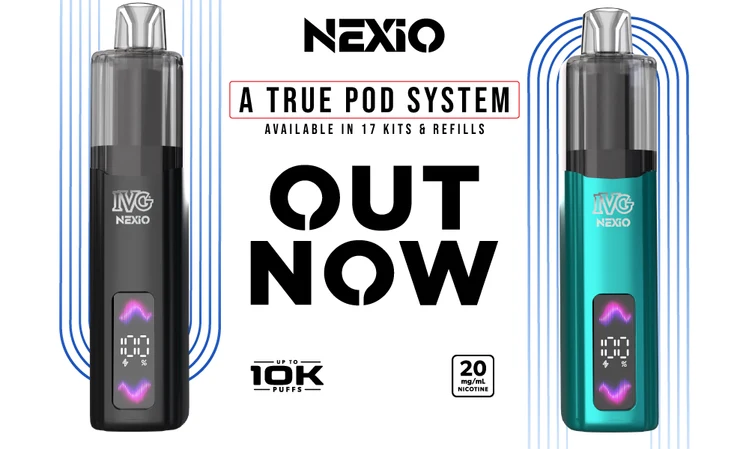
UK vape brand IVG has launched the NEXiO reusable prefilled pod system, expanding its product portfolio beyond disposable vape products. The device features a 1,000mAh rechargeable battery, prefilled pods with a refill reservoir structure and a claimed capacity of up to 10,000 puffs. Officially launched in the UK on July 9, 2026, NEXiO debuted with 17 flavor options, reflecting IVG’s move into reusable pod formats.
Aug.19
Australia Adds 6-Methylnicotine to Schedule 9 Prohibited Substances, Effective October 1
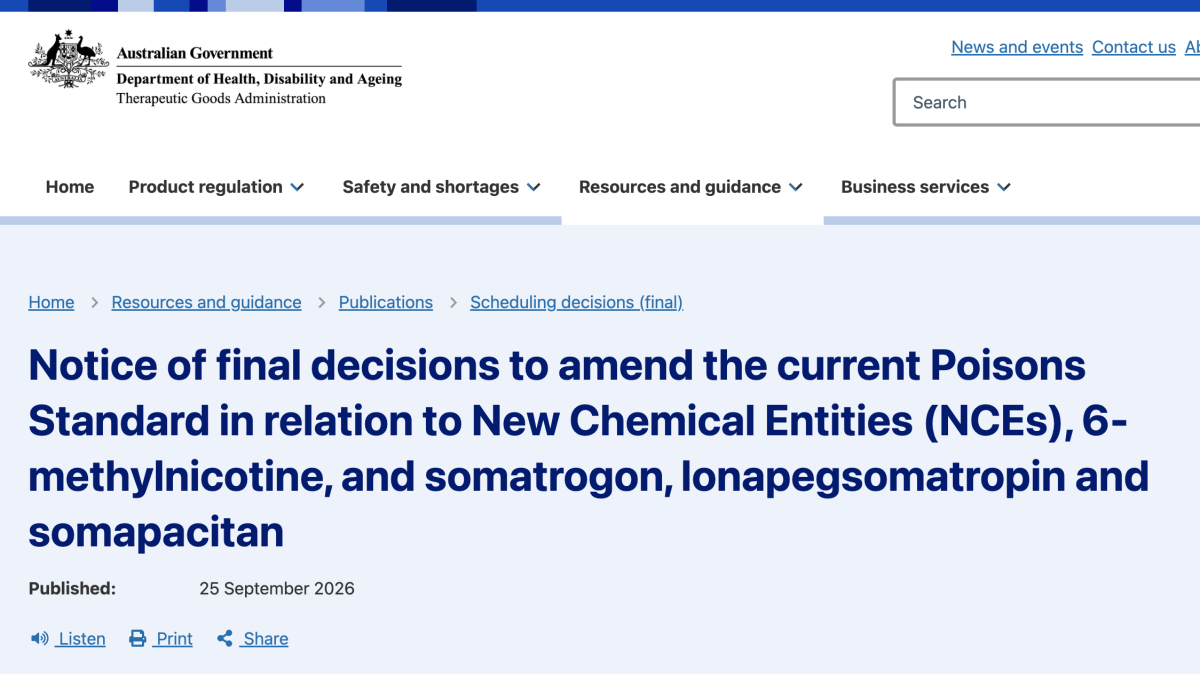
Australia's Therapeutic Goods Administration published a final decision on September 25 to classify 6-methylnicotine as a Schedule 9 prohibited substance under the Poisons Standard, effective October 1, 2026. TGA said the chemical has been reported in e-cigarette liquids sold in Australia and marketed as nicotine-free or nicotine alternatives, while evidence also indicates its use in preparations such as oral pouches. The government originally proposed a Schedule 7 classification but ultimately adopted the stricter Schedule 9 designation, citing acute toxicity, dependence risk, use in unapproved consumer products and misleading marketing.
News
Sep.29 by 2Firsts Perspectives