Illegal E-Cigarette Factory Busted in Taiwan, Faces Heavy Fines

Aug.30.2024
Illegal E-Cigarette Factory Busted in Taiwan, Faces Heavy Fines
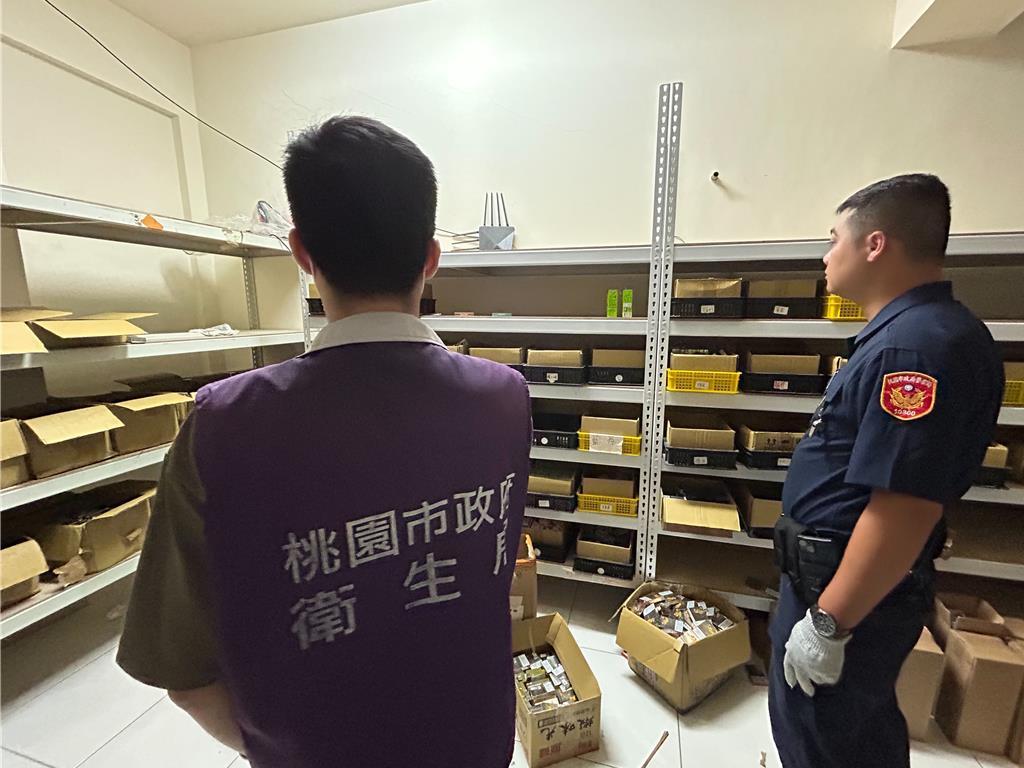
On August 29th, the Taiwan Taoyuan Health Department and Police busted an e-cigarette factory, seizing over $630,000 worth of products.

According to a report from the China Times News Website on August 29th, the Taoyuan Health Bureau in Taiwan, in conjunction with the Taoyuan Police Department, discovered a manufacturing factory for e-cigarettes on the afternoon of the 28th. A total of 321 boxes of e-cigarettes, 86 packs of e-liquid, as well as semi-finished products and main units were confiscated. Additionally, manufacturing equipment such as mixers, fillers, and scales were found. It is estimated that the value of the case exceeds 20 million New Taiwan Dollars (approximately 630,000 US dollars).


It is understood that currently all equipment and products have been sealed, and the manufacturers will be pursued for fines of up to 50 million Taiwanese dollars (approximately 1.57 million US dollars).


The Taoyuan Health Bureau has issued a warning, stating that illegal manufacturing of e-cigarettes and similar products poses a serious threat, especially to the health of young people. The bureau also urges businesses not to take any chances. This is the first time the Taoyuan City Health Bureau has uncovered an e-cigarette manufacturing factory.


The Health Department pointed out that recently, it has been discovered that some teenagers, not familiar with the regulations, have been helping their friends post advertisements or sell e-cigarettes, heated tobacco products, and their accessories on social media platforms. The Health Department once again reminds teenagers not to assist each other in posting advertisements or selling these products, with offenders facing fines ranging from 20,000 to 1 million Taiwanese dollars.


In addition, in order to actively prevent young people from accessing e-cigarette products, the Department of Health has also collaborated with the National Health Administration of the Ministry of Health and Welfare to monitor online activities. From the implementation of the new law on March 22nd last year until August 28th this year, over 2000 inspections have been conducted, resulting in 27 cases of illegal advertising or selling of e-cigarettes being penalized, with a total fine of 4.7 million Taiwan dollars (approximately 150,000 US dollars).


We welcome news tips, article submissions, interview requests, or comments on this piece.

Please contact us at info@2firsts.com, or reach out to Alan Zhao, CEO of 2Firsts, on LinkedIn


Notice

1.  This article is intended solely for professional research purposes related to industry, technology, and policy. Any references to brands or products are made purely for objective description and do not constitute any form of endorsement, recommendation, or promotion by 2Firsts.

2.  The use of nicotine-containing products — including, but not limited to, cigarettes, e-cigarettes, nicotine pouchand heated tobacco products — carries significant health risks. Users are responsible for complying with all applicable laws and regulations in their respective jurisdictions.

3.  This article is not intended to serve as the basis for any investment decisions or financial advice. 2Firsts assumes no direct or indirect liability for any inaccuracies or errors in the content.

4.  Access to this article is strictly prohibited for individuals below the legal age in their jurisdiction.


Copyright


This article is either an original work created by 2Firsts or a reproduction from third-party sources with proper attribution. All copyrights and usage rights belong to 2Firsts or the original content provider. Unauthorized reproduction, distribution, or any other form of unauthorized use by any individual or organization is strictly prohibited. Violators will be held legally accountable.

For copyright-related inquiries, please contact: info@2firsts.com


AI Assistance Disclaimer


This article may have been enhanced using AI tools to improve translation and editorial efficiency. However, due to technical limitations, inaccuracies may occur. Readers are encouraged to refer to the cited sources for the most accurate information.

We welcome any corrections or feedback. Please contact us at: info@2firsts.com

2Firsts On-Site | CTIHK Showcases Nicotine Pouches, Heated Tobacco and Chinese Cigars at InterTabac 2026
At InterTabac 2026 in Dortmund, China Tobacco International (HK) Company Limited (CTIHK) is exhibiting across two separate booths in Hall 5 and Hall 4. Products observed by 2Firsts include heated tobacco products, nicotine pouches, Chinese cigars and tobacco leaf. Nicotine pouch products on display include TOOP, Shuangxi and Ashima.
Market
Sep.16
Trump Names Darrell Scott as CDC Tobacco Health Adviser, Citing Tobacco Risks and Harm-Reduction Solutions
U.S. President Donald Trump has named Pastor Darrell Scott to serve as an adviser on tobacco health issues on the Centers for Disease Control and Prevention’s Advisory Committee to the Director. Trump said Scott would focus on the burden of tobacco-related disease and help examine ways to protect Americans from dangerous tobacco products while supporting solutions that reduce harm. Scott’s public career has largely centered on faith leadership, community advocacy and politics.
Sep.02
Australian Coalition Taskforce Calls for 80% Tobacco Tax Cut to Combat Illicit Market
According to SGST on August 26, 2026, Australia’s Coalition Illegal Tobacco Taskforce released a report recommending an up to 80% cut in tobacco excise to reduce the appeal of the illicit tobacco market. The report claimed organised crime groups now control about 80% of Australia’s tobacco market and argued that high excise rates have widened the price gap between legal and illegal products. The recommendation remains a policy proposal and has not been adopted by the Australian government, which said its focus remains on enforcement, compliance and additional resources.
Aug.27
Exclusive Analysis | Smoore H1 Revenue Rises 19.9% Amid Growth Concentration, Profit Pressure and Slowing Momentum
Smoore’s first-half 2026 revenue rose 19.9%, but the results revealed growing structural risks beneath the headline growth. Heat-not-burn contributed about 61% of incremental revenue and remains driven largely by one core customer, while traditional vaping markets diverged, own-brand growth slowed and China enterprise revenue declined further. Gross profit and adjusted profit lagged revenue growth, while second-quarter revenue growth slowed to about 1.9%, putting greater focus on the quality, concentration and sustainability of Smoore’s expansion.
Capital Markets
Aug.20
Charlie’s Says 30 PACHA Vape SKUs Tentatively Identified for FDA’s Non-Priority Enforcement Public List
Charlie’s Holdings said the U.S. Food and Drug Administration notified the company on June 23, 2026, that 30 PACHA vape SKUs with submitted PMTAs had been tentatively identified for inclusion on a planned public-facing FDA webpage. Under enforcement guidance issued by FDA in May, the webpage is intended to identify certain unauthorized products for which the agency generally does not intend to prioritize enforcement of premarket authorization requirements. Charlie’s disclosed the development alongside second-quarter revenue of $3.8 million, up 116% year over year.
Aug.25
Russia’s Vape Device Labeling Regime Enters Force: Registration Starts in September, Mandatory Coding in December
Russia's digital labeling regime for reusable e-cigarettes and similar personal vaping devices entered its first mandatory phase in September 2026. From September 1, manufacturers, importers and other market participants must register with the national Chestny ZNAK tracking system. From December 1, newly manufactured and imported covered devices will be required to carry digital identification codes and be reported as entering circulation. Russia has also issued new operational guidance for imports, marking the transition from a voluntary pilot to phased mandatory implementation.
Sep.15