Malaysian Customs Seizes Over US$3.4 Million in E-Cigarettes and Vape Liquids Shipped from China and Transported Overland

Dec.02
Malaysian Customs Seizes Over US$3.4 Million in E-Cigarettes and Vape Liquids Shipped from China and Transported Overland
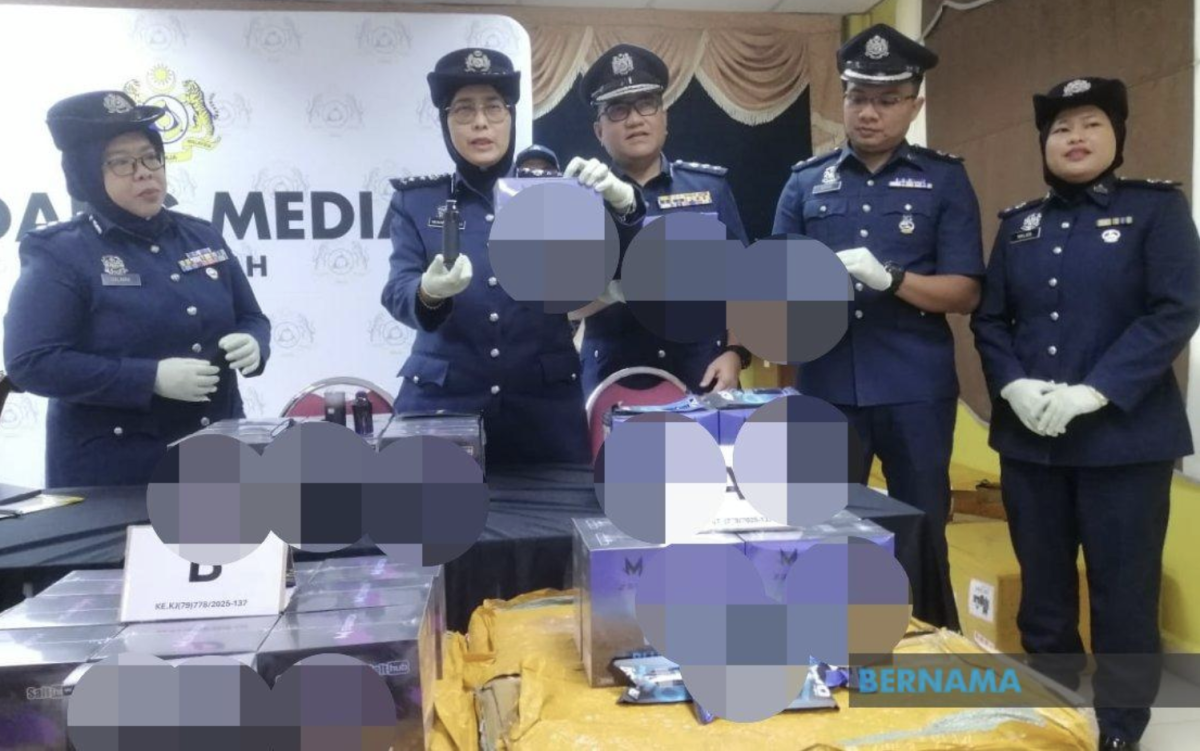
The Royal Malaysian Customs Department in Kedah seized a large consignment of e-cigarette devices and vape liquids originating from China, with a total value exceeding RM16 million (about US$3.4 million). The suspect, a man in his 40s, failed to produce the required import permit from the Health Ministry, and the case is being investigated under the Customs Act 1967.

Key Takeaways


  • Malaysian Customs seized 719,250 vape-related products in Kedah.
  • The goods were valued at about RM13 million (around US$2.7 million), with taxes exceeding RM3 million (around US$600,000).
  • The products originated from China and entered the country via Kuala Lumpur International Airport.
  • The suspect lacked the required import permit from the Health Ministry; authorities are investigating the goods’ intended use and those involved.


2Firsts, December 2, 2025 — According to The Star, the Royal Malaysian Customs Department conducted an enforcement operation in Kedah, seizing more than RM16 million (about US$3.4 million) worth of e-cigarette devices and vape liquids at a storage warehouse in Padang Besar, Perlis. The consignment is believed to have entered the country without proper customs clearance.


Wan Marini Wan Hamzah, director of the Kedah Customs Department, said the enforcement team carried out the raid on Oct 13, 2025, at 3pm, discovering 211,050 e-cigarette devices and 508,200 bottles of vape liquid — a total of 719,250 items spanning various brands.


She noted that the entire consignment, suspected to have bypassed official customs clearance, carried an estimated value of nearly RM13 million (about US$2.7 million), with import duties and taxes amounting to more than RM3 million (about US$600,000). The suspect, a man in his 40s, failed to present a valid import permit issued by the Health Ministry.


Under Part 1 of the Second Schedule of the Customs (Prohibition of Imports) Order 2023, vape liquids are classified as controlled import items that require prior approval from the Health Ministry before entering the country.


Investigations revealed that the products were manufactured in China, arriving first at Kuala Lumpur International Airport before being transported overland to Perlis. Authorities are probing whether the goods were intended for the local market or for export to other countries, and are also examining the role of the warehouse owner and other parties.


The case is currently being investigated under Section 135(1)(g) of the Customs Act 1967.


Wan Marini added that the Customs Department will continue to strengthen monitoring at all entry points to curb smuggling of high-duty and prohibited goods, urging the public to assist in reporting illicit activities involving tobacco, alcohol, fireworks, drugs, and other contraband items.


Cover image: Bernama


We welcome news tips, article submissions, interview requests, or comments on this piece.

Please contact us at info@2firsts.com, or reach out to Alan Zhao, CEO of 2Firsts, on LinkedIn


Notice

1.  This article is intended solely for professional research purposes related to industry, technology, and policy. Any references to brands or products are made purely for objective description and do not constitute any form of endorsement, recommendation, or promotion by 2Firsts.

2.  The use of nicotine-containing products — including, but not limited to, cigarettes, e-cigarettes, nicotine pouchand heated tobacco products — carries significant health risks. Users are responsible for complying with all applicable laws and regulations in their respective jurisdictions.

3.  This article is not intended to serve as the basis for any investment decisions or financial advice. 2Firsts assumes no direct or indirect liability for any inaccuracies or errors in the content.

4.  Access to this article is strictly prohibited for individuals below the legal age in their jurisdiction.


Copyright


This article is either an original work created by 2Firsts or a reproduction from third-party sources with proper attribution. All copyrights and usage rights belong to 2Firsts or the original content provider. Unauthorized reproduction, distribution, or any other form of unauthorized use by any individual or organization is strictly prohibited. Violators will be held legally accountable.

For copyright-related inquiries, please contact: info@2firsts.com


AI Assistance Disclaimer


This article may have been enhanced using AI tools to improve translation and editorial efficiency. However, due to technical limitations, inaccuracies may occur. Readers are encouraged to refer to the cited sources for the most accurate information.

We welcome any corrections or feedback. Please contact us at: info@2firsts.com

New Zealand Survey Finds Adult Daily Vaping Prevalence at 11.7%, Concentrated Among Youth and Disadvantaged Groups)
A survey report released by the Public Health Communication Centre Aotearoa shows that despite New Zealand implementing stricter vaping regulations in 2025, including a ban on disposable products and tighter flavour restrictions, daily vaping rates continue to rise. The research body urges close monitoring of behavioural changes following the new rules coming into force.
Dec.05 by 2FIRSTS.ai
France’s Finance Committee Rejects 2026 Vaping Tax, Backs Online Sales Ban
France’s National Assembly Finance Committee voted to oppose the government’s plan in Article 23 of the 2026 budget bill to tax vaping products at €0.30/10mL for low-nicotine liquids and €0.50/10mL for others (with typical bottles priced €5–€7). Lawmakers arguing against the tax said vaping is less harmful than combustible cigarettes and can aid cessation; others warned of a gateway effect for youth and sustained nicotine dependence.
Oct.23 by 2FIRSTS.ai
UK Advocacy Groups Launch "20IsPlenty" Campaign for Nicotine Pouch Strength Limit of 20mg
UK harm reduction groups led by We Vape have launched the “20IsPlenty” campaign calling for a 20mg nicotine pouch cap, a ban on youth advertising, and evidence-based regulation. The initiative coincides with the Tobacco and Vapes Bill debate and aims to ensure pouches remain accessible as safer alternatives for smokers.
Oct.28 by 2FIRSTS.ai
South Korea’s Parliament Reconsiders Bill to Regulate Synthetic Nicotine as Tobacco
South Korea’s National Assembly is once again reviewing a bill to classify synthetic nicotine as a tobacco product under the Tobacco Business Act. The proposal aims to close regulatory loopholes that allow untaxed, unregulated nicotine liquids — often used by minors — to circulate freely. Lawmakers expect the bill to pass during the current session amid growing public and civic pressure.
Nov.26 by 2FIRSTS.ai
UK Experts Raise Concerns Over High-Dose Nicotine Pouches Amid Rising Sales
According to The Guardian, health experts in the UK are warning about the potential health effects of high-dose nicotine pouches as their sales continue to rise. Recent studies show teenagers reporting nicotine rushes, sickness and fainting, while researchers say packaging and marketing increasingly appeal to younger age groups. Although viewed as less harmful than cigarettes, experts remain concerned about their use among non-smokers, especially adolescents.
Nov.13 by 2FIRSTS.ai
VCU Tests Nearly 1,300 School-Confiscated Vapes, Finding Mislabeling, Mixed Cannabinoids and Contamination
New research from Virginia Commonwealth University (VCU) found microbial contamination — including coliform, a bacteria indicating fecal exposure — in some vaping devices confiscated from U.S. schools. However, researchers stressed that newly purchased, unopened vapes showed no such contamination. The findings point to risks linked to unregulated products and improper storage conditions, reinforcing the importance of regulated supply chains and product authentication.
News
Dec.01