Philippines Customs Bureau Suspected of Corruption: E-Cig Products Worth Nearly $10 Million Possibly Resold

Regulations by 2FIRSTS.ai
Jul.30.2024
Philippines Customs Bureau Suspected of Corruption: E-Cig Products Worth Nearly $10 Million Possibly Resold
The Citizens Crime Watch calls on President Ferdinand Marcos Jr to address corruption within the Philippine Customs Bureau.

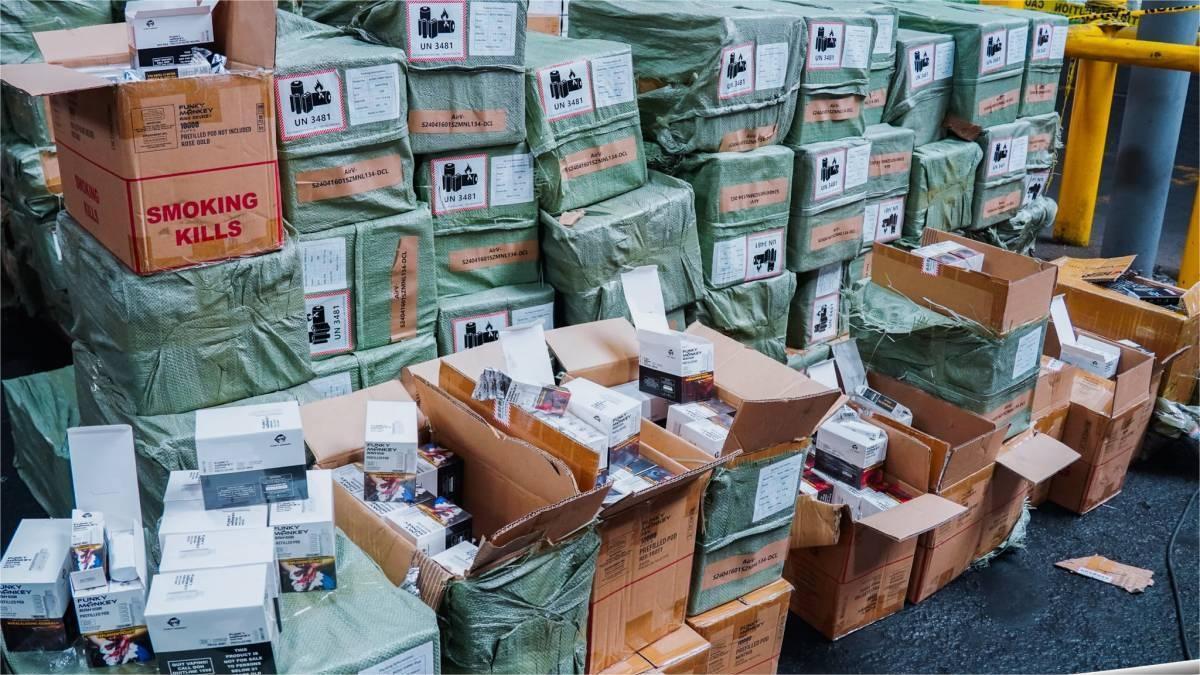
According to a report by Manila Times on July 30th, the Philippines' anti-crime watchdog organization has called on President Ferdinand Marcos Jr. to address the issue of corruption within the Bureau of Customs (BOC). The organization expressed concerns that confiscated e-cigarette products may have already been sold.


Citizens Crime Watch (CCW) National Chairman Diego Magpantay has stated that e-cigarette products worth 500 million pesos (8.52 million USD) seized, are being recycled.


He cited reports saying that the Customs Intelligence and Investigation Service, the Intellectual Property Rights Division, and the head of the Manila port issued a "hold order" to a designated disposal facility. Therefore, it is claimed that the storage of these products no longer needs to go through the Office of the Customs Commissioner.


However, the organization stated that these products may be reused or sold without the knowledge of the customs commissioner. In a statement, CCW said that the customs office should conduct another inventory to determine if the seized products are still in the warehouse.


The organization is also concerned that the counterfeit products worth 11 billion pesos (1.8 billion US dollars) recently seized in Binondo may be "recycled.


Last week, a large-scale operation was carried out in Binondo, Manila, where authorities seized counterfeit products worth 11 billion pesos (1.8 billion US dollars).


We welcome news tips, article submissions, interview requests, or comments on this piece.

Please contact us at info@2firsts.com, or reach out to Alan Zhao, CEO of 2Firsts, on LinkedIn


Notice

1.  This article is intended solely for professional research purposes related to industry, technology, and policy. Any references to brands or products are made purely for objective description and do not constitute any form of endorsement, recommendation, or promotion by 2Firsts.

2.  The use of nicotine-containing products — including, but not limited to, cigarettes, e-cigarettes, nicotine pouchand heated tobacco products — carries significant health risks. Users are responsible for complying with all applicable laws and regulations in their respective jurisdictions.

3.  This article is not intended to serve as the basis for any investment decisions or financial advice. 2Firsts assumes no direct or indirect liability for any inaccuracies or errors in the content.

4.  Access to this article is strictly prohibited for individuals below the legal age in their jurisdiction.


Copyright


This article is either an original work created by 2Firsts or a reproduction from third-party sources with proper attribution. All copyrights and usage rights belong to 2Firsts or the original content provider. Unauthorized reproduction, distribution, or any other form of unauthorized use by any individual or organization is strictly prohibited. Violators will be held legally accountable.

For copyright-related inquiries, please contact: info@2firsts.com


AI Assistance Disclaimer


This article may have been enhanced using AI tools to improve translation and editorial efficiency. However, due to technical limitations, inaccuracies may occur. Readers are encouraged to refer to the cited sources for the most accurate information.

We welcome any corrections or feedback. Please contact us at: info@2firsts.com

JAMA Issues First U.S. Clinical Guidance on Vaping for Smoking Cessation, Urging Complete Switch From Cigarettes
JAMA has published a Special Communication offering systematic recommendations for U.S.-based clinicians on the use of nicotine e-cigarettes in adult smoking cessation. Developed by the Harm Reduction Workgroup of the Society for Research on Nicotine and Tobacco’s Treatment Research Network, the paper recommends including e-cigarettes alongside FDA-approved cessation medications in risk-benefit discussions. It cites high-certainty evidence that nicotine e-cigarettes achieve higher quit rates than nicotine replacement therapy and evidence suggesting efficacy comparable to highly effective medications such as varenicline and cytisine. For adults who choose vaping to quit, the authors recommend FDA-authorized products, sufficient nicotine delivery and a rapid, complete transition away from cigarettes rather than prolonged dual use.
Aug.13
Illegal Vape Sellers Still Use TikTok and Other Platforms to Drive Sales Despite Australia’s Ad Ban
Illegal vape sellers are still promoting nicotine products on TikTok, Instagram and YouTube despite Australia’s 2024 advertising ban, while illicit tobacco sales are increasingly moving from physical stores to online marketplaces.
Jul.15
South Korea Rejects 16 Trillion Won Tax-Evasion Claim Over Chinese Synthetic Nicotine
The South Korean government rejected allegations that Chinese synthetic-nicotine e-liquids were linked to about 16 trillion won in tobacco tax evasion, saying China does not ban synthetic nicotine exports and the estimate is difficult to verify, while acknowledging that pre-law synthetic-nicotine inventory is effectively difficult to tax.
Market
Jun.25
Special Report | Russia, Ukraine and Belarus Launch Fresh Push to Rein in Vaping
Russia, Ukraine and Belarus are tightening vape regulation through different tools, from Ukraine’s stronger enforcement push and Belarus’s proposed advertising restrictions to Russia’s new GOST standard and regional sales-ban mechanism. As black-market concerns persist, some Russian experts argue that China’s tightly controlled but legalised model — built around licensing, traceability and taxation — may offer a more effective alternative to blanket prohibition.
Jul.15
How AI Is Rewriting the Talent Playbook for the Nicotine Industry: JTI’s Case
AI is moving from a back-office tool to a core organizational capability in the nicotine industry. Based on JTI’s responses, this 2Firsts feature examines how AI is reshaping talent strategy, internal mobility, decision-making and human accountability as global tobacco companies compete in the shift toward new nicotine categories.
Jun.17
UK PM Andy Burnham Reshapes Vape Retail Rules as Licensing Could Raise Barriers for New Shops
UK Prime Minister Andy Burnham is pushing a high street reform agenda that could give local authorities greater powers over commercial activity, including vape retail. The reforms could involve expanded planning powers and a potential vape retail licensing system, allowing councils to play a larger role in store locations and market access. The measures are part of the UK’s broader shift toward tighter vape regulation, although no nationwide vape retail restrictions have yet been implemented.
Aug.11