Recent Consultancy Report on Popular E-Cigarette Brands and Prices in UK

Industry Insight by 2FIRSTS.ai
Nov.27.2023
Recent Consultancy Report on Popular E-Cigarette Brands and Prices in UK
The UK government website released a report on the most popular e-cigarette brands and their average prices, including ELFBAR, priced at around £5.

Recently, the official website of the British government has released a consultation report, which mentions the most popular e-cigarette brands in the market and the average prices of e-cigarettes.
Recent Consultancy Report on Popular E-Cigarette Brands and Prices in UK
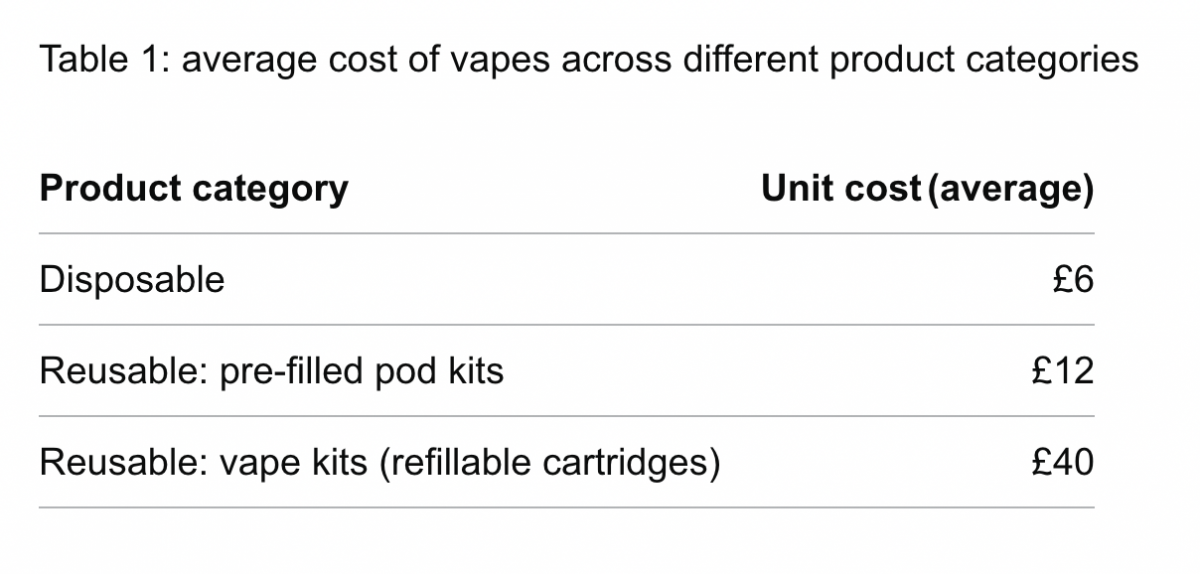
Average price list of e-cigarettes published by the UK government. | Image source: gov.uk


According to the report, in 2022, the most popular disposable e-cigarette brand among young people in the UK is ELFBAR, priced at around £5. On the other hand, the price of ELFBAR's cartridge-based products is approximately £8.
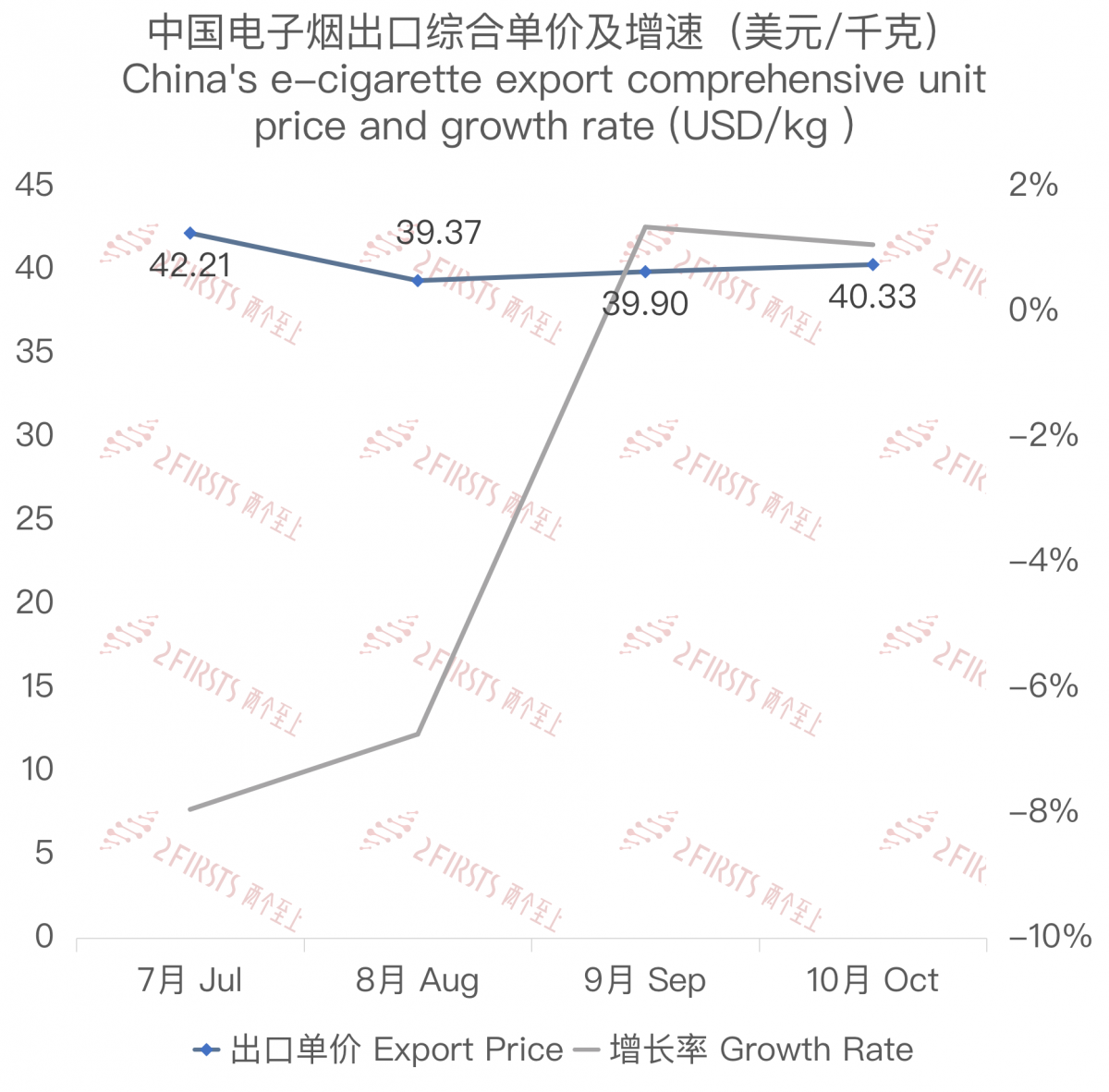
Recent Consultancy Report on Popular E-Cigarette Brands and Prices in UK
Image source: 2FIRSTS (Mincy design) | Data source: General Administration of Customs of the People's Republic of China.


The report also mentions the average selling price of different product categories in the UK market.


The average price of disposable e-cigarettes is £6, while pod system kits have an average price of £12. Open-system devices have the highest average selling price at £40.


In addition, according to the updated trade data from the General Administration of Customs of the People's Republic of China, 2FIRSTS has compiled the average export unit price of e-cigarettes to the UK in October 2023. According to the statistics, the export unit price is $40.33 per kilogram, representing a month-on-month increase of 1.62% and a year-on-year decrease of 18.65%. The average price of "e-cigarettes and similar personal electronic vaporizers" is £3.8 per unit.


We welcome news tips, article submissions, interview requests, or comments on this piece.

Please contact us at info@2firsts.com, or reach out to Alan Zhao, CEO of 2Firsts, on LinkedIn


Notice

1.  This article is intended solely for professional research purposes related to industry, technology, and policy. Any references to brands or products are made purely for objective description and do not constitute any form of endorsement, recommendation, or promotion by 2Firsts.

2.  The use of nicotine-containing products — including, but not limited to, cigarettes, e-cigarettes, nicotine pouchand heated tobacco products — carries significant health risks. Users are responsible for complying with all applicable laws and regulations in their respective jurisdictions.

3.  This article is not intended to serve as the basis for any investment decisions or financial advice. 2Firsts assumes no direct or indirect liability for any inaccuracies or errors in the content.

4.  Access to this article is strictly prohibited for individuals below the legal age in their jurisdiction.


Copyright


This article is either an original work created by 2Firsts or a reproduction from third-party sources with proper attribution. All copyrights and usage rights belong to 2Firsts or the original content provider. Unauthorized reproduction, distribution, or any other form of unauthorized use by any individual or organization is strictly prohibited. Violators will be held legally accountable.

For copyright-related inquiries, please contact: info@2firsts.com


AI Assistance Disclaimer


This article may have been enhanced using AI tools to improve translation and editorial efficiency. However, due to technical limitations, inaccuracies may occur. Readers are encouraged to refer to the cited sources for the most accurate information.

We welcome any corrections or feedback. Please contact us at: info@2firsts.com

Australia’s Daily Smoking Rate Falls to Record Low of 5.8% as Nicotine Use Patterns Shift
According to the Australian Institute of Health and Welfare’s National Drug Strategy Household Survey, daily smoking among Australians aged 18 and over fell to a record low of 5.8% in 2025. Health Minister Mark Butler said Australia now has around 500,000 fewer daily smokers than three years ago and credited the government’s vaping reforms as part of broader progress. Among people aged 14 and over, daily smoking declined from 8.3% in 2022-23 to 5.6% in 2025. Daily vaping rates stabilised at 3.6%, while the government also moved to further restrict access to nicotine pouches through unapproved therapeutic import pathways.
Jul.21
FDA 2025 NYTS: Youth E-Cigarette Use Declines but Unauthorized Disposables Remain Prominent; Nicotine Pouch Use Stays Low
The U.S. Food and Drug Administration (FDA) released its 2025 National Youth Tobacco Survey analysis, saying about 2.01 million U.S. middle and high school students currently used any tobacco product; among current youth e-cigarette users, unauthorized disposable brands including Geek Bar, Elf Bar, Lost Mary and Raz had high reported shares, potentially making them a focus for future enforcement.
Jun.24
Product | JTI Expands Ploom Ecosystem as LYO Tobacco-Free Nicotine Sticks Roll Out Across Europe
Japan Tobacco International (JTI) is expanding its Ploom heated product ecosystem with LYO tobacco-free nicotine sticks. Designed specifically for Ploom devices, LYO contains nicotine but no tobacco. Public information shows that the product has gradually entered several European markets, including Spain, Portugal and Germany, and was officially introduced in Romania in July 2026. The launch highlights JTI’s efforts to explore broader nicotine consumable formats beyond traditional tobacco-based sticks.
JTI
Jul.21 by 2Firsts Perspectives
Russian Strikes Destroy JTI and Imperial Brands Ukraine Warehouses, With Losses Reaching Tens of Millions of Hryvnias
According to Ukrainska Pravda, Russian strikes on the Kyiv region during the night of Aug. 4-5, 2026, damaged warehouses storing products of Japan Tobacco International (JTI) and Imperial Brands Ukraine. JTI said a finished goods warehouse in Kyiv Oblast was destroyed, with no employees injured, and that it did not expect disruptions to retail supplies. Imperial Brands Ukraine said products stored at warehouses of distributors and retail partners were affected and estimated losses from the strikes at “tens of millions of Ukrainian hryvnias” (roughly hundreds of thousands of U.S. dollars).
JTI
Aug.07
Smoore Wins Three Heated Device Supply Lots in China Tobacco Jiangsu’s Overseas Market Project Covering Japan, South Korea and Southeast Asia
China Tobacco Jiangsu Industrial Co., Ltd. (JSIC) has completed its 2026-2028 heated device procurement project, with Shenzhen Smoore Technology Limited securing final supply contracts for three lots: U1, C1 and C2. The project was launched through a public tender in June 2026 to support overseas markets and involved heated tobacco devices carrying JSIC’s “iRod” trademark. Candidate supplier results published on July 13 showed Smoore ranked first for the three awarded lots, while Shenzhen Yunxi Intelligent Technology Co., Ltd. and Shenzhen Bodi Technology Development Co., Ltd. participated in the bidding process.
Aug.03
WIRED Investigation: Chinese-Made Vapes Turn to 6-Methyl-Nicotine and Other Analogs, Challenging U.S. Regulation
U.S. technology and investigative publication WIRED has examined how nicotine analogs are emerging as a new challenge for the country’s vape regulatory framework. The article argues that after the U.S. expanded federal oversight of nicotine products in 2022, some manufacturers began using nicotine-like compounds such as 6-methyl-nicotine that may fall outside existing definitions. Researchers cited by WIRED said some nicotine analogs could be more potent than traditional nicotine, although human health impacts remain unclear. U.S. policymakers are considering broader definitions of nicotine to bring these compounds under federal oversight.
Jul.27