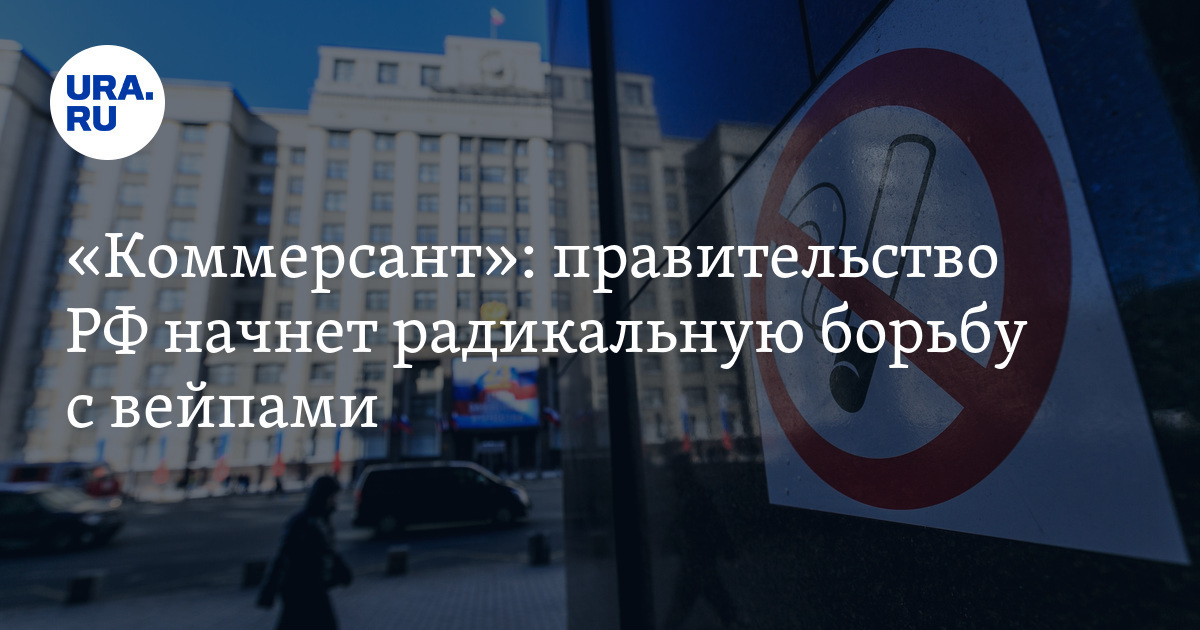
According to the Russian media outlet "Businessman's Gazette" on May 15, the government is planning to launch a comprehensive crackdown on e-cigarettes. The country will prohibit e-liquids containing flavors, food additives, and dietary supplements. The Ministry of Health has prepared a list of substances aimed at increasing the attractiveness of e-cigarettes. If implemented, only liquid containing nicotine will continue to be sold.
The list of banned substances was developed by a multi-departmental working group that includes doctors, scientists, as well as representatives from the Ministry of Finance, Ministry of Agriculture, Ministry of Industry and Trade, and the State Duma. Sources believe that substances "aimed at increasing the attractiveness of e-cigarettes" include food additives, dietary supplements, food flavors and seasoning chemicals, natural and synthetic sugars, drugs and medicinal plant extracts, as well as additives "approved for cosmetics fragrances and dyes" that "increase nicotine addiction." The contents of this list include nicotine derivatives, tobacco alkaloids, organic acids, ethanol, cocoa beans, licorice, ammonium, ammonia, and more.
Therefore, only liquid containing nicotine, distilled glycerin (purity of at least 94%), and propylene glycol (purity of at least 95%) will continue to be legally sold after government approval.
Explanatory notes point out that the purpose of the ban is to "reduce the consumption and distribution of nicotine products among the population, particularly young people." The author of the document referenced international research indicating that the smell of aerosol inhalants is the primary factor driving young people to choose e-cigarettes. Minors tend to prefer e-cigarettes with candy, gum, coffee, mint, and cherry flavors, while adult consumers prefer tobacco-flavored liquids.
The use of flavorings and food additives has created a false sense of safety for electronic nicotine delivery devices. Their use is "associated with exposure to high levels of ultrafine particles and other toxins," which significantly increases the risk of cardiovascular disease and chronic lung conditions.
Yaroslav Nilov, the chairman of the parliamentary committee on labor, social policy, and veterans' affairs, emphasized that even nicotine-free e-liquid is harmful because it contains ingredients such as glycerin, propylene glycol, flavorings, and thickening agents.
Lev Grigoriev, Chairman of the Professional Alliance of Russian Electronic Nicotine Systems (PAURRENS), estimates that the e-cigarette audience in Russia is around 10 million people. Additionally, there are 5 million people who exclusively use e-cigarettes, and another 5 million who use other nicotine-containing products. These individuals are primarily young people aged 18 to 35 years old.
He acknowledged, "Considering we are talking about new innovative products, this is expected. Classic smokers are typically elderly." Lev Grigoryev reminded that selling nicotine-containing products to minors is prohibited, similar to tobacco and alcohol. Experts believe that by utilizing existing control and supervision mechanisms, the chances of minors using e-cigarettes can be reduced.
We welcome news tips, article submissions, interview requests, or comments on this piece.
Please contact us at info@2firsts.com, or reach out to Alan Zhao, CEO of 2Firsts, on LinkedIn
Notice
1. This article is intended solely for professional research purposes related to industry, technology, and policy. Any references to brands or products are made purely for objective description and do not constitute any form of endorsement, recommendation, or promotion by 2Firsts.
2. The use of nicotine-containing products — including, but not limited to, cigarettes, e-cigarettes, nicotine pouchand heated tobacco products — carries significant health risks. Users are responsible for complying with all applicable laws and regulations in their respective jurisdictions.
3. This article is not intended to serve as the basis for any investment decisions or financial advice. 2Firsts assumes no direct or indirect liability for any inaccuracies or errors in the content.
4. Access to this article is strictly prohibited for individuals below the legal age in their jurisdiction.
Copyright
This article is either an original work created by 2Firsts or a reproduction from third-party sources with proper attribution. All copyrights and usage rights belong to 2Firsts or the original content provider. Unauthorized reproduction, distribution, or any other form of unauthorized use by any individual or organization is strictly prohibited. Violators will be held legally accountable.
For copyright-related inquiries, please contact: info@2firsts.com
AI Assistance Disclaimer
This article may have been enhanced using AI tools to improve translation and editorial efficiency. However, due to technical limitations, inaccuracies may occur. Readers are encouraged to refer to the cited sources for the most accurate information.
We welcome any corrections or feedback. Please contact us at: info@2firsts.com