Key Points:
·Quit smoking effect: The success rate of women using nicotine pouches to quit smoking has increased by 200%.
·Product advantages: Smoke-free and odor-free, high social acceptance; convenient to use.
·Health achievements: Smoking rates among Swedish women have decreased by 49%; male lung cancer mortality rates are 61% lower than the European Union.
·Policy comparisons: Sweden has adopted harm reduction strategies; strict restrictions in countries like Canada affect the accessibility of products.
·Experts call for: Suggesting countries to learn from the Swedish model; warning that excessive regulation may lead to a public health crisis.
According to a report by Western Standard on June 23, a groundbreaking study shows that nicotine pouches are changing the way Swedish women quit smoking in the world's first smoke-free country.
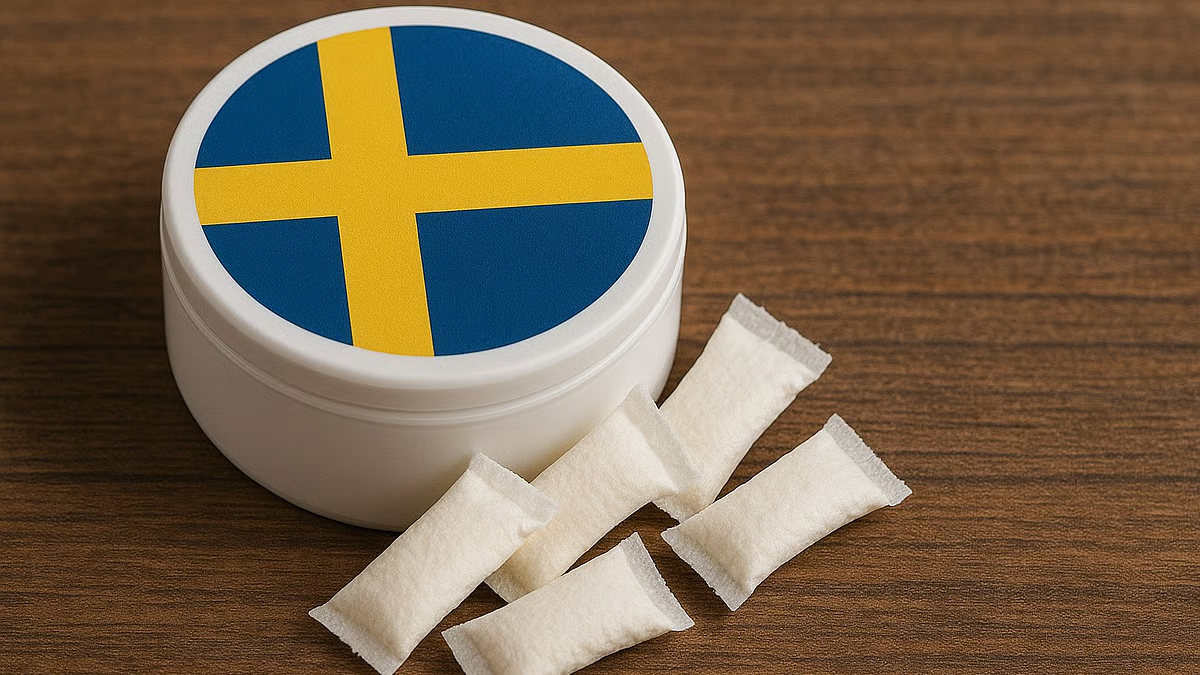
A study by the Swedish Smoke-free Organization has shown that since 2016, smokeless nicotine pouches have led to a significant shift in smoking patterns. Currently, the smoking cessation rate among women is nearly 200% higher than before.
A report released this week titled "Power in a Pouch" shows that the effectiveness of these small pouches is significantly better than traditional smoking cessation aids. As a tool for quitting smoking, women perceive nicotine pouches to be 56% more effective than nicotine gum.
"The evidence is clear: Nicotine pouches are the most effective method to help smokers, especially women, quit smoking."
Dr. Marewa Glover, a behavioral scientist from New Zealand and co-author of the study, said.
Nicotine pouches are popular among women because of their discreet appearance and easy societal acceptance. Unlike e-cigarettes, they do not produce smoke, vapor, or odor. Users simply place them between their lips and gums.
Sweden's approach differs starkly from other countries that ban or strictly limit nicotine pouches. Instead, Swedish health officials have adopted a harm reduction strategy, acknowledging smokeless tobacco as a safer alternative to cigarettes. The results speak for themselves.
Since the introduction of nicotine pouches, the smoking rate among Swedish women has decreased by 49%.
This is a breakthrough because historically, women have had lower smoking cessation rates compared to men.
After becoming a smoke-free country, Sweden has seen noticeable health benefits for its entire population. The lung cancer mortality rate among Swedish men is 61% lower than the EU average. The overall cancer mortality rate is 34% lower than the EU average.
Dr. Delon Human, who leads the smoke-free Sweden organization and previously served as Secretary-General of the World Medical Association, has warned that excessive regulation could potentially reverse this progress.
Human said:
"Incorrect bans are preventing people from accessing life-saving products. This is not just bad policy - it is a public health disaster."
Researchers emphasize that women should be provided with smoking cessation tools that align with their preferences and lifestyles. Traditional methods often fail because they do not address the practical obstacles women face when trying to quit smoking.
Glover said:
"When women have the option to choose a clean lifestyle, the rate of smoking cessation will skyrocket."
Sweden's open attitude contrasts sharply with the restrictive policies of other countries.
In Canada, nicotine pouches like Zonnic are restricted to sale in pharmacies and are only available in mint, mint menthol, or unflavored varieties. Compared to the more relaxed entry system in Sweden, Canada's regulatory framework significantly limits access.
The authors of the study urge policymakers around the world to carefully examine Sweden's success story. They believe that evidence-based harm reduction strategies can save the lives of millions globally.
"Policymakers must emulate the approach of Sweden - otherwise it will result in large-scale preventable deaths."
Human said.
We welcome news tips, article submissions, interview requests, or comments on this piece.
Please contact us at info@2firsts.com, or reach out to Alan Zhao, CEO of 2Firsts, on LinkedIn
Notice
1. This article is intended solely for professional research purposes related to industry, technology, and policy. Any references to brands or products are made purely for objective description and do not constitute any form of endorsement, recommendation, or promotion by 2Firsts.
2. The use of nicotine-containing products — including, but not limited to, cigarettes, e-cigarettes, nicotine pouchand heated tobacco products — carries significant health risks. Users are responsible for complying with all applicable laws and regulations in their respective jurisdictions.
3. This article is not intended to serve as the basis for any investment decisions or financial advice. 2Firsts assumes no direct or indirect liability for any inaccuracies or errors in the content.
4. Access to this article is strictly prohibited for individuals below the legal age in their jurisdiction.
Copyright
This article is either an original work created by 2Firsts or a reproduction from third-party sources with proper attribution. All copyrights and usage rights belong to 2Firsts or the original content provider. Unauthorized reproduction, distribution, or any other form of unauthorized use by any individual or organization is strictly prohibited. Violators will be held legally accountable.
For copyright-related inquiries, please contact: info@2firsts.com
AI Assistance Disclaimer
This article may have been enhanced using AI tools to improve translation and editorial efficiency. However, due to technical limitations, inaccuracies may occur. Readers are encouraged to refer to the cited sources for the most accurate information.
We welcome any corrections or feedback. Please contact us at: info@2firsts.com