WHO Report: E-cigarette Use Among Adolescents Surpasses Cigarette Use

Regulations by 2FIRSTS.ai
Apr.25.2024
WHO Report: E-cigarette Use Among Adolescents Surpasses Cigarette Use
WHO Europe Branch report shows alarming trend of alcohol and e-cigarette use among teens, calling for restrictive measures.

According to Indonesian media Media Indonesia on April 25th, the European branch of the World Health Organization (WHO) recently stated in a report that the use of alcohol and e-cigarettes among young people has become a "concerning" trend, and recommended taking measures to restrict their access to these items.


Based on survey data from 280,000 adolescents aged 11, 13, and 15 in Europe, Central Asia, and Canada, the World Health Organization (WHO) stated that the report highlights a "disturbing" picture of substance use among teenagers.


In response, the World Health Organization warned, "The long-term implications of these trends are extremely significant, and policymakers should not ignore these concerning findings."


A report has found that 57% of 15-year-old adolescents have tried alcohol. The percentage is higher among females at 59% compared to males at 56%. The WHO has pointed out that overall, alcohol consumption among males is decreasing while it is increasing among females. The report also highlights the increase in e-cigarette use among teenagers. Despite a decrease in the number of smokers, a significant number have switched to e-cigarettes - a phenomenon that is becoming increasingly common among adolescents. The report shows that 32% of 15-year-old adolescents have used e-cigarettes, with 20% using them in the past 30 days.


Hans Kluge, the Regional Director for Europe at the World Health Organization, stated in a declaration that "Across Europe, and even globally, many countries' youth are widely using harmful substances, posing a serious threat to public health.


Klug is calling for increased taxes, sales and advertising restrictions, and a ban on added flavorings.


"This report also points out that "the high risks undertaken in adolescence may shape adult behavior, and early use of harmful substances is associated with a higher risk of addiction." "This comes at a high cost to both them and society."


At the same time, the report found that the proportion of teenage marijuana users has slightly decreased. Among 15-year-olds, the rate of those who have used marijuana in the past has decreased by 4 percentage points compared to four years ago.


The HBSC (Health Behaviour in School-aged Children) survey, conducted every four years by the World Health Organization, aims to understand the health behaviors of children aged 11, 13, and 15, and also includes an investigation into substance use.


We welcome news tips, article submissions, interview requests, or comments on this piece.

Please contact us at info@2firsts.com, or reach out to Alan Zhao, CEO of 2Firsts, on LinkedIn


Notice

1.  This article is intended solely for professional research purposes related to industry, technology, and policy. Any references to brands or products are made purely for objective description and do not constitute any form of endorsement, recommendation, or promotion by 2Firsts.

2.  The use of nicotine-containing products — including, but not limited to, cigarettes, e-cigarettes, nicotine pouchand heated tobacco products — carries significant health risks. Users are responsible for complying with all applicable laws and regulations in their respective jurisdictions.

3.  This article is not intended to serve as the basis for any investment decisions or financial advice. 2Firsts assumes no direct or indirect liability for any inaccuracies or errors in the content.

4.  Access to this article is strictly prohibited for individuals below the legal age in their jurisdiction.


Copyright


This article is either an original work created by 2Firsts or a reproduction from third-party sources with proper attribution. All copyrights and usage rights belong to 2Firsts or the original content provider. Unauthorized reproduction, distribution, or any other form of unauthorized use by any individual or organization is strictly prohibited. Violators will be held legally accountable.

For copyright-related inquiries, please contact: info@2firsts.com


AI Assistance Disclaimer


This article may have been enhanced using AI tools to improve translation and editorial efficiency. However, due to technical limitations, inaccuracies may occur. Readers are encouraged to refer to the cited sources for the most accurate information.

We welcome any corrections or feedback. Please contact us at: info@2firsts.com

Retail Case Study | Wisconsin Vape Market One Year After New Regulations: Johnny Vapes Reports 80% Sales Decline as Consumers Shift Online and Across State Lines
According to WNCY on August 24, 2026, some independent vape retailers in Wisconsin say they have faced significant business pressure one year after new vape regulations took effect. Johnny Vapes, a retailer operating in northeast Wisconsin, said its store count fell from seven locations to four, sales declined by about 80%, and roughly 90% of its inventory was affected. Retailers said some consumers have shifted to online purchases or traveled to neighboring Michigan to buy vape products. The case highlights how local regulations can reshape retail operations, inventory management and consumer purchasing patterns.
Aug.28
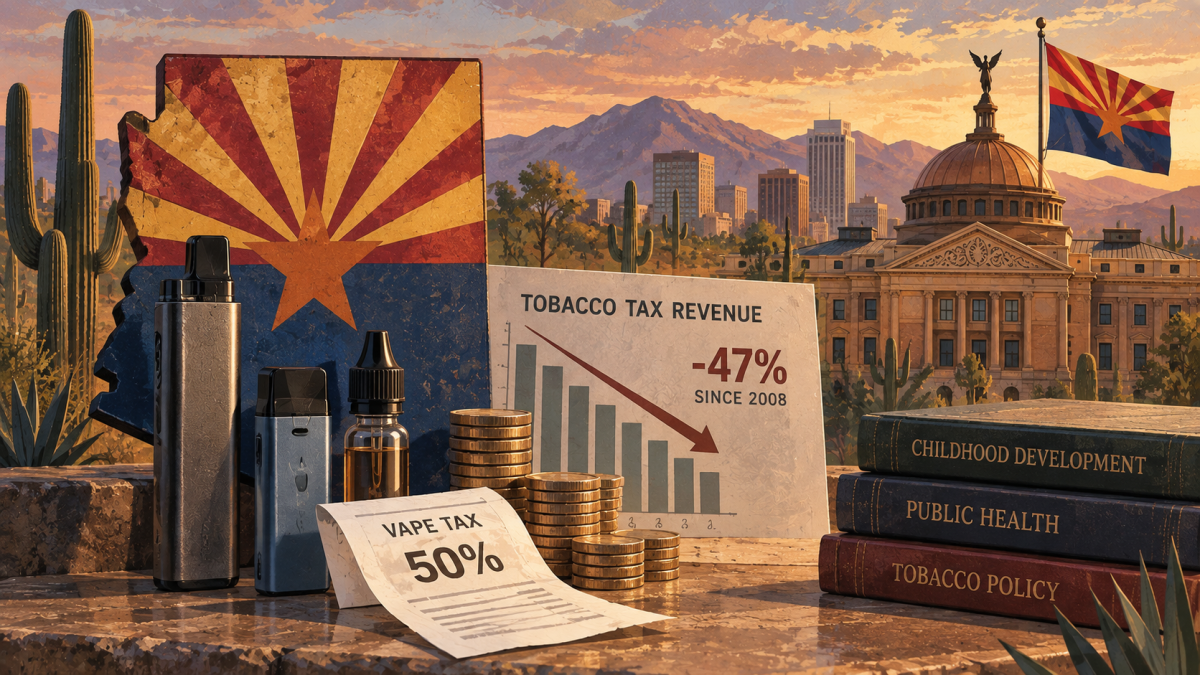
Arizona Turns to a 50% Retail Vape Tax as Tobacco Tax Revenue Falls 47% From 2008
Arizona's First Things First is pushing for an excise tax equal to 50% of the retail price of vaping products, estimating that the measure could generate about $100 million annually. The agency says its tobacco-tax revenue has fallen 47% from 2008 levels. Arizona has attempted to broaden its nicotine tax base in each of the past two years: a 2025 bill proposed a 50% wholesale-price tax, while a 2026 measure shifted to a 50% retail-price tax covering alternative nicotine products and vapor products. Separately, the state enacted HB 4001 this year to establish a new licensing and sales framework for alternative nicotine products.
Sep.21
UK Directors Banned After 352,688 Vapes Imported From China Were Misdeclared as Medical Nebulizers in £15 Million Tax Case
The UK Insolvency Service said YSK Enterprises imported large quantities of vapes from China in 2023, with a shipment addressed to the company declared as medical nebulizers before Border Force found 352,688 vaping products. HMRC calculated nearly £15 million ($20.3 million) in unpaid VAT and customs duty, alongside about £437,000 in corporation tax. Two directors were disqualified for nine years. The case predates the UK's Vaping Products Duty, which will introduce vape-specific excise and duty-stamp requirements from October 2026.
Regulations
Sep.11
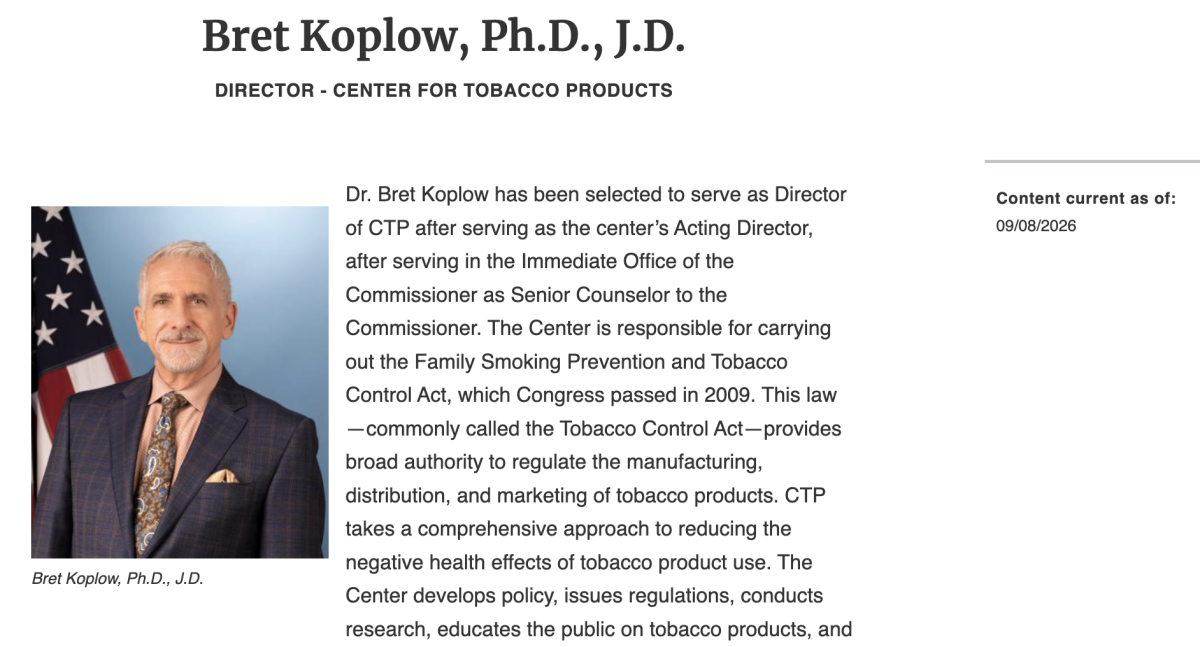
Bret Koplow Takes Permanent Charge of FDA Tobacco Center After Pushing Faster PMTA Reviews, as HHS Emphasizes Innovation and Access to Lower-Risk Alternatives
The U.S. Department of Health and Human Services has named Bret Koplow permanent director of the FDA’s Center for Tobacco Products, ending his period as acting chief. Koplow has spent years working on tobacco regulation, law and policy inside the FDA and, while serving as acting director, pushed for faster PMTA reviews and nicotine pouch review pilots. HHS also said CTP will prioritize innovation and access to less harmful alternatives for adult smokers while continuing efforts to protect youth.
Sep.09
Smoore Seeks to Toss CCELL Price-Fixing Claim as Court Weighs Vertical Distribution Versus Horizontal Conspiracy
Smoore and four authorized U.S. CCELL distributors are asking a California federal court to permanently dismiss a core antitrust claim brought by direct purchasers. Plaintiffs allege that Smoore coordinated minimum wholesale prices, customer allocation and limits on price competition among distributors, amounting to a per se unlawful horizontal conspiracy. The defendants say the alleged conduct reflects ordinary vertical relationships between a manufacturer and its distributors. The court previously dismissed a similar claim, and the latest dispute centers on whether the second amended complaint adds sufficient facts to establish a horizontal agreement.
Sep.14
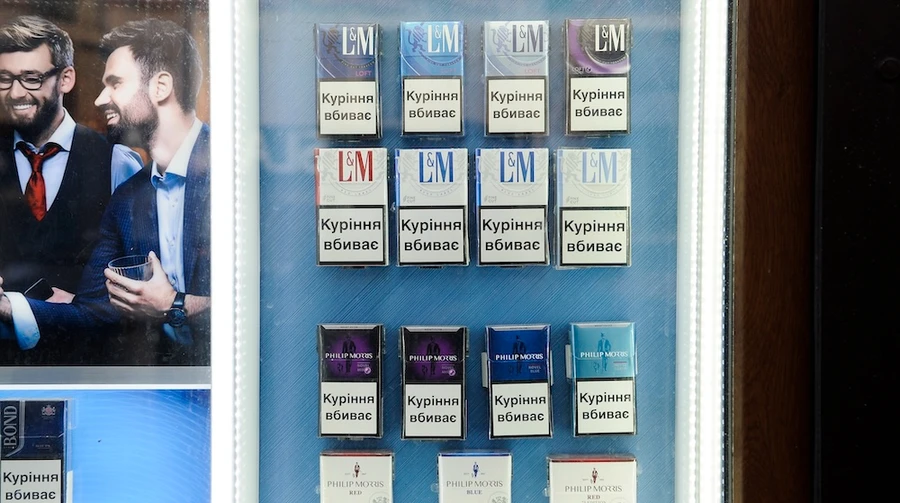
Russian Strikes Destroy JTI and Imperial Brands Ukraine Warehouses, With Losses Reaching Tens of Millions of Hryvnias
According to Ukrainska Pravda, Russian strikes on the Kyiv region during the night of Aug. 4-5, 2026, damaged warehouses storing products of Japan Tobacco International (JTI) and Imperial Brands Ukraine. JTI said a finished goods warehouse in Kyiv Oblast was destroyed, with no employees injured, and that it did not expect disruptions to retail supplies. Imperial Brands Ukraine said products stored at warehouses of distributors and retail partners were affected and estimated losses from the strikes at “tens of millions of Ukrainian hryvnias” (roughly hundreds of thousands of U.S. dollars).
JTI
Aug.07