【By 2Firsts】E-cigarette regulations in Malaysia are undergoing a new round of strict tightening. According to observations by 2Firsts, since April 2025, several states in Malaysia have been intensively implementing policies to ban or restrict the sale of e-cigarettes. Johor, Kelantan, Terengganu, and Perlis states have already implemented or are on the verge of implementing a total ban.
At the same time, British American Tobacco (BAT) announced that it will gradually stop selling its VUSE series of e-cigarette products in the third quarter of this year in response to the upcoming full enforcement of Public Health Act No. 852. The industry generally believes that the e-cigarette market in Malaysia is entering a period of high policy pressure.

To help industry readers accurately understand the latest developments in e-cigarette regulation in Malaysia, 2Firsts has analyzed the policy changes and reactions from various parties in the market over the past month, which has distilled key trends and practical points for reference by all stakeholders in the industry.
State-Led Vape Sales Bans Intensify Across Malaysia
Terengganu State: To Enforce Sales Ban in August
On April 25, the Terengganu state government announced that starting August 1, 2025, the sale and advertisement of e-cigarette products will be completely prohibited, becoming the earliest state to make a statement on this issue. Subsequently, other local governments such as Perlis and Kedah also announced their intention to join the restriction.
Perlis: Religious decree drives policy implementation
Perlis based on a religious decree in 2022, has announced that the sale of e-cigarette products will be completely banned starting from August 1, 2025, making it the fourth state after Johor, Kelantan, and Terengganu to explicitly prohibit sales.
Kedah state: To implement gradual ban on e-cigarette sales
Kedah state has announced it will no longer renew business licenses for the sale of e-cigarettes, and plans to fully implement a ban in 2026 after existing permits expire. State Chief Minister Muhammad Sanusi has stated that e-cigarettes have become a new tool for consuming synthetic drugs and must be restricted.
Selangor State: Advertising of e-cigarettes to be sealed first, ban on sales proposal under discussion
In Selangor, Malaysia's most populous and economically developed state, the local government has ordered the immediate sealing of all e-cigarette-related advertisements and is currently drafting policies to restrict their sale.
Malacca and Pahang State: Likely to follow up
Pahang State, which has already stated that it is considering implementing similar measures; Malacca State, on the other hand, has expressed that it will pilot control measures in some areas. Local governments will be the main driving force in implementing this regulatory cycle.
Health Ministry Pushes Regulations, Prioritizes Youth Protection
Health Minister Dzulkefly Ahmad has publicly voiced his support for local governments tightening control and has established a special committee in early May to investigate the issue of e-cigarette abuse among students. He emphasized the full enforcement of the Public Health Smoking Control Act 2024 (Act 852), especially cracking down on advertising, promotion, and sales to minors.
According to the bill, starting from October 1, 2025, e-cigarettes will officially be included in the statutory regulatory system, with comprehensive requirements for product labeling, display, sales channels, and content ingredients.
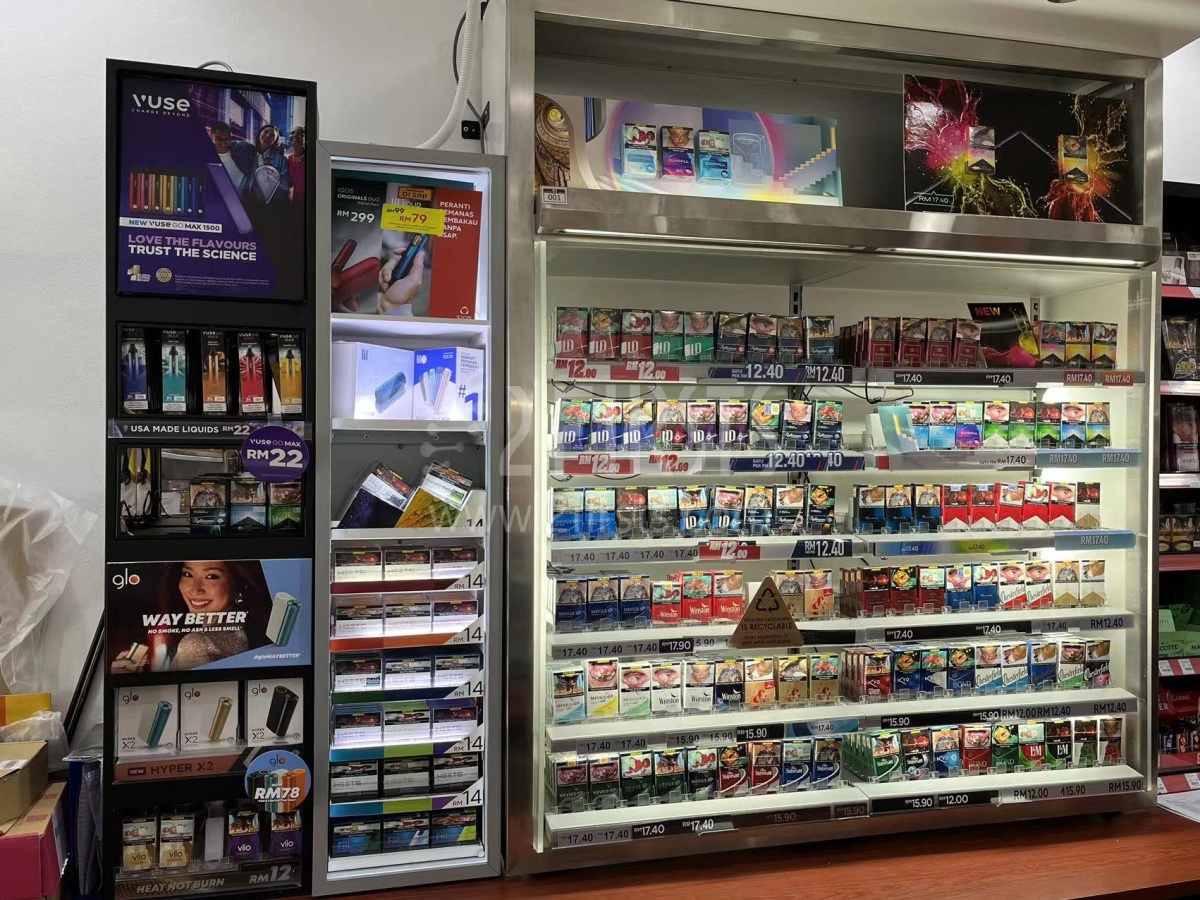
At the end of April, e-cigarette operators in Malaysia received feedback from two top authorities. In response to Malaysia's new regulations prohibiting the display of e-cigarettes, some e-cigarette retailers have installed curtains on their display cabinets.

BAT Halts Sale of VUSE Products
Against the backdrop of an increasingly stringent regulatory environment, British American Tobacco Malaysia (BAT Malaysia) is taking the lead in making adjustments. According to a notice released to the stock exchange on April 28, the company will cease selling VUSE series products in the Malaysian market in the third quarter of 2025.
BAT announced that this move is aimed at complying with the requirements of Bill 852 regarding e-cigarette products, and will also conduct a commercial evaluation of the VUSE series. The company anticipates that this decision will have a limited impact on its financial performance in 2025.
According to 2Firsts, VUSE primarily sells disposable e-cigarette products in the Malaysian market and has a high shelf presence in that market. Malaysia is also one of VUSE's important markets.
Medical, Law Enforcement, and Religious Groups Back Comprehensive Controls
The Malaysian medical community continues to issue high-risk warnings about e-cigarettes. Organizations such as the Malaysian Medical Association (MMA), Chest Association, and Lung Foundation are calling on the government to completely ban the sale of e-cigarettes, emphasizing their "increasingly severe systemic threat to public health." The MMA revealed that between 2019 and 2024, a total of 41 cases of e-cigarette-related lung injuries (Evali) have been reported nationwide, indicating that the issue is no longer isolated.
The law enforcement system is also sending a strong signal. Deputy Chief of Police Datuk Seri Ayob Khan Mydin Pitchay pointed out that e-cigarettes are being abused for inhaling synthetic drugs and have become a new tool for drug crimes. He urged more states to proactively emulate pioneering regions and implement sales bans as early as possible to curb the spread before federal legislation is perfected.
The religious community has also joined the camp pushing for policies. The Pahang state Islamic party youth committee openly pressured the state government to implement a ban similar to Johor, Kelantan, and Terengganu, emphasizing that e-cigarettes pose a "dual threat" to the physical and mental health and ethical morality of young people.
Industry Groups Oppose Total Ban, Call for Careful Regulation
However, industry groups strongly oppose the complete ban. The Malaysian Vape Chamber of Commerce (MVCC) believes that "prohibition is not a good strategy" and calls on the government to focus on reviewing product ingredients and regulating labeling to avoid pushing the growth of the illegal market due to regulatory vacuum, which could weaken tax revenue and legitimate business ecosystem.
The E-Cigarette Merchants Association at Terengganu also expressed strong dissatisfaction with the state government's policy. The association's president, Kamaruzaman Mahmud, pointed out that the ban in the state could lead to loss of up to 5 million ringgit (about $1.15 million) per month for 169 member merchants, and the official three-month buffer period set is "far from enough to deplete inventory or transition business.
According to the "2023 Malaysia E-Cigarette Industry Research Report," the industry's annual market size has reached 3.48 billion ringgit (about $800 million), with over 7,500 retail points and directly creating around 31,500 jobs. The report also highlights that 31% of smokers in Malaysia have completely switched to e-cigarette products, indicating their significant role in the smoking cessation journey.
Commentary: Local Authorities Advance Cautiously as Federal Government Hesitates, Heightening Regulatory Tensions
In the context of policy paths not yet unified, the e-cigarette market in Malaysia is currently going through a "control acceleration period" led by local governments. Despite Act 852 about to take effect, the industry is still waiting for clear central-level rules, causing inconsistent enforcement standards and market volatility.
Some analysts point out that the next few months will be a critical period for determining whether the e-cigarette industry can successfully transition to compliance. From local bans to companies exiting the market, from pressure from the medical community to industry protests, e-cigarette regulation in Malaysia is shaping up to be a policy game involving multiple forces.
2Firsts will continue to monitor the progress of e-cigarette policies in Malaysia and track developments in other Southeast Asian markets.
The cover image is created by AI.
We welcome news tips, article submissions, interview requests, or comments on this piece.
Please contact us at info@2firsts.com, or reach out to Alan Zhao, CEO of 2Firsts, on LinkedIn
Notice
1. This article is intended solely for professional research purposes related to industry, technology, and policy. Any references to brands or products are made purely for objective description and do not constitute any form of endorsement, recommendation, or promotion by 2Firsts.
2. The use of nicotine-containing products — including, but not limited to, cigarettes, e-cigarettes, nicotine pouchand heated tobacco products — carries significant health risks. Users are responsible for complying with all applicable laws and regulations in their respective jurisdictions.
3. This article is not intended to serve as the basis for any investment decisions or financial advice. 2Firsts assumes no direct or indirect liability for any inaccuracies or errors in the content.
4. Access to this article is strictly prohibited for individuals below the legal age in their jurisdiction.
Copyright
This article is either an original work created by 2Firsts or a reproduction from third-party sources with proper attribution. All copyrights and usage rights belong to 2Firsts or the original content provider. Unauthorized reproduction, distribution, or any other form of unauthorized use by any individual or organization is strictly prohibited. Violators will be held legally accountable.
For copyright-related inquiries, please contact: info@2firsts.com
AI Assistance Disclaimer
This article may have been enhanced using AI tools to improve translation and editorial efficiency. However, due to technical limitations, inaccuracies may occur. Readers are encouraged to refer to the cited sources for the most accurate information.
We welcome any corrections or feedback. Please contact us at: info@2firsts.com