North Dakota Organization Pushes for Legalization of Recreational Marijuana

Regulations by 2FIRSTS.ai
Apr.30.2024
North Dakota Organization Pushes for Legalization of Recreational Marijuana
Organization aims to legalize recreational marijuana in North Dakota through November ballot" - AP report.

According to a recent report by the Associated Press, an organization called "New Economic Frontier" in North Dakota, USA, is seeking approval from the Secretary of State to include the issue of legalizing recreational marijuana in the state's November ballot.


It is reported that the voting campaign needs to collect 15,582 valid signatures by July 8 in order to include the issue on the November ballot. Otherwise, the organization will have a year to collect enough signatures to wait for the next voting opportunity.


This initiative will also allow residents of North Dakota who are 21 years old and above to use marijuana in their homes, with each adult allowed to grow up to three marijuana plants and a maximum of six plants per household.


The organization's chairman, former Bismarck Mayor Steve Bakken, stated that the organization was able to collect enough signatures before the deadline at the end of July.


In 2022 and 2018, ballot measures to legalize marijuana for adult use in North Dakota were rejected with 55% and 59% of the vote against, respectively. In 2016, a medical marijuana measure passed through the ballot voting. In 2021, a bill to legalize and tax recreational marijuana, led by the Republican-controlled state House, was rejected by the Republican-majority Senate.


We welcome news tips, article submissions, interview requests, or comments on this piece.

Please contact us at info@2firsts.com, or reach out to Alan Zhao, CEO of 2Firsts, on LinkedIn


Notice

1.  This article is intended solely for professional research purposes related to industry, technology, and policy. Any references to brands or products are made purely for objective description and do not constitute any form of endorsement, recommendation, or promotion by 2Firsts.

2.  The use of nicotine-containing products — including, but not limited to, cigarettes, e-cigarettes, nicotine pouchand heated tobacco products — carries significant health risks. Users are responsible for complying with all applicable laws and regulations in their respective jurisdictions.

3.  This article is not intended to serve as the basis for any investment decisions or financial advice. 2Firsts assumes no direct or indirect liability for any inaccuracies or errors in the content.

4.  Access to this article is strictly prohibited for individuals below the legal age in their jurisdiction.


Copyright


This article is either an original work created by 2Firsts or a reproduction from third-party sources with proper attribution. All copyrights and usage rights belong to 2Firsts or the original content provider. Unauthorized reproduction, distribution, or any other form of unauthorized use by any individual or organization is strictly prohibited. Violators will be held legally accountable.

For copyright-related inquiries, please contact: info@2firsts.com


AI Assistance Disclaimer


This article may have been enhanced using AI tools to improve translation and editorial efficiency. However, due to technical limitations, inaccuracies may occur. Readers are encouraged to refer to the cited sources for the most accurate information.

We welcome any corrections or feedback. Please contact us at: info@2firsts.com

From Nicotine Salts to Cocrystals: China’s Shenzhen Huabao institute explores a more stable form for sustained nicotine release
China-based Shenzhen Huabao Collaborative Innovation Technology Research Institute Co., Ltd. has filed a patent application for a nicotine-ascorbic acid cocrystal, exploring a new solid-state form of nicotine. The patent proposes applications across e-liquids, heated tobacco sticks, oral tobacco, chewing tobacco and snuff. In nicotine pouch tests disclosed in the filing, cocrystal formulations showed less than a 6% decline in nicotine content after three months of accelerated storage and a release profile combining early-stage release with sustained delivery over 60 minutes. The filing reflects exploration of nicotine forms beyond conventional nicotine base and nicotine salts.
Aug.13
China Tobacco Supply-Chain Leader Huabao’s Three-Way Transformation Takes Hold as Overseas Revenue Jumps 216%, Non-Flavor Businesses Reach 42.2% and the Company Expands Into Global Next-Generation Tobacco Supply Chains
Huabao’s H1 2026 results show the company advancing across three connected fronts: international expansion, entry into next-generation tobacco supply chains and diversification beyond its traditional tobacco-related base. Overseas revenue rose 216.08% to CNY 96.02 million, while non-flavor businesses reached 42.2% of total revenue. Huabao also said it had entered the supply chains of leading global tobacco customers, as its nutrition, food ingredient, fragrance and personal-care businesses gained ground in Europe, Southeast Asia, Australia and New Zealand. However, adjusted net profit increased only 2.78%, and next-generation tobacco revenue was not separately disclosed, showing that the transformation is reshaping revenue and customer exposure but has yet to translate fully into underlying earnings.
Aug.28
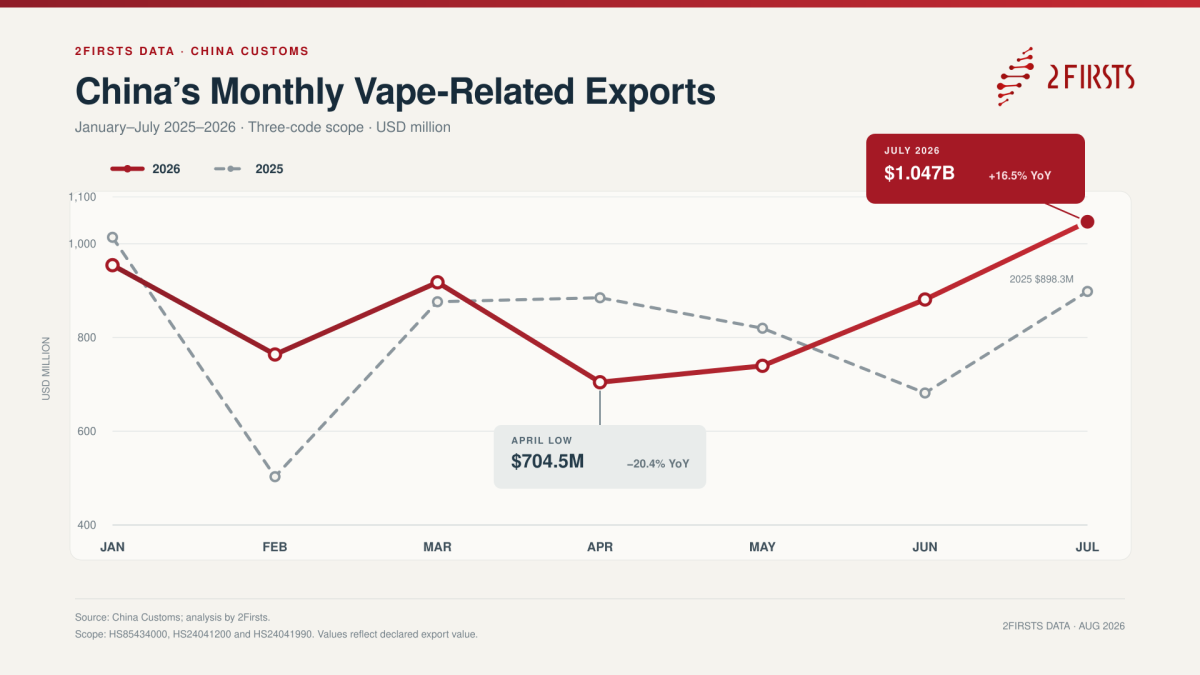
2Firsts Data | China’s Vape-Related Exports Rise 16.5% in July 2026 as U.S.-Bound Shipments Jump 53.5%
China’s vape-related exports reached $1.047 billion in July 2026, up 16.5% year on year and the highest monthly total of the year. Growth was heavily concentrated in the U.S., where exports jumped 53.5% to $404 million and accounted for 94.9% of the overall increase. Exports to all other markets rose just 1.2%. By category, nicotine-containing non-combustible products—primarily vapes—under HS24041200 rose 24.7% and generated 95.5% of the total increase. Vape-device exports under HS85434000 fell 0.4%, while other nicotine-substitute products under HS24041990 grew 88.9% but remained comparatively small.
DATA
Aug.24
South Korea Vape Strategies Diverge as BAT Reconsiders Exit and PMI Takes VEEV to About 14,000 Stores
BAT Rothmans says it previously considered exiting South Korea's vaping market because of competitive pressure from unregulated products, but is now reassessing conditions following changes to the country's nicotine regulatory framework. Vuse and other BAT vaping products remain available through existing distribution channels. The statement followed a South Korean media report that interpreted BAT's broader withdrawal from selected Vapour markets as a full exit from South Korea. Meanwhile, Philip Morris International launched VEEV inPRIME in the country in June and began expanding distribution to around 14,000 convenience stores and other retail channels in July. The contrasting moves highlight differing investment strategies as South Korea's regulated vaping market evolves.
Aug.14
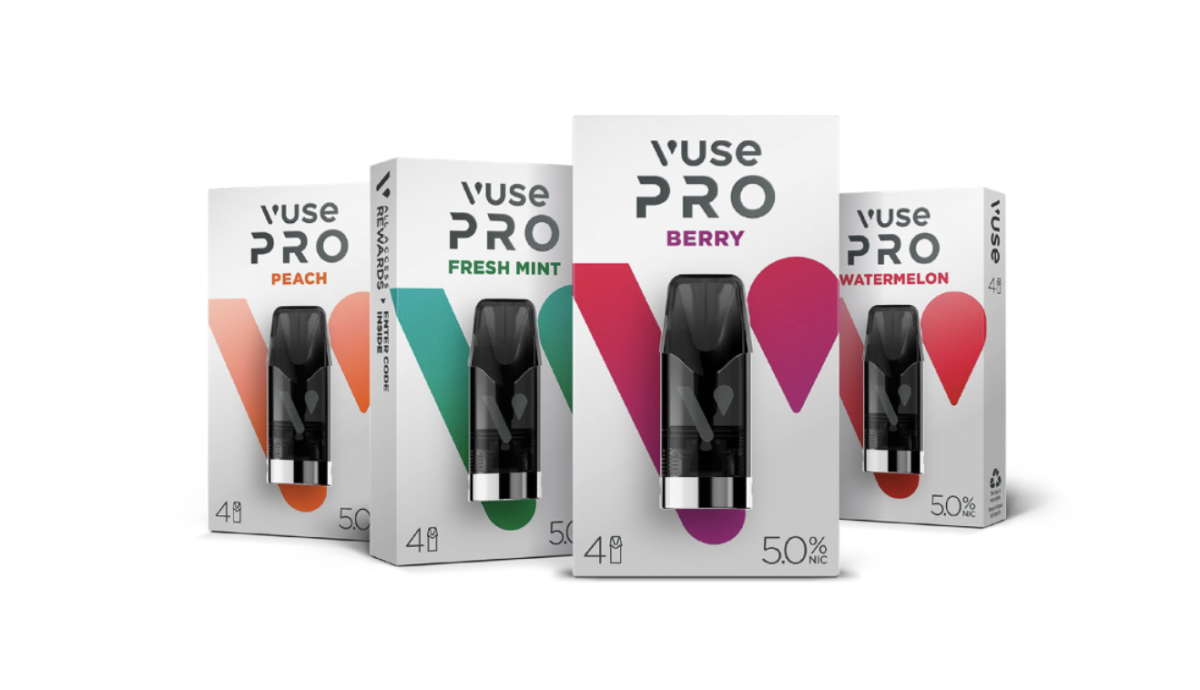
Product | R.J. Reynolds Launches Four Flavored Vuse Pro Pods for Vuse Alto Devices in U.S.
R.J. Reynolds Vapor Company has introduced Vuse Pro prefilled pods in Peach, Berry, Watermelon and Fresh Mint in selected U.S. states. Vuse’s U.S. website says the pods are intended for use with existing Vuse Alto devices. Each contains 2.0 mL of e-liquid at 5.0% nicotine by weight, uses nicotine salts and is offered in two- and four-pod packs. Reynolds said the rollout includes mandatory ID scanning for every purchase, purchase limits, stronger retailer-accountability requirements and strict age-restricted marketing standards. The four pods have not received marketing authorization from the U.S. Food and Drug Administration.
Sep.10
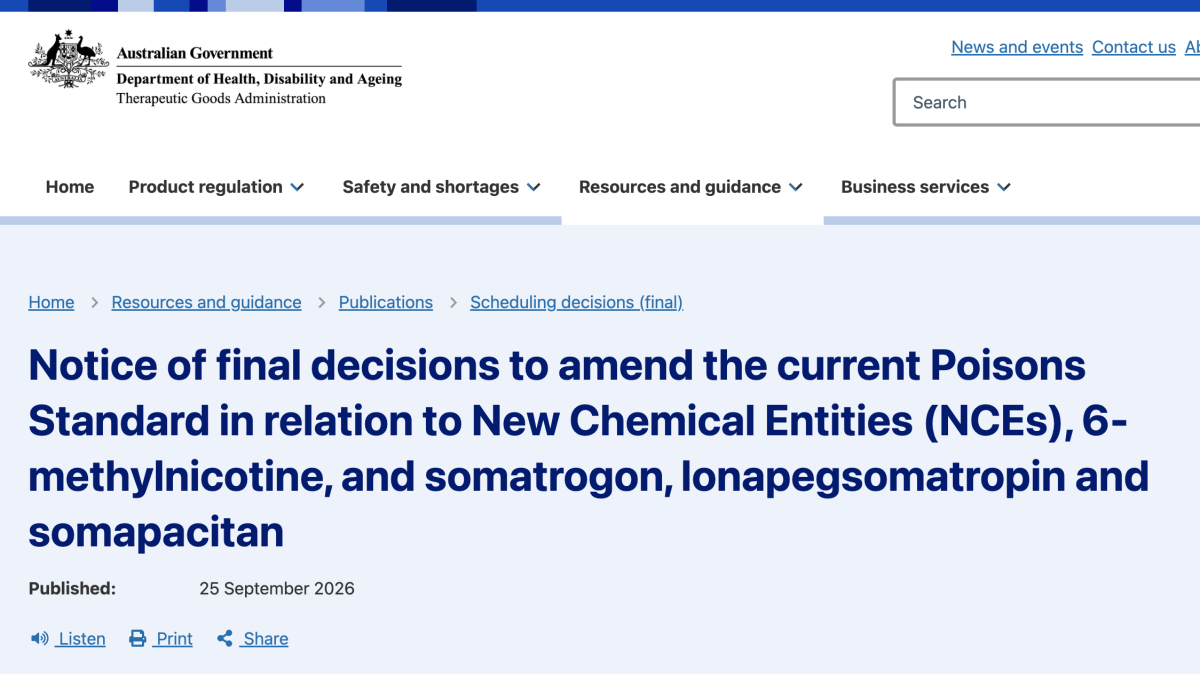
Australia Adds 6-Methylnicotine to Schedule 9 Prohibited Substances, Effective October 1
Australia's Therapeutic Goods Administration published a final decision on September 25 to classify 6-methylnicotine as a Schedule 9 prohibited substance under the Poisons Standard, effective October 1, 2026. TGA said the chemical has been reported in e-cigarette liquids sold in Australia and marketed as nicotine-free or nicotine alternatives, while evidence also indicates its use in preparations such as oral pouches. The government originally proposed a Schedule 7 classification but ultimately adopted the stricter Schedule 9 designation, citing acute toxicity, dependence risk, use in unapproved consumer products and misleading marketing.
News
Sep.29 by 2Firsts Perspectives